Mesh vs Cushioned Office Chairs: Compare Daily Use
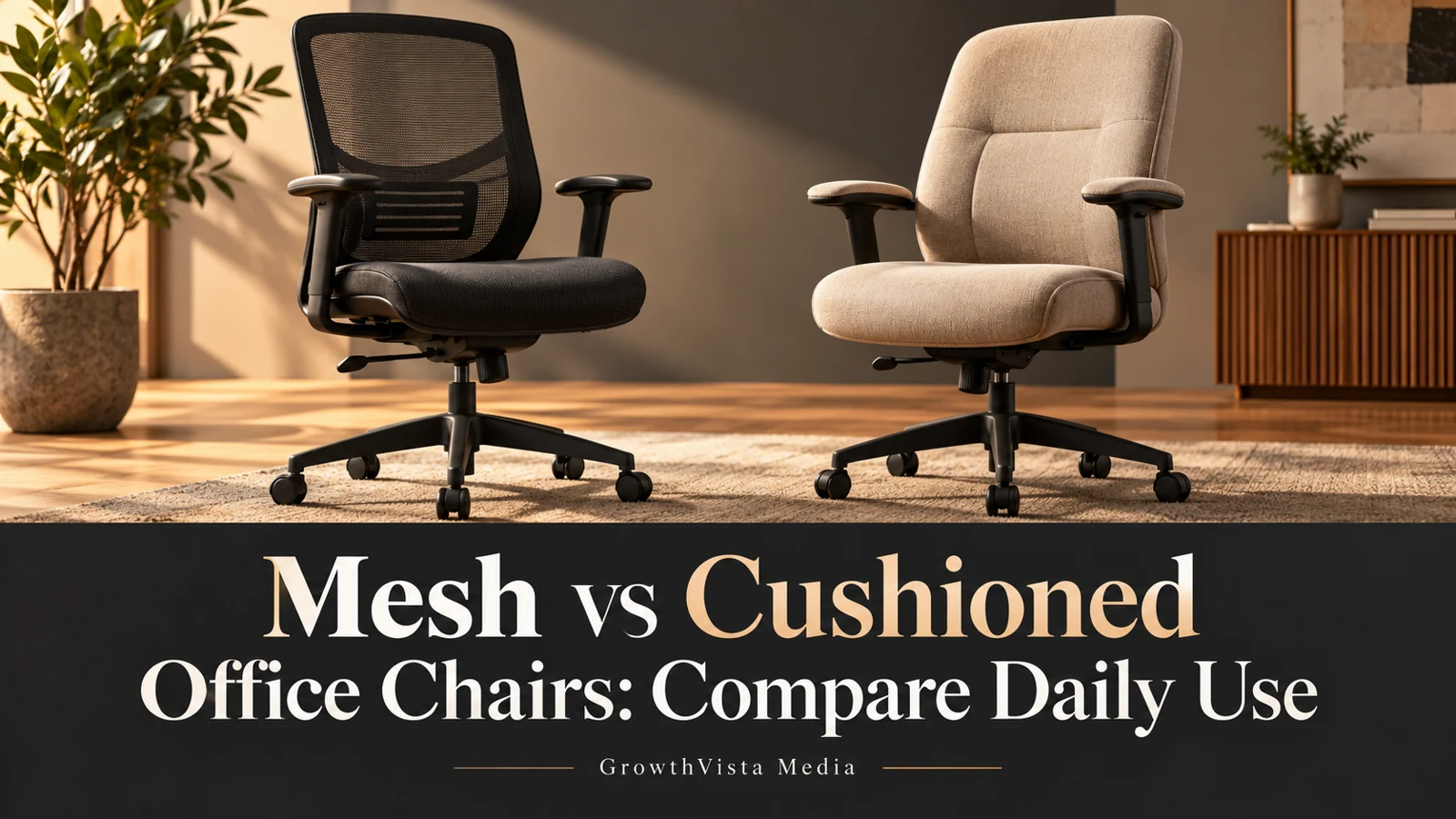
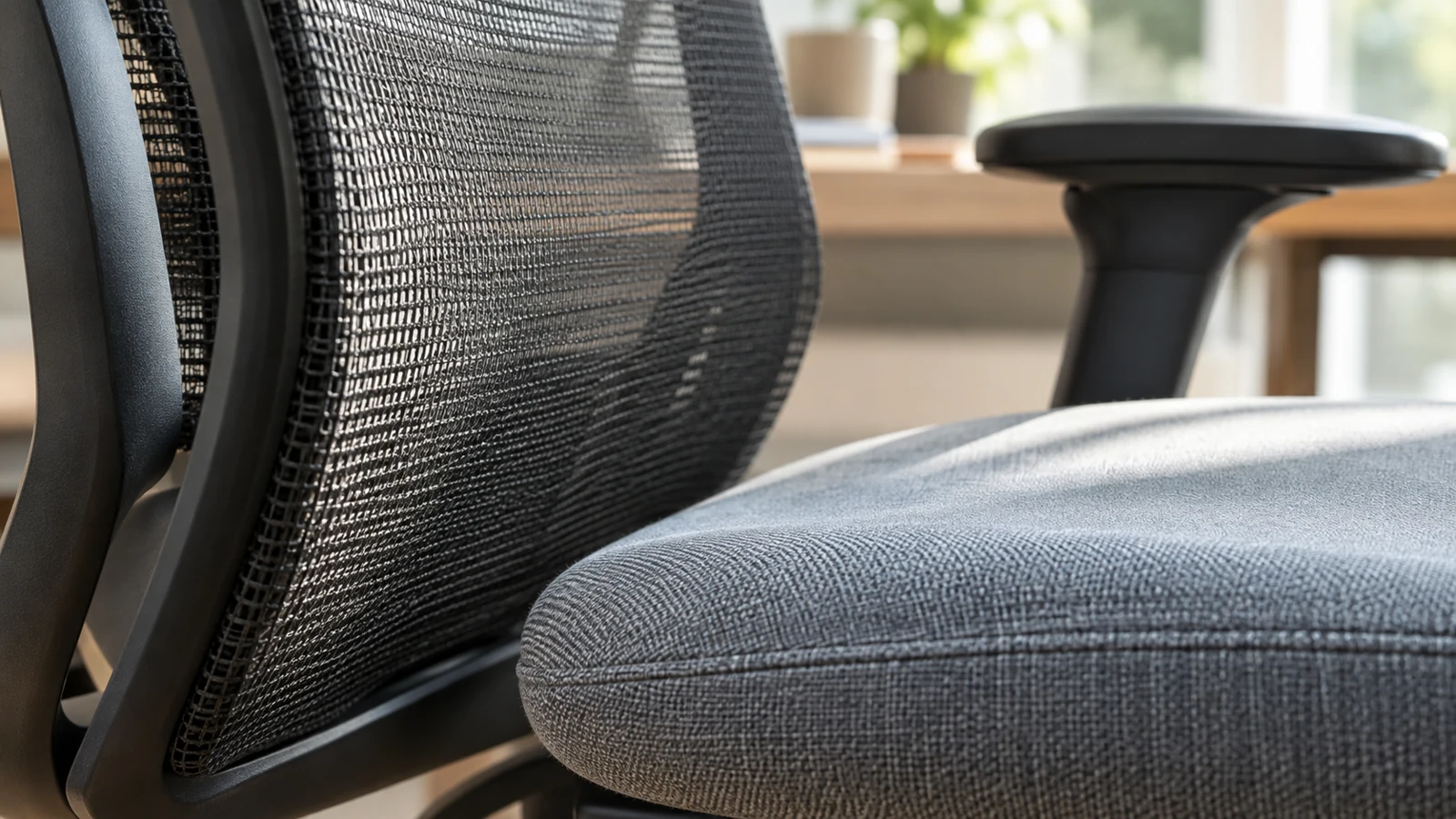
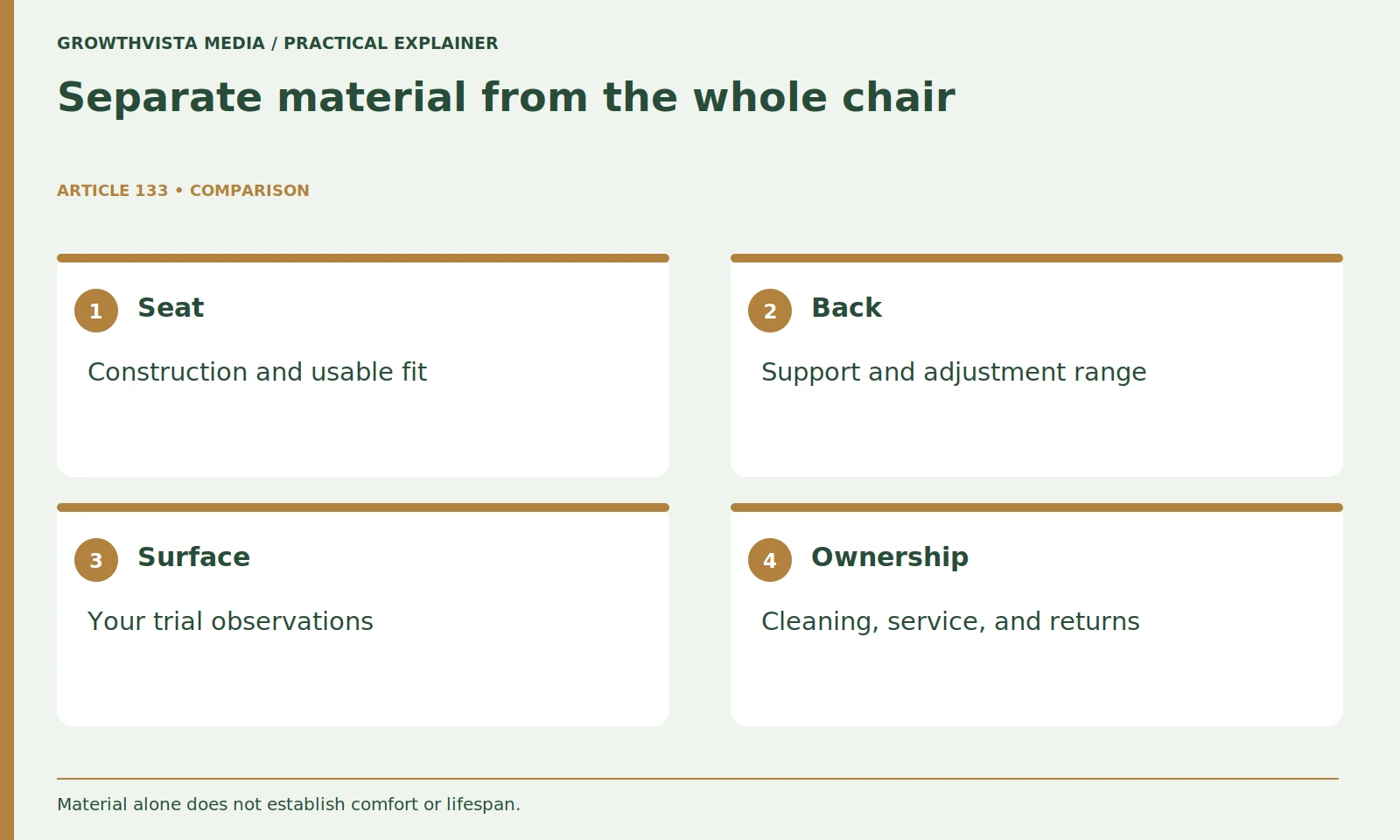
Mesh vs cushioned office chairs should be compared as complete model variants, not as a universal material contest. Check what the seat and back actually use, establish workstation fit, and then evaluate surface feel, care, parts, trial conditions, and total cost. A mesh-back chair can still have a cushioned seat.
Use the same tasks and record trial conditions for both options. This guide does not claim one material is always cooler, healthier, or longer-lasting. It provides a purchase worksheet that separates personal preference from product evidence, with the exact care and service terms kept beside the decision.
Your decision checklist
- Confirm the exact seat and back construction.
- Check complete workstation fit before surface preference.
- Read model-specific care and service terms.
- Keep personal trial observations separate from measured claims.
How do you compare mesh vs cushioned office chairs accurately?
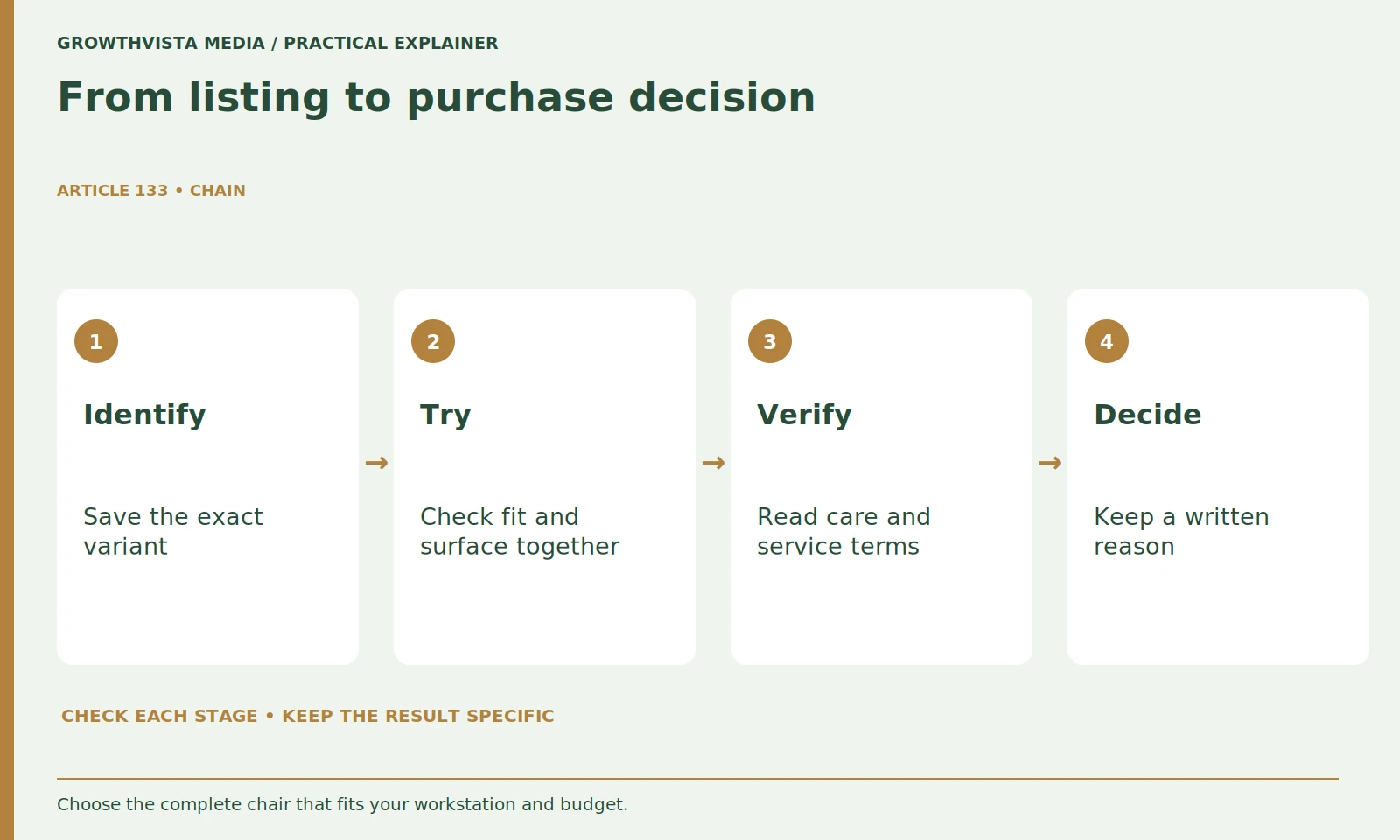
Identify the exact seat and back construction, size, and upholstery option in each listing. Do not assume the title describes both surfaces. Keep the model code and unresolved details visible so evidence about another variant does not silently substitute for the product you will buy.
Ask whether the seat has a replaceable cover, whether mesh tension is adjustable, and which components can be serviced. These are questions for the manufacturer, not assumptions based on appearance. A photograph may show a woven surface without revealing the support beneath it. Keep unknown details in the comparison sheet until the seller provides an answer you can rely on.
Should fit be checked before material preference?
Yes. Establish desk access, usable seat position, and controls before choosing by softness or texture. OSHA emphasizes individual chair fit within the workstation. A preferred upholstery should not outweigh a practical limitation that prevents ordinary tasks. OSHA: chair considerations
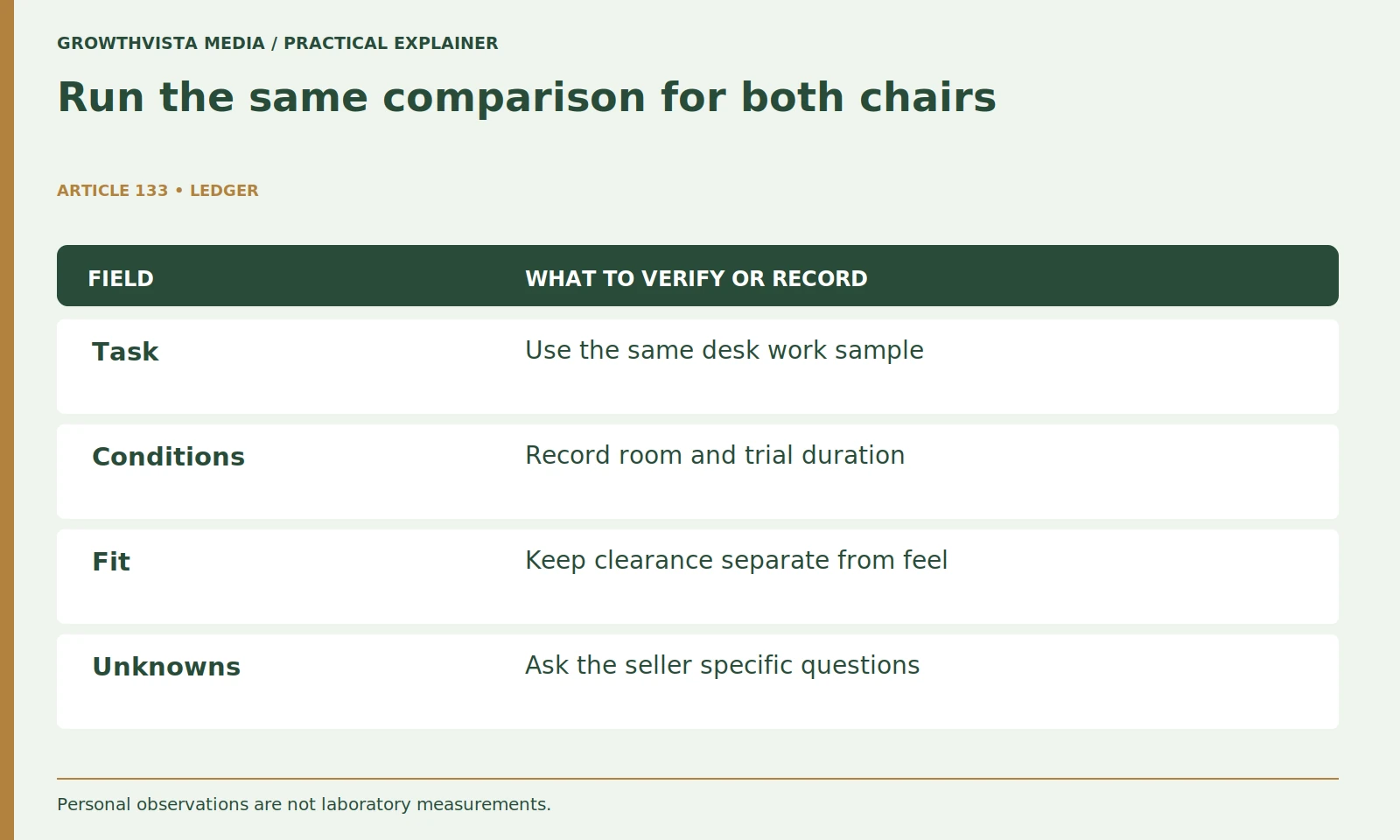
When trying two models in different stores, carry the same worksheet and describe the conditions. A five-minute showroom trial is not directly comparable with an afternoon at home. Avoid turning those unequal observations into a precise comfort ranking. They can still help you identify questions that need a longer return-window trial, such as pressure near the seat edge or controls that are difficult to reach.
| Area | Mesh variant | Cushioned variant |
|---|---|---|
| Seat fit | Record actual trial | Record actual trial |
| Back construction | Confirm specification | Confirm specification |
| Cleaning | Read approved method | Read approved method |
| Replacement parts | Ask exact availability | Ask exact availability |
| Return cost | Save current terms | Save current terms |
Is every mesh seat or cushioned seat alike?
No. Compare the actual shape, usable area, edges, and response during supported movement. Neither label guarantees a suitable experience. Record a model-specific observation instead of assuming that all foam will soften enough or all mesh will adapt as needed.
Test the positions you normally use while staying within the manufacturer’s instructions. If the surface encourages you to slide forward or sit away from the backrest, record that result. Do not assume all cushioning will soften enough to correct a poor fit, or that mesh will automatically adapt to every body. A short description of the issue gives the seller a clearer question than a broad complaint about the material.
Can a short trial establish which material runs cooler?
It can establish your limited preference under those conditions, not a controlled thermal result. Room, clothing, construction, and trial duration belong in the record. Ask for product-specific evidence if a seller makes a measured cooling claim.
Avoid making a thermal-performance claim from a brief store visit. A preference for a more open backrest is valid, but it is not a measured temperature advantage. If the seller advertises cooling technology, ask for product-specific evidence and the conditions under which it was tested. Keep your personal experience separate from that claim in the buying worksheet.
What should cleaning comparisons include?
Read the approved method for the exact surface and surrounding components. Consider spills, pets, sunlight, and replacement-cover options where relevant. Do not apply an aggressive general cleaning method on the assumption it will restore an unfamiliar material.
Think about the actual room: food at the desk, pets, sunlight, or a shared workspace. Ask how replacement covers or upholstery parts are supplied. If a stain is visible during a used-chair inspection, consider whether the manufacturer’s method can reasonably address it. Avoid buying on the assumption that aggressive cleaning will restore the surface. Cleaning convenience belongs in the ownership comparison alongside price and fit.
Which durability questions are more useful than a material ranking?
Ask which components can be replaced, what the warranty covers, and how service is supplied. Inspect a used chair’s actual condition and documented history. An upholstery category alone cannot establish a remaining lifespan or parts availability.
For a used chair, inspect visible wear, sagging, damaged edges, loose hardware, and control operation without dismantling it. The absence of visible damage does not prove a remaining lifespan. A well-documented service history can improve confidence, while uncertain parts availability can change the value calculation. Treat these as purchase risks to assess, not as evidence that an entire material category is unreliable.
How should total ownership cost be compared?
Include the exact chair, delivery, necessary approved accessories, return costs, and relevant service terms. Compare working arrangements rather than unmatched headline prices. Optional color or upholstery upgrades should remain separate from changes needed for usable fit.
Separate mandatory spending from optional upgrades. A different color or premium upholstery may change the price without improving your desk access or adjustment range. If two variants fit equally well, surface preference and cleaning needs can guide the final choice. If only one fits, the material debate has already become secondary to the practical workstation decision.
What should the final comparison explain?
State the fit findings, surface preference, and ownership conditions for the exact variant. OSHA’s workstation guidance supports fitting the arrangement to the user; it does not provide a universal upholstery winner. If neither model fits, keep searching rather than forcing a material preference. OSHA: computer workstation principles
Choose a chair whose complete configuration works in your room and whose purchase terms you understand. If neither option fits, widen the search rather than accepting a poor arrangement because you prefer one material. A useful comparison ends with a clear reason for the choice and a plan for checking it during normal use. It does not require declaring one upholstery type the winner for everyone.
Confirm the exact seat and back construction. Check complete workstation fit before surface preference. Read model-specific care and service terms. Keep personal trial observations separate from measured claims. Keep verified findings, illustrative examples, and unresolved requirements separate in the final decision.
Frequently asked questions
Is every mesh chair more breathable than every cushioned chair?
A material label does not establish a measured advantage. Compare the exact construction and your trial conditions without generalizing to an entire category.
Are cushioned seats always softer?
No universal result follows. Shape, firmness, construction, and usable fit vary by model.
Can the back and seat use different materials?
Yes. Confirm both specifications and the exact variant rather than assuming a mesh-back title describes the seat.
Which material lasts longer?
The label alone cannot determine lifespan. Read construction, care, service, and warranty details, and inspect the actual condition of a used chair.
Does a short showroom trial prove temperature performance?
No. It gives a limited personal observation in that environment, not a controlled thermal comparison.
Should I buy a preferred material if neither chair fits?
Keep searching or resolve a documented supported setup change. Material preference should not conceal an unworkable workstation arrangement.
Sources and further reading
Official documentation supports the technical guidance. Examples and worksheets are editorial methods, not hands-on product benchmarks. Reviewed October 2026.