Brokerage Account vs Retirement Account: 5 Rule Differences

Brokerage account vs retirement account compares account rules, not two guaranteed investment outcomes. A taxable brokerage can provide flexible investing access. Retirement accounts can have tax advantages along with eligibility, contribution, and withdrawal conditions. The same investment may appear in different account types, but its market risk does not disappear when the account has a retirement label.
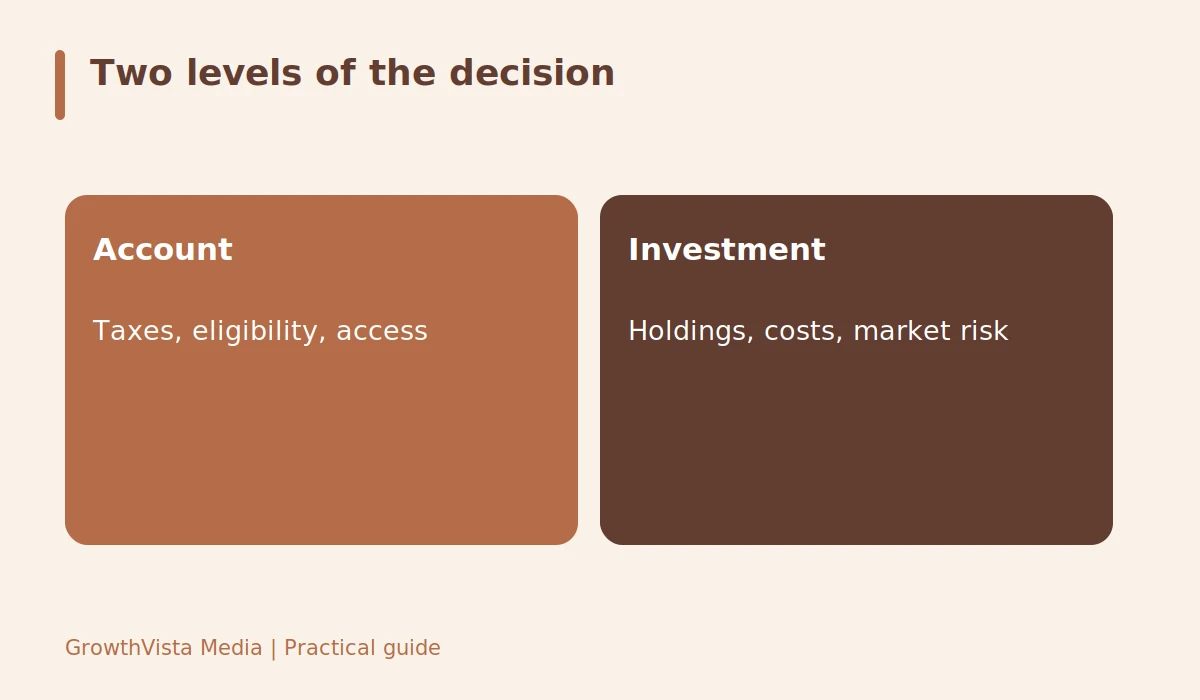
Separate the container from its contents
An account sets ownership, tax, and access rules. The assets inside determine much of the investment exposure. A retirement account can hold risky investments, and a taxable account can hold relatively conservative ones. Compare both levels of the decision. Avoid opening an account solely because a product advertisement uses the word retirement or promises easy access.

Brokerage account vs retirement account on taxes
A taxable account can create tax obligations from income and realized gains under applicable rules. Retirement accounts can defer taxes or provide qualifying tax-free treatment depending on type. That does not mean every contribution is deductible or every withdrawal is tax-free. Check the specific account rules, your eligibility, and state treatment rather than applying one retirement-account description to every product.
Give two goals separate rules
A fictional household has a long-term retirement goal and a planned expense several years away. It compares retirement-account conditions for the first goal and flexible account options for the second, then separately selects appropriate assets. The exercise does not establish the correct account for a particular person. It shows why an account decision should reflect timing and tax rules before investment selection.
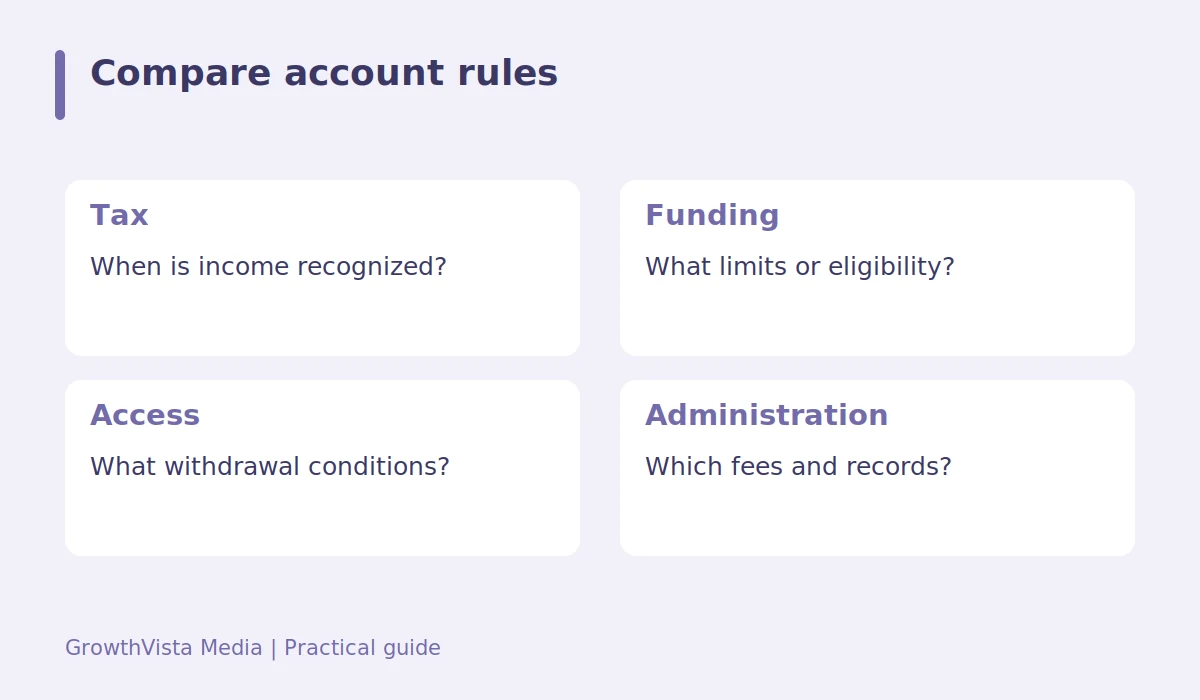
| Item | Detail |
|---|---|
| Tax | When is income recognized? |
| Funding | What limits or eligibility? |
| Access | What withdrawal conditions? |
| Administration | Which fees and records? |
Consider when you need the money
Retirement accounts generally have distribution restrictions or consequences, with exceptions that vary. A taxable brokerage does not have the same retirement withdrawal framework, but investments can still lose value or take time to sell and settle. Flexible access is not equivalent to a safe emergency reserve. Match the account and assets to the date and certainty of the spending need.
Check contribution and eligibility conditions
Retirement account limits can depend on account type, tax year, income, age, or workplace plan participation. A taxable brokerage has a different funding framework. Employer plan features, including a match, can affect the comparison. Review current rules before moving money or assuming you can contribute an unlimited amount to an account because the provider accepts deposits.
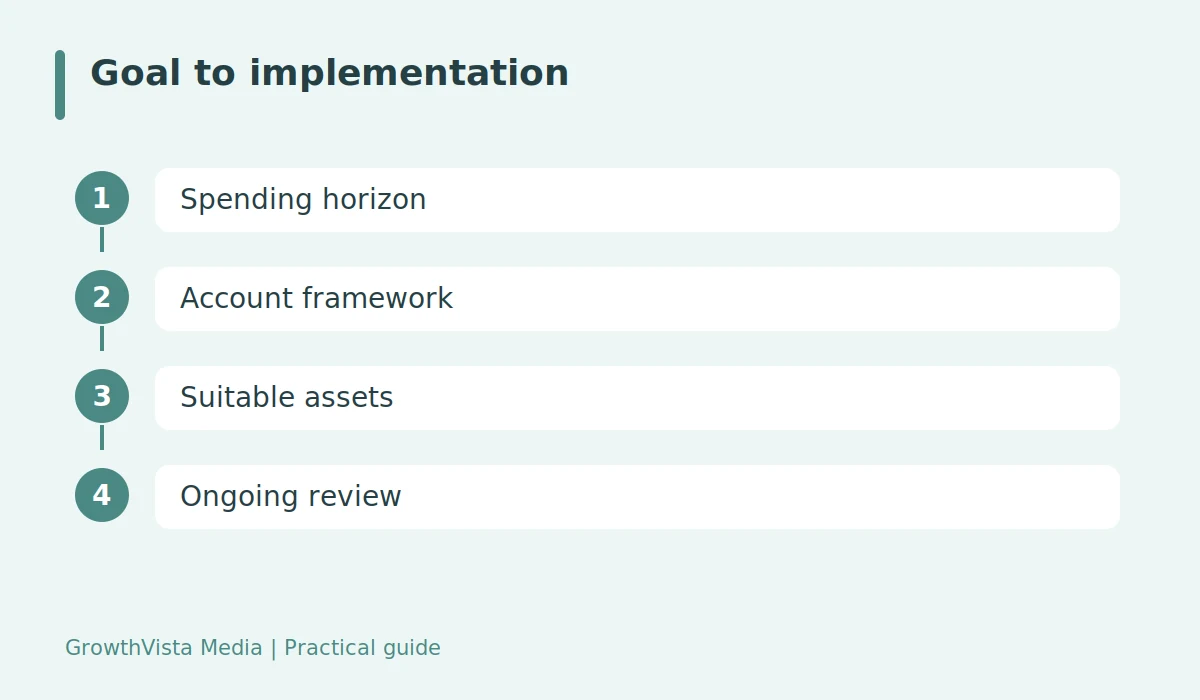
Compare costs and administration
Look at provider fees, investment expenses, advice charges, and recordkeeping. Multiple accounts may help serve separate goals but add statements and tax records. Keep beneficiary information current where applicable. When changing providers, confirm transfer procedures and whether assets or account treatment will change. Get qualified advice when a move could create a tax consequence.
Questions readers ask
Can I buy the same fund in both?
Sometimes, depending on provider and plan availability. Even then, account taxes and access rules can differ while the fund’s market exposure remains similar.
Is a brokerage account an emergency fund?
Not automatically. Investments can decline or require time to sell. Emergency money needs storage and access suited to urgent essential spending.
Are all retirement contributions deductible?
No. Treatment depends on account type and eligibility. Roth contributions use after-tax money, and other deduction rules can depend on circumstances.
Your next steps
- Write the goal and likely spending date.
- Identify the specific account tax treatment.
- Check current contribution and eligibility rules.
- Compare access and transfer conditions.
- Select investments separately from the account label.
Related guides: What Is a 401(k)? 7 Basics for New Employees · Traditional vs Roth 401(k): 5 Important Differences · Investing for Beginners: 7 Decisions Before Buying
Further reading
Editorial update: October 12, 2026. U.S.-focused general education, not individual investment, tax, or legal advice. Examples are hypothetical, not current product offers.