Traditional vs Roth 401(k): 5 Important Differences

Traditional vs Roth 401(k) is primarily a decision about when income taxes apply to your employee contributions. It is not a choice between a safe and a risky investment. Both can hold the same funds within an employer plan. Start by comparing the tax treatment, then check the payroll impact and the rules for taking money out.
The tax bill moves to a different time
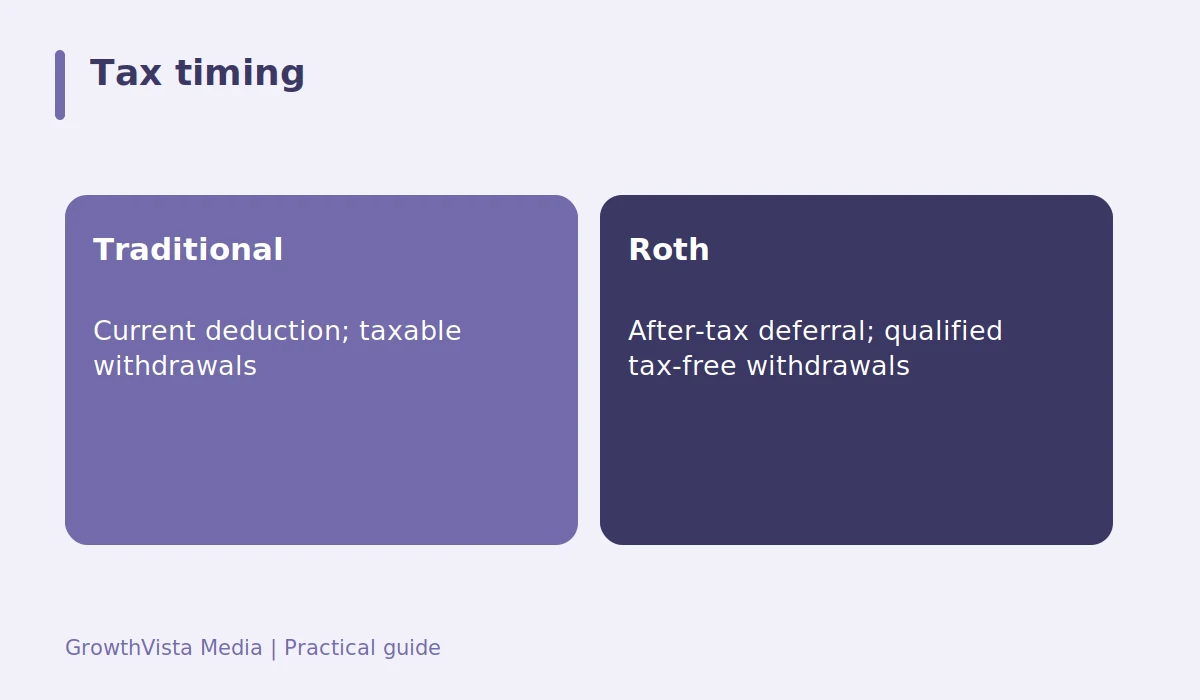
Traditional deferrals generally lower current federal taxable wages, while taxable distributions create income later. Roth deferrals do not give that current income-tax reduction. Qualified Roth distributions can be tax-free after the required conditions are met. That distinction does not establish what your future tax rate will be. Earnings, state residency, retirement income, and legislative changes can all affect a long-term comparison.

Traditional vs Roth 401(k) does not change the fund
Selecting Roth does not automatically buy a different investment or increase expected returns. A stock fund remains exposed to market losses regardless of the contribution type. Keep the investment allocation consistent when comparing tax treatments; otherwise you may accidentally compare different risks. Review plan fees too. A contribution label cannot compensate for a costly investment or an allocation you cannot stick with during a decline.
The same contribution can have a different payroll effect
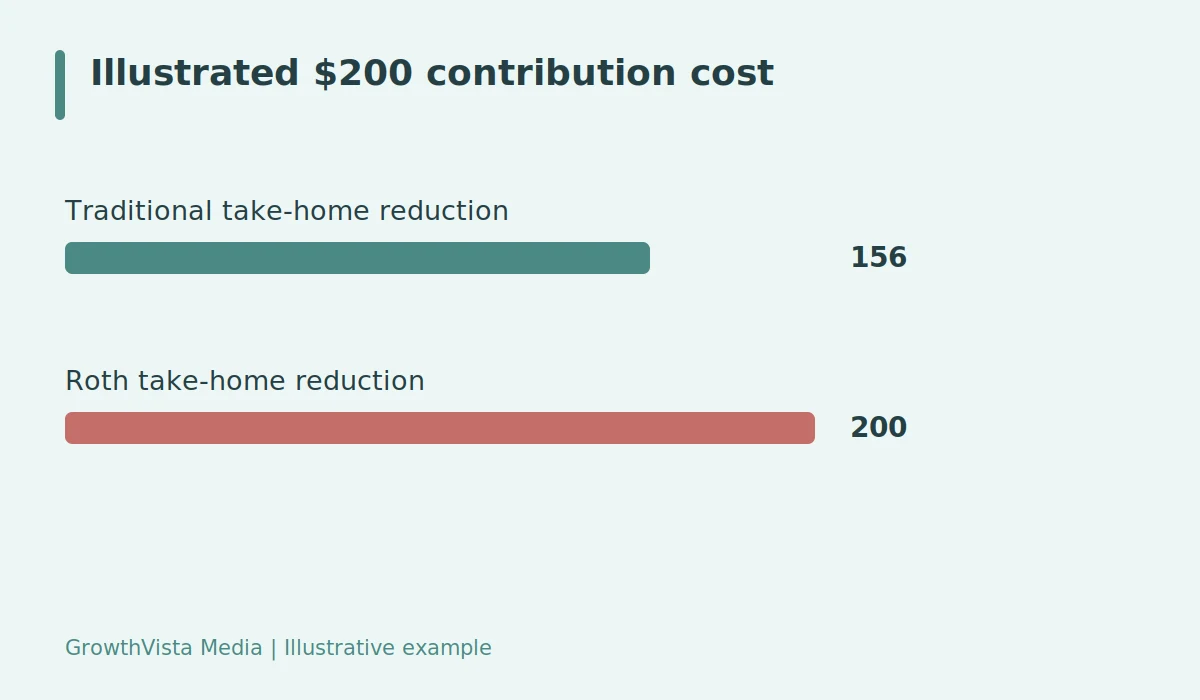
Imagine a $200 employee contribution and a hypothetical 22% marginal federal income-tax rate. A traditional contribution could reduce current federal income tax by about $44, making the take-home reduction about $156 before other taxes and payroll factors. A Roth contribution has no equivalent current federal deduction, so its take-home effect is closer to the full $200. This simplified illustration excludes state tax and does not calculate a lifetime winner.
| Item | Detail |
|---|---|
| Traditional take-home reduction | 156 |
| Roth take-home reduction | 200 |
Use the shared contribution limit correctly
For 2026, the general employee deferral limit is $24,500 before eligible catch-up contributions. Traditional and Roth employee deferrals share that limit; each does not receive a separate allowance. Additional age and plan rules may apply. If you change employers during the year, keep track of employee deferrals across plans rather than assume each payroll system knows what another employer deducted.
Check employer money separately
An employer match follows the plan’s formula and may have a different tax treatment from your own Roth deferrals. Do not infer its treatment from the label on your payroll election. Ask the administrator what the plan permits and whether employer contributions are subject to vesting. If a change to tax treatment is available, understand when income is recognized and how it is reported before electing it.
Make a decision that can tolerate uncertainty
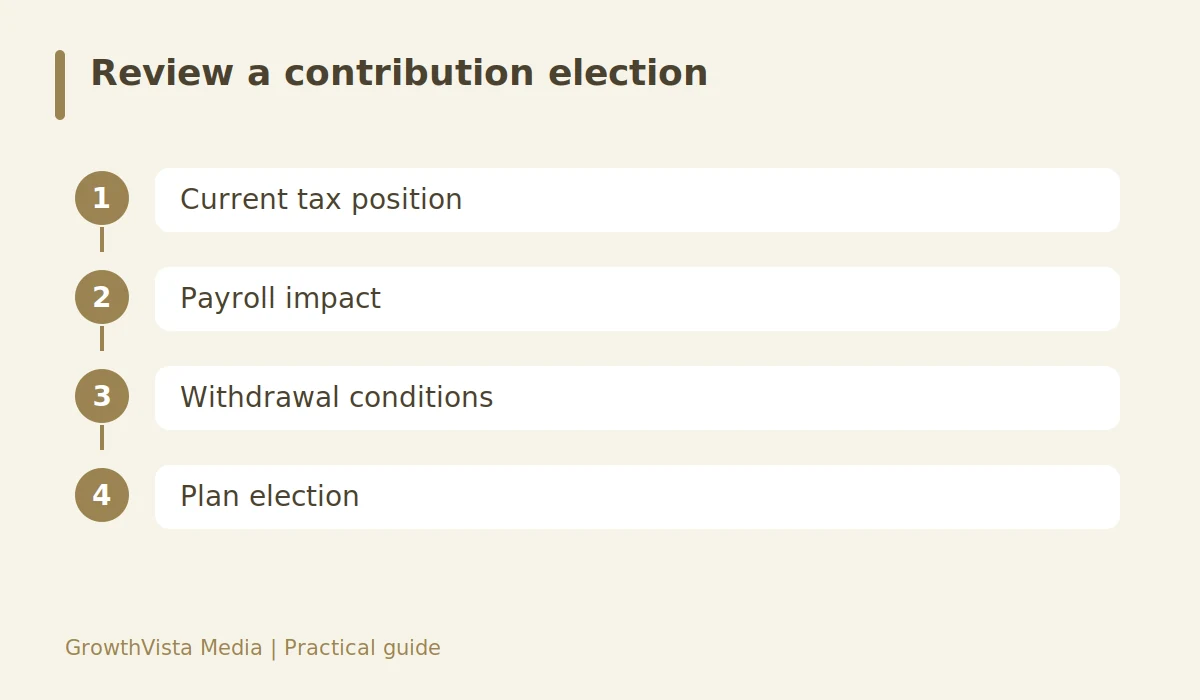
Write down the assumptions behind your preference: current marginal income-tax rate, expected retirement income, cash-flow needs, and time horizon. Those are estimates, not facts about the future. Some workers choose a mix of contribution types when permitted. A mix is not automatically optimal, but it can spread exposure to tax uncertainty. Review the decision after a major earnings change rather than following a rule based only on age.
Questions readers ask
Can I switch without converting old money?
Many plans let you change the treatment of future deductions. That is different from converting an existing balance. Ask which transaction the election performs.
Are all Roth withdrawals tax-free?
No. A qualified distribution must satisfy the applicable holding-period and age, disability, or death conditions. Nonqualified withdrawals need separate tax review.
Should I choose the type with the larger paycheck?
Take-home pay is one factor. Compare the future withdrawal treatment and your savings capacity too; a larger paycheck does not identify the best lifetime outcome.
Your next steps
- Compare equal contributions and equal take-home-cost scenarios.
- Keep investment assumptions identical.
- Confirm shared annual limits and payroll history.
- Ask how the employer match is treated.
- Revisit your election after a meaningful tax or income change.
Related guides: What Is a 401(k)? 7 Basics for New Employees · 401(k) Match: Decode Your Employer Formula in 4 Steps · Brokerage Account vs Retirement Account: 5 Rule Differences
Further reading
Editorial update: October 12, 2026. U.S.-focused general education, not individual investment, tax, or legal advice. Examples are hypothetical, not current product offers.