Cordless vs Corded Vacuums: Choose for Your Floors
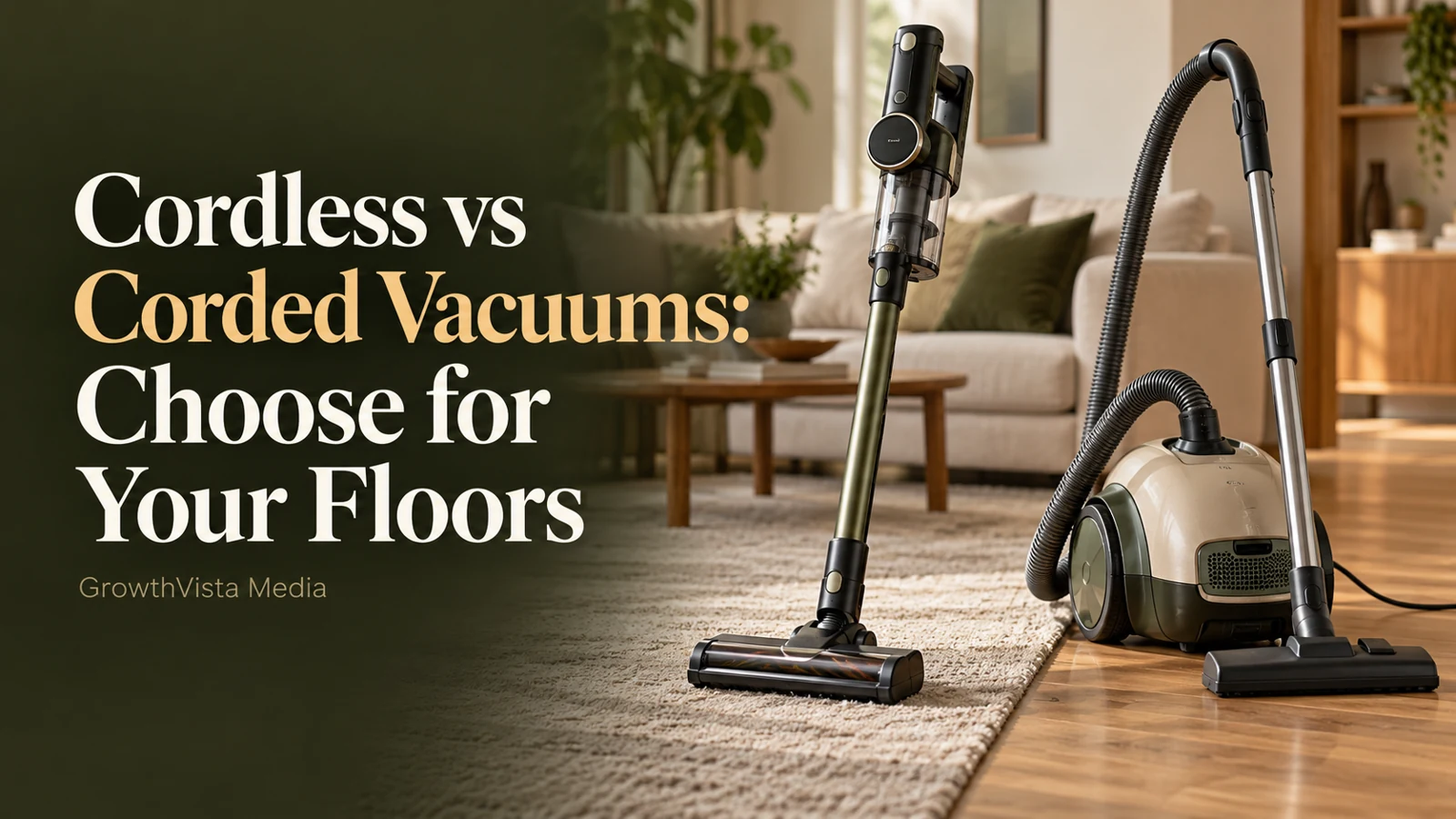
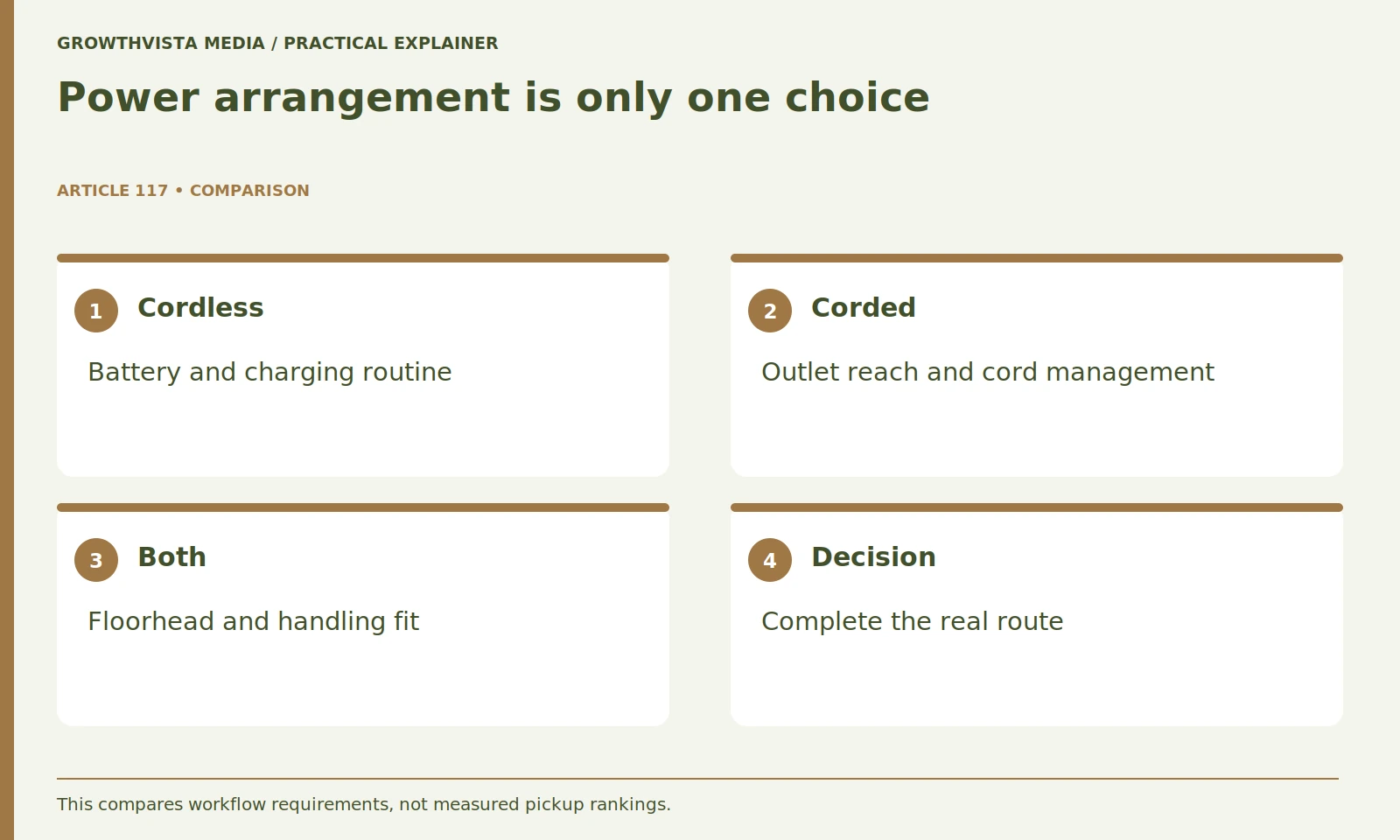
Cordless vs corded vacuums should be compared by whether the complete machine can finish your normal cleaning route with suitable tools and manageable interruptions. Cordless operation shifts attention to usable battery runtime and charging. Corded operation shifts attention to outlet reach and cable handling. Both still need an appropriate floorhead, practical emptying, and maintainable parts.
Choose the route before the power category. A short hard-floor cleanup, stairs, and a long carpet session can create different priorities. This guide offers a buying worksheet and trial method, not measured pickup rankings. Maximum runtime and motor specifications should not be treated as proof of performance on every surface.
Your decision checklist
- Map the actual session and surfaces.
- Confirm suitable included tools.
- Check usable runtime or outlet reach.
- Include handling, maintenance, and ownership cost.
How do you compare cordless vs corded vacuums for your home?
List the normal surfaces, stairs, upholstery, and edges in one cleaning session. Record what currently interrupts the route. Compare which power arrangement solves that constraint while keeping the complete machine and accessories manageable.
For an illustrative apartment, the route might include a small hard-floor living area, a rug, and sofa cushions. A multi-level home may have a longer carpet session and stairs. Those routes create different handling and accessory needs.
Write down what currently interrupts you: moving a plug, carrying a heavy unit, changing a head, emptying the bin, or finding a charged battery. The best power arrangement is the one that addresses a real constraint without creating a more significant one.
Why does the floorhead matter before motor specifications?
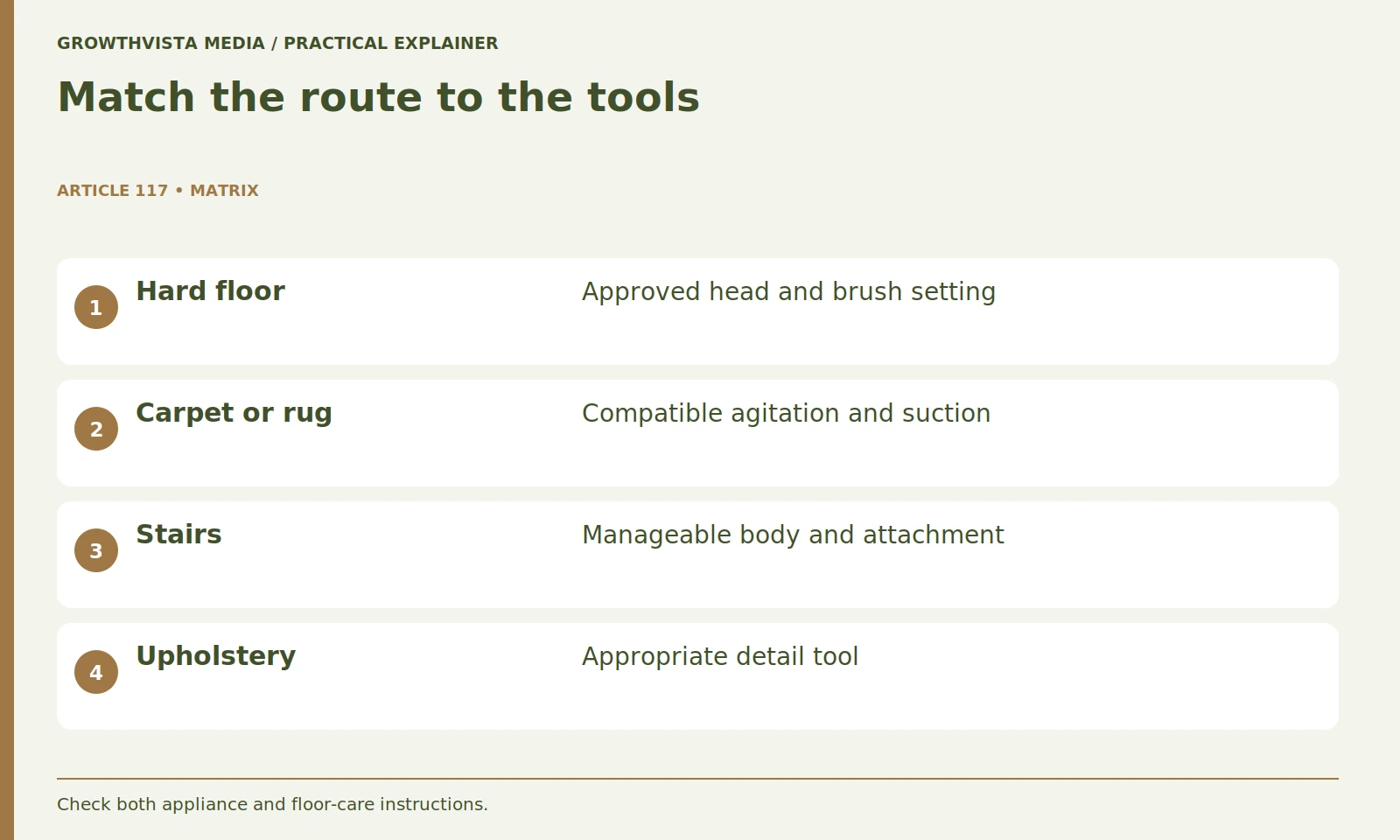
The tool needs to suit the surface and its care requirements. Miele’s guidance distinguishes brush choices for different floors and cleaning tasks. Confirm the included head for the exact variant; an unmatched motor number is not a complete pickup comparison. Miele: matching brushes to floor types
Read both the vacuum instructions and any care restrictions for your floor or rug. Look for permitted brush settings, adjustable suction where relevant, and appropriate tools for delicate surfaces. Do not assume every rotating brush is suitable for every floor finish.
When inspecting a demonstration, focus on the same surface and debris you care about. A large advertised suction number is not a complete pickup test. Handling, head contact, edges, and the route through the room can matter alongside airflow and suction. Do not rank different products by one unmatched specification.
| Requirement | Cordless question | Corded question |
|---|---|---|
| Long session | Usable runtime with required head? | Suitable reach and movement? |
| Stairs | Manageable weight distribution? | Can body and hose be handled? |
| Readiness | Charged and accessible? | Stored near a suitable outlet? |
| Ownership | Approved battery and parts available? | Bags, filters, and head parts available? |
How should you interpret cordless runtime claims?
Read the mode, head, battery, and conditions behind the stated figure. Maximum runtime is not necessarily the usable session with your required tools. During a permitted trial, record whether the real route finishes and include any extra approved battery in the complete cost.
Check charge time, removable-battery options, replacement availability, and the approved charging location. If an extra battery is part of the plan, include its confirmed price and storage needs. Do not assume a compatible-looking third-party battery is approved for the device.
During an allowed trial, clean the intended route and record interruptions. Keep the result tied to that battery, setting, and surface. If you need repeated high-power operation to finish a carpeted area, judge the full session rather than the convenience of the first few minutes.
What should you check about a corded vacuum’s reach?
Map suitable outlets and the actual movement route, including furniture and stairs. Review the stated cord and hose dimensions alongside handling. Follow the electrical instructions instead of assuming an extension cable is an appropriate solution to every reach problem.
Avoid treating extension cables as an automatic solution; follow the product's electrical instructions. Keep cords clear of trip paths and sharp edges. Inspect how the unit moves and whether it needs to be carried between levels.
A canister may let you handle a lighter wand while the body stays on the floor, but assess the entire movement task. An upright or stick has a different weight distribution. Try lifting, turning, and reaching in the way you actually clean rather than judging only the listed total weight.
Which arrangement is easier to keep ready?
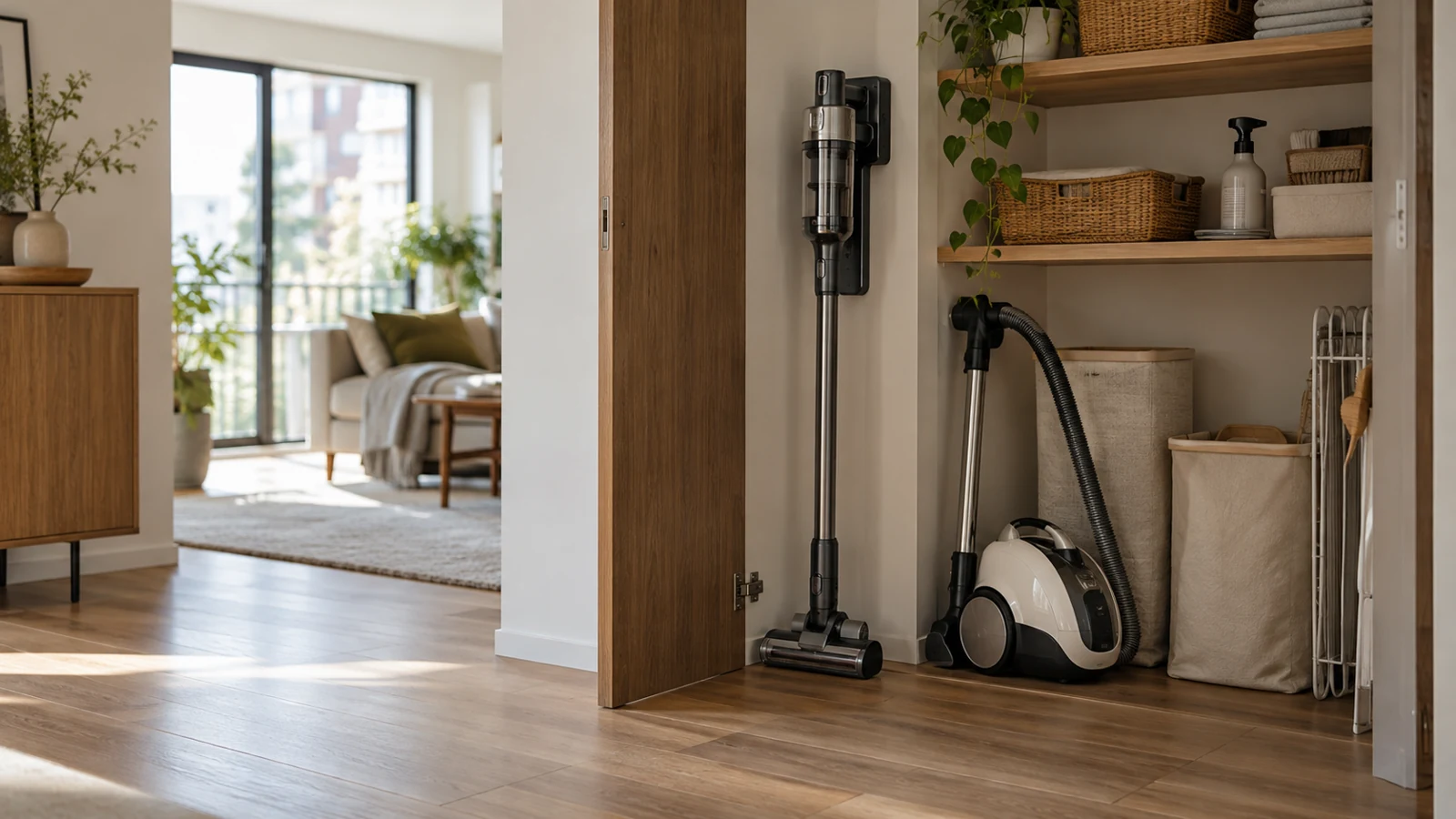
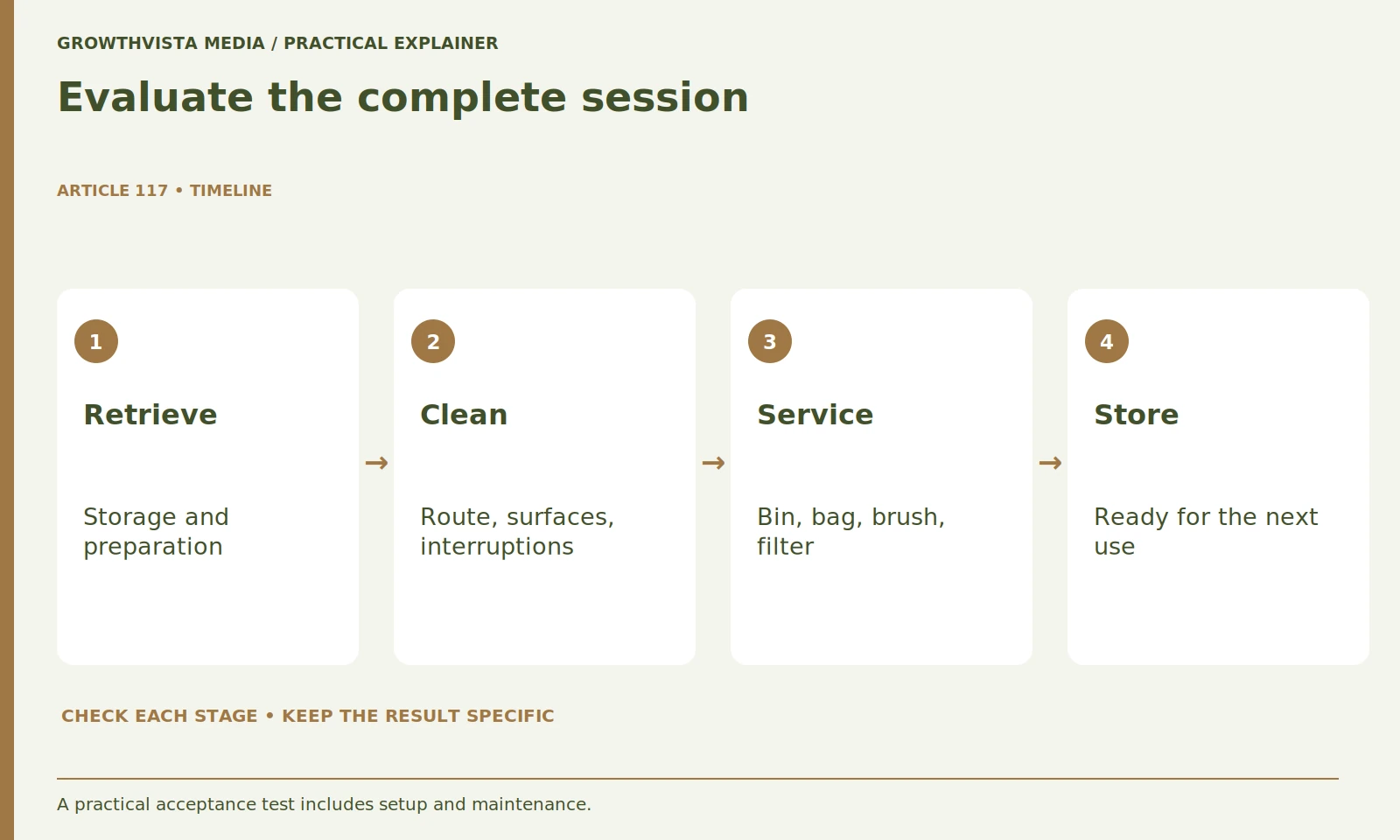
The answer depends on your storage, charging, tools, and routine. Test retrieval, preparation, cleaning, emptying, and putting the machine away. A convenient power category can still be awkward if the dock, bin, hose, or accessory storage does not fit your room.
A device that is easy to retrieve can be useful for frequent short tasks. A larger unit may fit a planned weekly session better. Decide whether you want one vacuum for all work or a primary machine plus a small complementary tool.
Do not infer convenience from the product category alone. A cordless machine with a difficult bin or awkward wall mount can be less convenient than a well-stored corded unit. Check readiness as a sequence: retrieve, fit the head, clean, empty or service, and put away.
What maintenance and spare parts should you compare?
Check bags or bins, approved filter care, floorhead access, batteries where relevant, and compatible replacement parts in your market. Dyson provides model-specific filter guidance, illustrating why a general category label is insufficient for a maintenance plan. Dyson: filter care for cordless vacuums
Look up the actual consumables and compatible parts. Check whether you can obtain bags, filters, batteries, and floorhead components in your market. Record current prices rather than inventing a lifetime cost from a generic review.
Follow the manual for washable parts. Dyson's filter-care instructions for supported cordless models specify washing and thorough drying, illustrating why model-specific directions matter. Do not wash a filter simply because another brand permits it, and never reinstall a damp component when the instructions require it to be dry.
What belongs in the total vacuum budget?
Include the machine, required heads, storage or charging items, and confirmed consumables. Separate necessary accessories from optional extras and keep unknown replacement costs visible. A low purchase price is meaningful only for a setup that can handle the intended route.
Keep unknown replacement intervals separate from confirmed costs. A three-year estimate can include a clearly labeled allowance, but it should not imply that a battery or motor will fail at a particular time. Warranty coverage and replacement availability are different questions.
Avoid buying a premium feature you will not use while omitting a head needed for your main floor. The complete setup matters more than the cheapest body or the most impressive promotional mode.
How do you make the final cordless-or-corded decision?
Use the same cleaning route and practical acceptance criteria for both options. Record interruptions, handling, tool changes, and servicing alongside visible pickup. Choose the arrangement that meets the real tasks; do not declare an entire category superior from one specification.
Use a short acceptance worksheet: floor fit, completed route, manageable handling, acceptable emptying, suitable storage, and available maintenance parts. Note which findings come from the manual and which come from your own trial.
Map the actual session and surfaces. Confirm suitable included tools. Check usable runtime or outlet reach. Include handling, maintenance, and ownership cost. Keep verified findings separate from expectations, and revisit the decision after a material change.
Frequently asked questions
Are cordless vacuums always less powerful?
This guide does not rank power categories by untested performance. Compare the exact machine, head, surface, and complete cleaning route.
Does maximum runtime apply with every attachment?
Do not assume so. Read the claimed mode, head, battery, and conditions, then assess your intended session.
Can an extension cable solve any cord-reach problem?
Follow the appliance’s electrical instructions. Do not treat an extension cable as a universal approved solution.
Does a bagless vacuum require no consumables?
Check the exact model. Filters, brush parts, and batteries where relevant may still need care or replacement.
What should a cleaning trial include?
The real surfaces, stairs, tools, interruptions, handling, emptying, and return-to-storage routine, described as personal observations.
Can one vacuum handle every floor?
Check both the included tools and your floor-care instructions. A suitable body does not make every head appropriate for every finish.
Sources and further reading
Official documentation supports the technical guidance. Examples and worksheets are editorial methods, not hands-on product benchmarks. Reviewed October 2026.
Related guides
For an automated cleaning approach, see our robot-vacuum comparison.