Checking vs Savings Accounts: 5 Everyday Differences

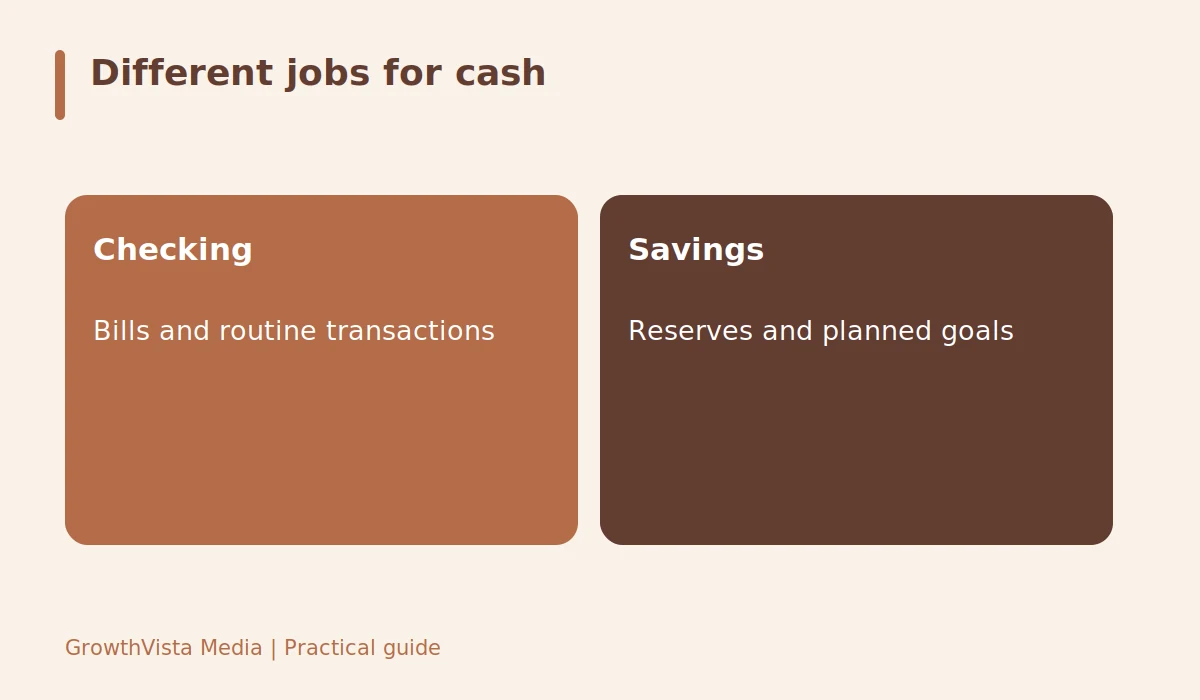
Checking vs savings accounts is mainly a question of purpose. Checking usually handles money moving in and out for ordinary bills. Savings usually holds money set aside for a later need. Both can have fees, access conditions, and different interest terms. A useful setup gives each account a clear job and keeps payment money accessible when bills are due.
Use checking for the payment calendar
A checking account commonly supports debit transactions, bill payments, transfers, and sometimes checks. Compare the actual payment tools you need. A household with cash deposits has different requirements from one paid entirely by direct deposit. Review ATM access, overdraft settings, and what happens if an automatic payment arrives before your income clears.

Give savings a defined purpose
Savings can separate an emergency reserve or a near-term goal from everyday spending. Some accounts offer a variable interest rate; some have balance or access conditions. Label the goal in your records, but remember that an account nickname does not change the bank’s contract. Check how quickly you can move the money back to checking when it is needed.
Two accounts with two jobs
Jordan expects $1,700 of bills before the next payday and keeps that payment money in checking. A separate savings account holds a household repair reserve. Jordan checks transfer timing before moving extra cash. The amounts are a fictional budgeting example, not a recommended account balance. The useful principle is to match account access to when the money must be spent.
Checking vs savings accounts after fees
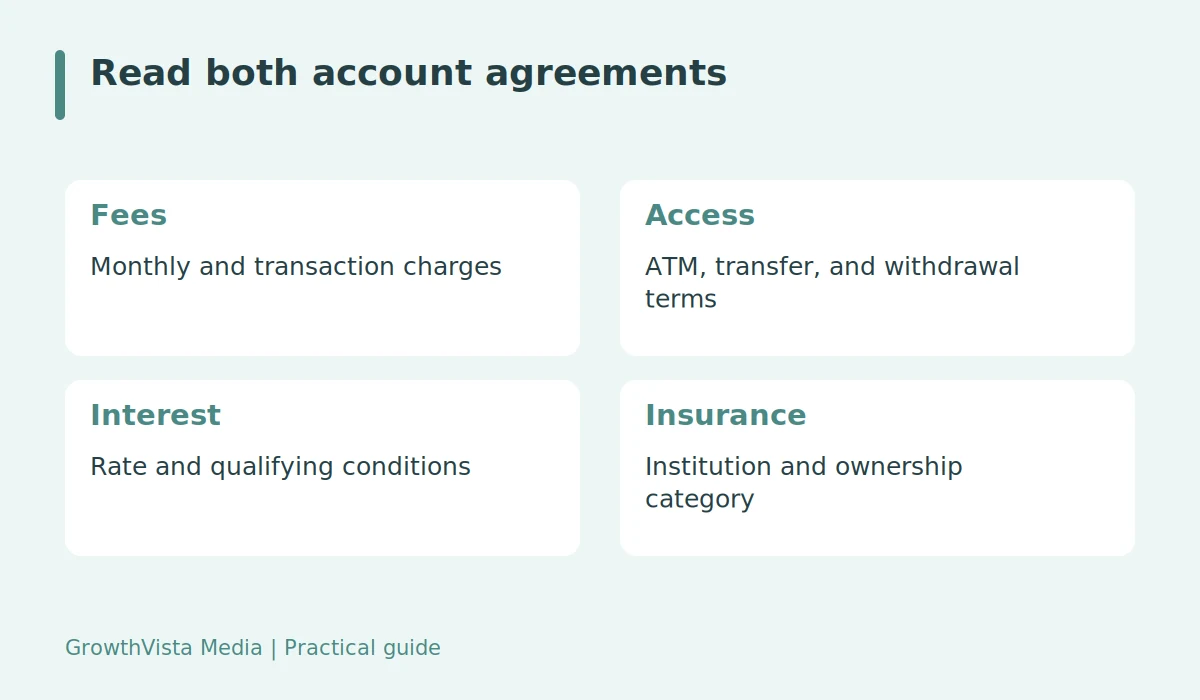
A higher interest rate can be offset by monthly fees or minimum-balance requirements. Read how a waiver is earned and whether you can meet it without tying up money unnecessarily. Calculate likely charges over a full year. If you maintain two accounts, check both sets of terms; separating money is helpful only if the arrangement remains affordable and usable.
Verify the institution and account coverage
At an FDIC-insured bank, deposit insurance is generally $250,000 per depositor, per insured bank, per ownership category. That is not a separate allowance for each account. Credit unions use a different insurance system. A financial app’s branding alone does not establish where deposits are held or what protection applies. Verify the actual institution and account arrangement.
Test the transfer route before an emergency
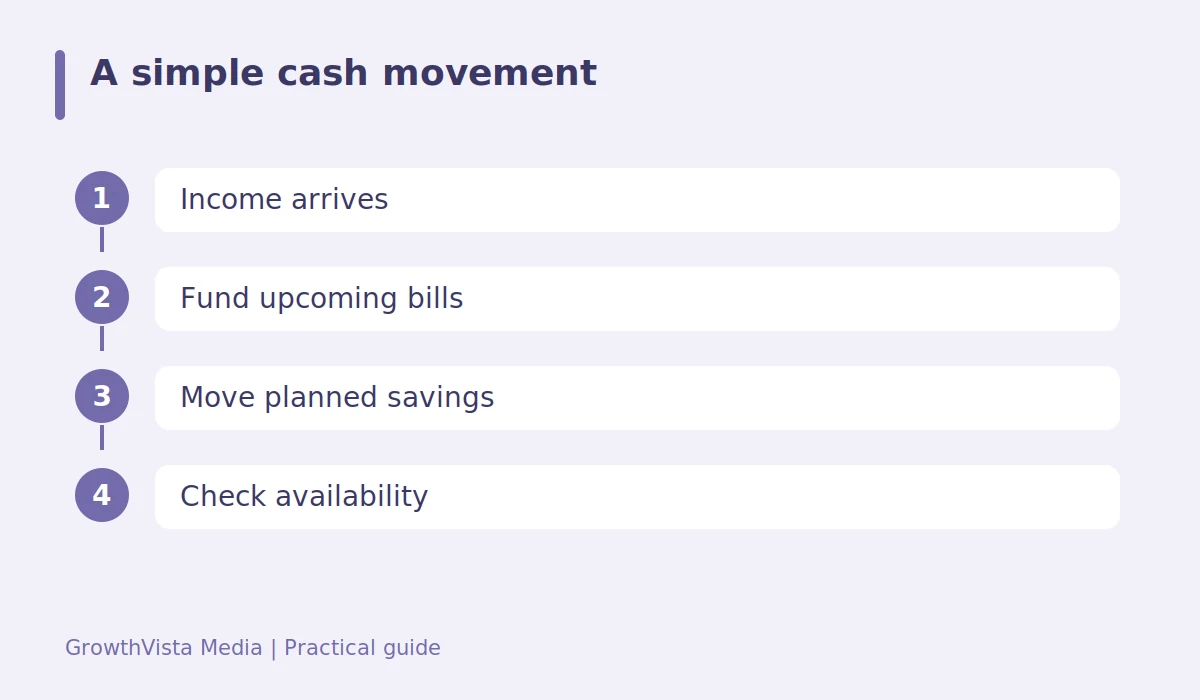
Move a small amount and observe availability, transfer limits, and any holds. Record the steps for an urgent withdrawal and make sure login recovery works. Keep enough in checking for upcoming bills so savings transfers are deliberate. If income is irregular, map the expected payment dates rather than rely on an average monthly balance.
Questions readers ask
Can a checking account earn interest?
Yes, some do. Compare the actual account terms rather than assuming interest is available only on savings or that an interest account has no conditions.
Do two accounts double deposit insurance?
Not automatically. Coverage depends on depositor, insured bank, ownership category, and account arrangement, not simply the number of account names.
Should my emergency fund be in checking?
Choose safe, accessible storage suited to your situation. Compare withdrawal speed, costs, and how easily everyday spending could consume the reserve.
Your next steps
- Map upcoming payments and income dates.
- Check payment tools and ATM access.
- Compare annual fees after realistic waivers.
- Verify the institution and deposit coverage.
- Test a small transfer between accounts.
Related guides: High-Yield Savings Accounts: 6 Checks Beyond APY · Online Banks vs Traditional Banks: 6 Practical Trade-offs · Emergency Fund: Set a Target That Fits Your Risks
Further reading
Editorial update: October 12, 2026. U.S.-focused general education, not individual investment, tax, or legal advice. Examples are hypothetical, not current product offers.