Emergency Fund: Set a Target That Fits Your Risks

An emergency fund is accessible money reserved for unexpected essential costs or an income interruption. A single target does not fit every household. Start with the risks most likely to disrupt your bills, the support available, and what you can save consistently. Even a modest reserve can reduce the need to scramble when a necessary expense arrives.
Define what counts as an emergency
Separate an unexpected essential event from a predictable annual bill or optional purchase. A repair needed to get to work is different from a planned holiday. Write a short rule for using the fund so ordinary spending does not slowly absorb it. Keep predictable nonmonthly expenses in a separate planning category where possible.

Estimate essential monthly spending
List housing, food, basic transport, utilities, insurance, and minimum required payments. Focus on what would continue during a temporary income gap. Review recent bills rather than using a guessed total. If income is irregular or a household relies on one earner, that context can affect the cushion you prefer. A target based on expenses is different from one based on gross salary.
Build the emergency fund in stages
Choose an initial milestone linked to a plausible disruption, then review a larger target as capacity grows. A small automatic transfer can support the routine if it does not create a payment-account shortage. One-time income can also help. Keep progress visible, but avoid setting a number so large that it prevents you from starting at all.
Choose access before chasing yield
The storage needs to be safe, accessible, and suitable for the size of the reserve. Compare account fees, withdrawal speed, and deposit protection. Volatile investments can be difficult to rely on during an urgent expense. Test transfers while the situation is calm. Keep enough payment access available if a bank hold or lost phone prevents immediate use.
Create a refill plan after using it
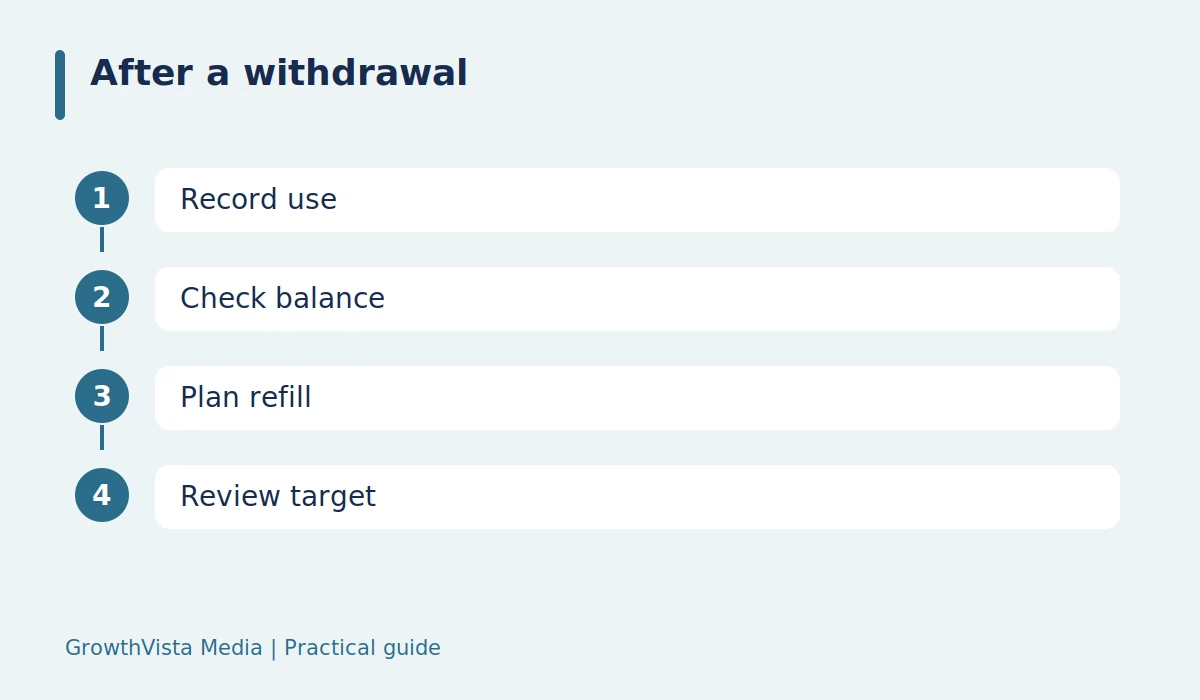
A reserve is designed to be used for qualifying events. After a withdrawal, record the remaining balance and a realistic rebuilding schedule. Review whether the event revealed a new recurring cost, insurance gap, or change in essential spending. Revisit the target after a job change, move, family change, or major debt repayment rather than treating the first estimate as permanent.
Illustrative target milestones
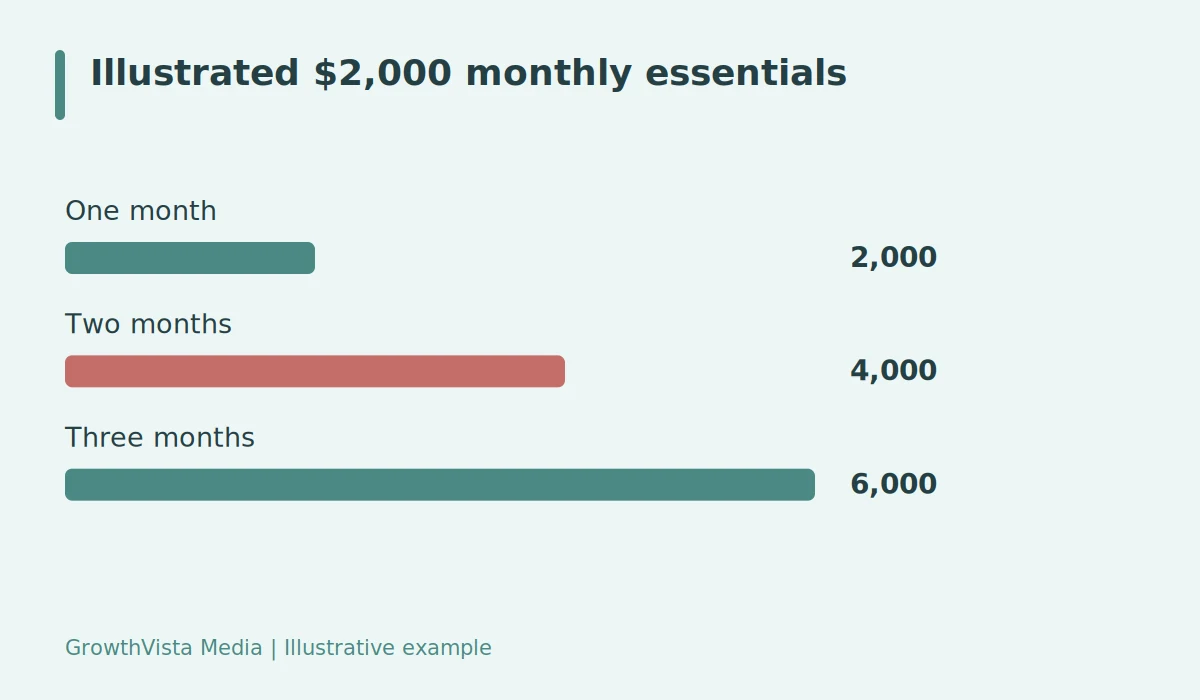
If fictional essential spending is $2,000 a month, one month is $2,000 and three months is $6,000. Those calculations show how an expense-based target works; they are not universal recommendations. The household might first aim for a smaller repair reserve while reviewing income stability and insurance. It should also decide how quickly the money can be withdrawn and what counts as an appropriate use.
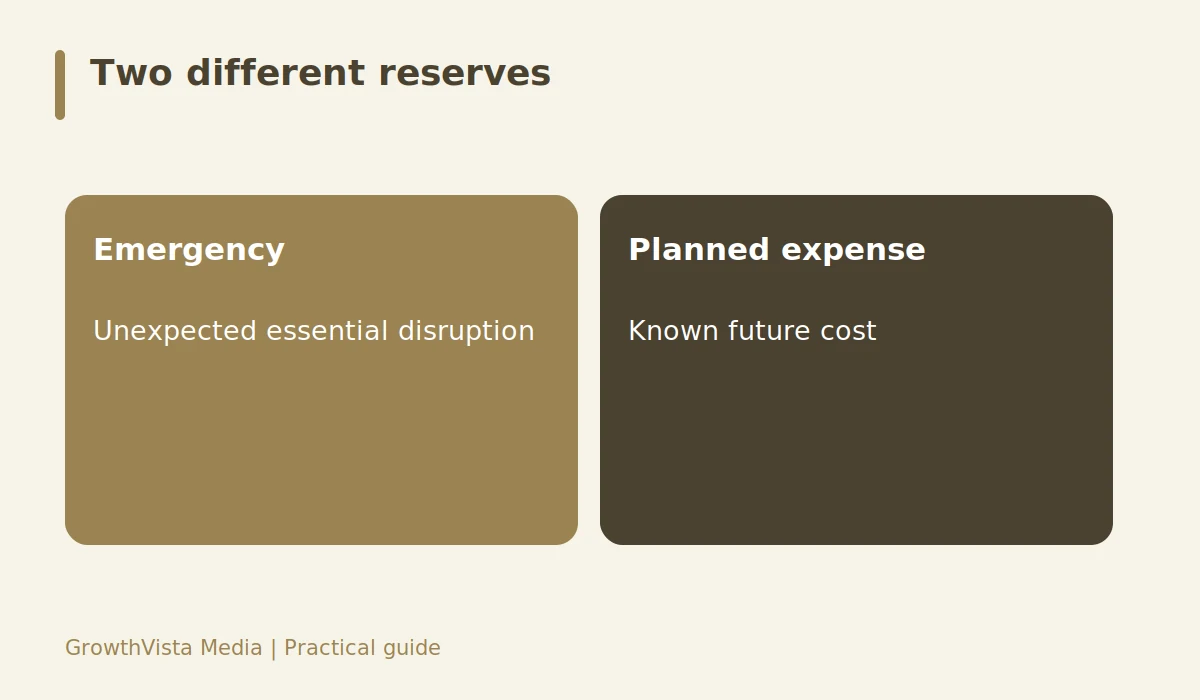
| Item | Detail |
|---|---|
| Emergency | Unexpected essential disruption |
| Planned expense | Known future cost |
Questions readers ask
Must I save the whole target before starting?
No. A staged plan can begin with a manageable amount. The first milestone should be useful and achievable rather than a reason to postpone saving.
Can planned annual bills use the fund?
They are usually better treated as predictable expenses with their own set-aside. Keeping the distinction clear helps preserve money for unexpected essential events.
What if I need to use it?
Use it under your own emergency rule, then make a refill plan. Review the reason for the expense and update the target if circumstances changed.
Your next steps
- List likely household disruptions.
- Calculate essential spending from actual bills.
- Choose an achievable first milestone.
- Verify safe storage and withdrawal access.
- Set a review and refill routine.
Related guides: High-Yield Savings Accounts: 6 Checks Beyond APY · Monthly Budget: Build a Plan Around Real Payment Dates · Debt Repayment Plan: Compare Avalanche and Snowball
Further reading
Editorial update: October 12, 2026. U.S.-focused general education, not individual investment, tax, or legal advice. Examples are hypothetical, not current product offers.