ETFs vs Mutual Funds: Trading, Costs, and Tax Differences

ETFs vs mutual funds compares two ways to hold a pooled investment portfolio. Both can follow an index or use an active strategy. The important differences include how you buy shares, when prices are set, and what costs apply. Start with the investment objective, then compare the structure; a fund’s trading format does not tell you what it owns.
Start with the underlying portfolio
Compare funds that seek similar exposure before judging the structure. A broad-market stock ETF and a narrowly focused mutual fund are not a clean comparison. Read objectives, holdings, risks, and management approach. Either structure can be diversified or concentrated. Do not infer low costs or broad coverage simply from the letters ETF.

ETFs vs mutual funds during a trading day
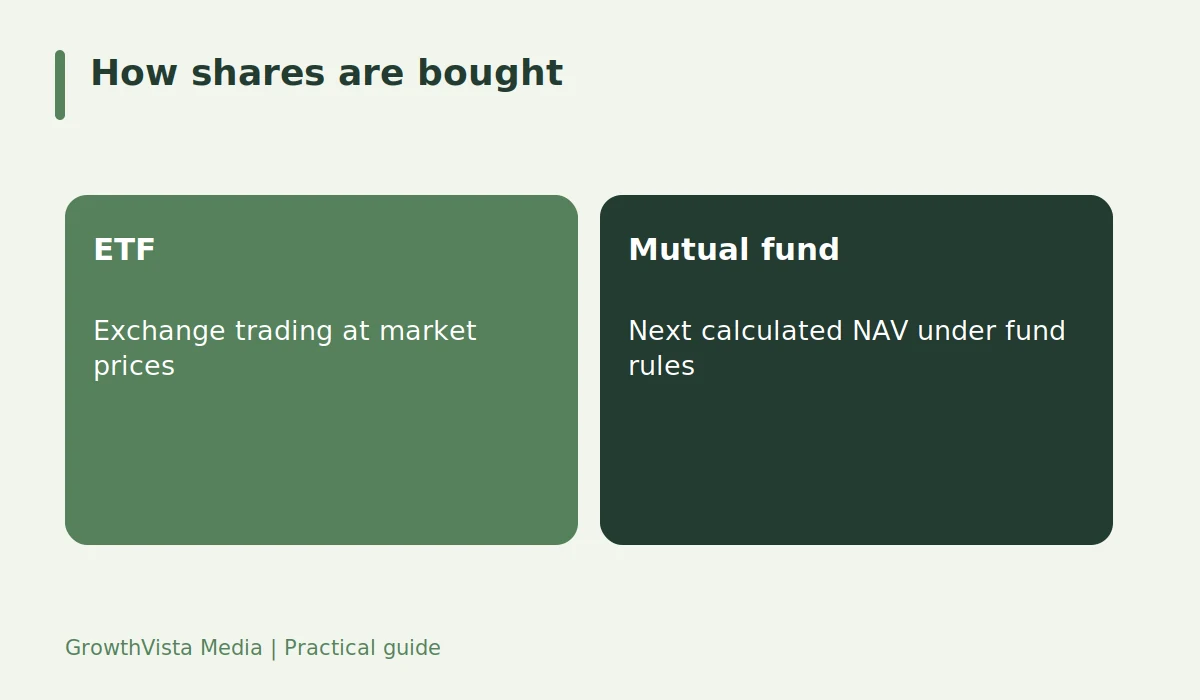
ETF shares generally trade on an exchange at market prices during trading hours. Mutual fund purchases and redemptions generally occur at the next calculated net asset value under the fund’s rules. For ETFs, the market price can differ from asset value and a bid-ask spread can affect cost. Understand order types before treating a quoted price as an assured execution.
Compare like with like
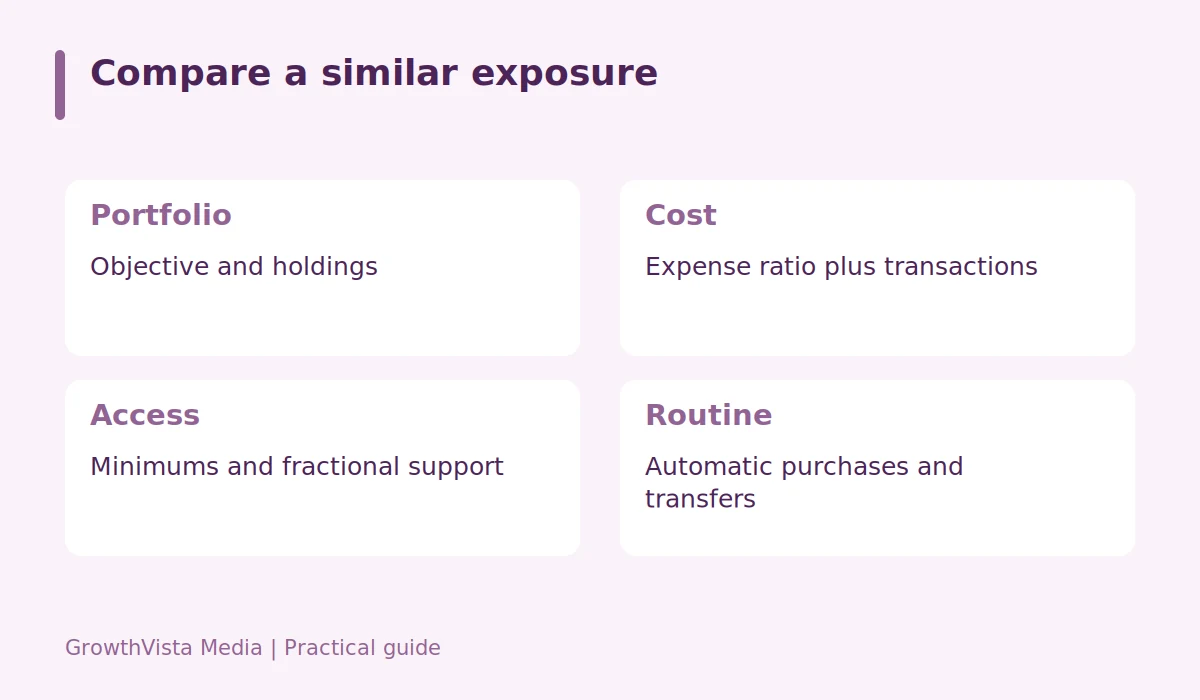
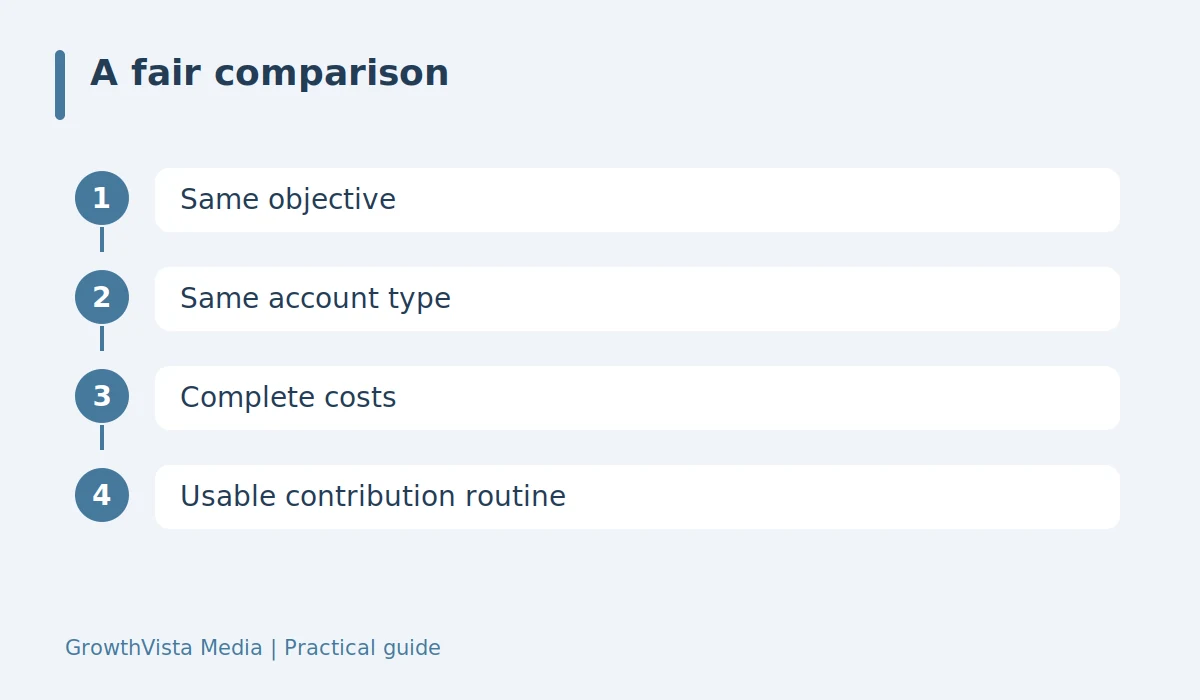
A useful shortlist might compare two funds seeking similar broad-market exposure. The reader records expense ratios, trading costs, minimums, automatic-purchase availability, and the account’s tax rules in separate rows. This comparison method does not identify a universal winner. If one candidate owns different assets or uses a different strategy, that investment difference should be examined before attributing results to ETF or mutual fund structure.
| Item | Detail |
|---|---|
| Portfolio | Objective and holdings |
| Cost | Expense ratio plus transactions |
| Access | Minimums and fractional support |
| Routine | Automatic purchases and transfers |
Add all relevant costs
Both can charge ongoing expenses. Mutual funds may have sales charges or account conditions; ETFs can involve spreads, commissions, and other trading costs. Commission-free does not mean expense-free. Check the prospectus and account fee schedule. Compare costs for your actual purchase frequency and amount rather than only one headline expense ratio.
Check minimums and automatic contributions
Some mutual funds have a minimum initial purchase or share-class requirements. Fractional ETF shares and recurring purchases depend on the brokerage. If you plan regular small contributions, test whether the provider supports the routine without leaving inconvenient idle cash. Also check what happens if you later move the account; fractional holdings may have transfer limitations.
Account type affects the tax comparison
Taxable investors should consider fund distributions and sale-related gains under their own circumstances. Some ETFs have historically had tax advantages in taxable accounts, but outcomes vary. In a tax-advantaged account, the structure comparison can have a different tax context. Avoid choosing a fund on an assumed tax advantage without considering the account in which it will be held.
Questions readers ask
Are all ETFs index funds?
No. ETFs can use active or index strategies. Mutual funds can also do either. Read the objective and management approach.
Does commission-free mean free?
No. Ongoing fund expenses and, for ETFs, spreads or other costs can still apply. Compare the complete cost picture.
Can I automatically buy either?
Provider support differs. Check recurring purchases, minimums, fractional shares, and how contributions are invested in your actual account.
Your next steps
- Compare funds with similar objectives.
- Read holdings and risk disclosures.
- Add fund and account costs.
- Check purchase timing and order mechanics.
- Test recurring contribution support.
Related guides: Investing for Beginners: 7 Decisions Before Buying · Index Funds: What They Track and What to Check · Diversification: Look Beyond the Number of Funds
Further reading
Editorial update: October 12, 2026. U.S.-focused general education, not individual investment, tax, or legal advice. Examples are hypothetical, not current product offers.