Index Funds: What They Track and What to Check

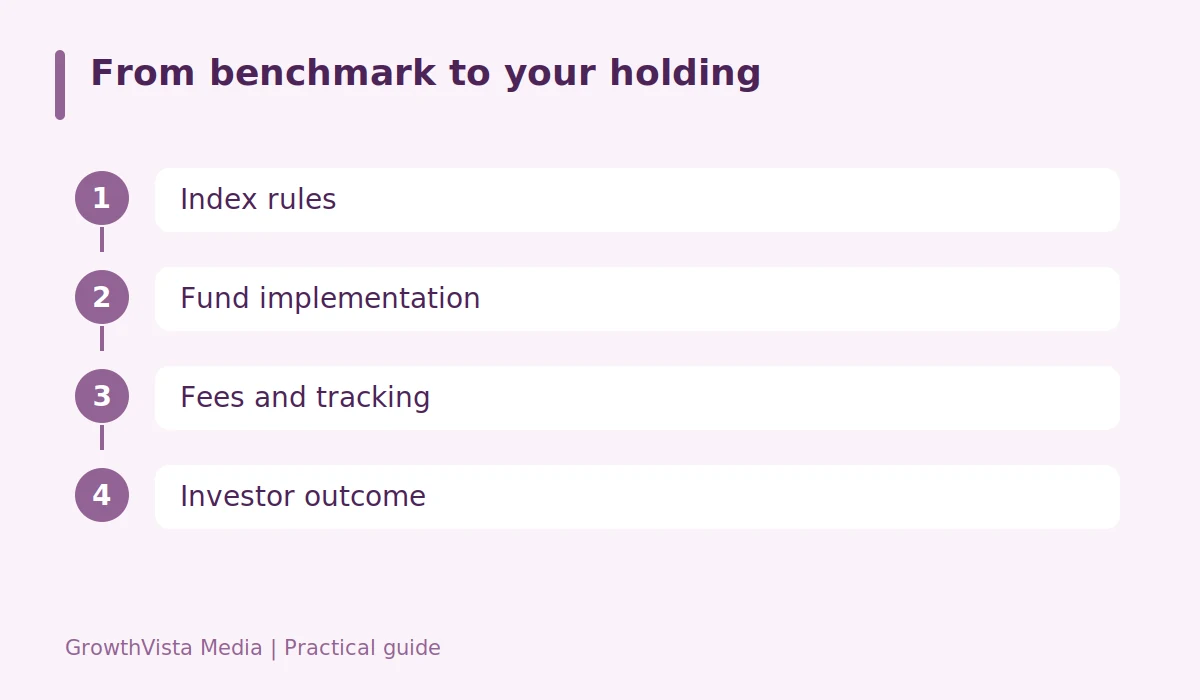
Index funds aim to follow a selected market benchmark rather than choose investments solely through an active manager’s judgment. They can be mutual funds or ETFs. The benchmark is the starting point: an index of a few industries and an index of a broad market create different exposure. Check what is being tracked before calling a fund diversified.
Read the benchmark, not just the name
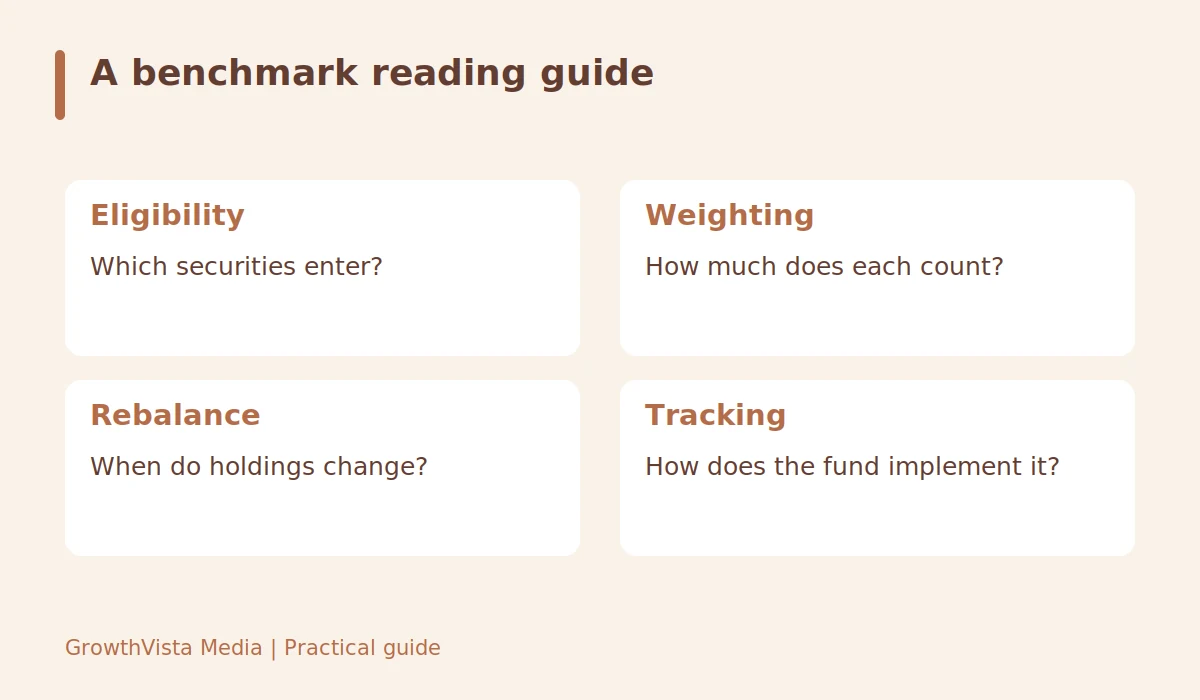
Find which securities qualify for the index and how they are weighted. Market-capitalization weighting can give larger companies a bigger role. Other indexes use different selection or weighting rules. The methodology helps explain why holdings change. A familiar market name is not enough to show how concentrated the portfolio may be in a company, sector, or region.

Index funds still have implementation costs
Expenses reduce investor returns, and an index is not itself a purchasable account. Funds may use different methods to track it. Trading, cash holdings, and portfolio implementation can create differences between fund performance and benchmark results. Compare the expense ratio alongside the published tracking information instead of treating the smallest displayed fee as the only consideration.
Diversification depends on the exposure
A broad index may spread holdings across many companies, while a sector or thematic index can remain concentrated. Several index funds can overlap heavily. Review major holdings and overall allocation before adding another product. More funds do not automatically mean more diversification; sometimes they add complexity while increasing exposure to the same large companies.
Match the fund to the goal and account
A stock index fund can experience substantial declines and may not fit money needed soon. A bond index fund has different risks, including interest-rate and credit exposure. Account tax rules also matter. Choose the exposure based on time horizon and risk capacity, then compare fund structures and provider access. Passive management does not eliminate the need for an investment plan.
Keep the review focused
After buying, review changes to the objective, expenses, major holdings, and your own goal. Avoid treating each short-term price move as a reason to switch. If the plan needs rebalancing, consider transaction and tax consequences. Keep documentation so a future review can compare the fund with the reason you selected it.
An overlap check
Suppose a reader holds a broad stock fund and considers adding a large-company index fund. Both may own many of the same leading companies. The second fund could increase that exposure instead of adding a different source of risk. The reader compares holdings and intended allocation first. This hypothetical example shows why counting funds is less useful than looking through them to the underlying investments.
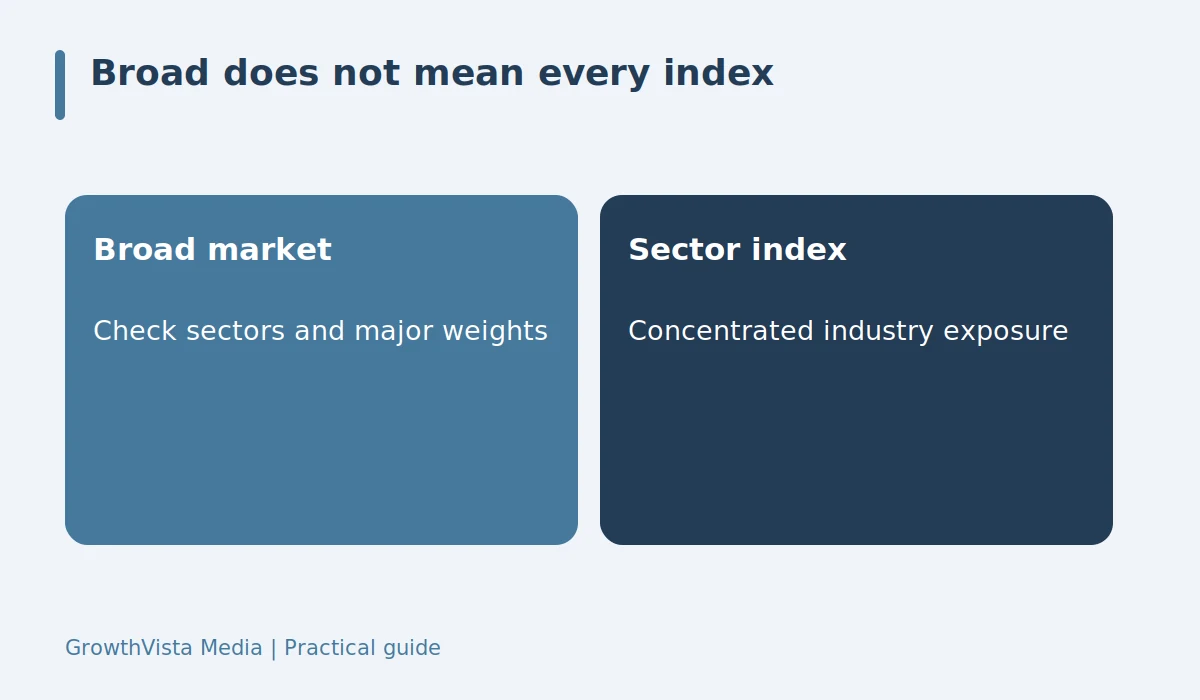
| Item | Detail |
|---|---|
| Broad market | Check sectors and major weights |
| Sector index | Concentrated industry exposure |
Questions readers ask
Are index funds guaranteed to match an index exactly?
No. Expenses and implementation can cause differences. Read how the fund tracks its benchmark and compare published results on the same basis.
Can an index fund lose money?
Yes. The assets it tracks can decline. Passive selection does not protect the principal or guarantee a positive return.
Is every index fund suitable for a beginner?
No. Some indexes are narrow or complex. Understand the benchmark, risks, costs, and account fit before deciding.
Your next steps
- Identify the benchmark and selection rules.
- Check weighting and major holdings.
- Compare expenses and tracking information.
- Review overlap with existing investments.
- Match exposure to the goal and horizon.
Related guides: Investing for Beginners: 7 Decisions Before Buying · ETFs vs Mutual Funds: Trading, Costs, and Tax Differences · Diversification: Look Beyond the Number of Funds
Further reading
Editorial update: October 12, 2026. U.S.-focused general education, not individual investment, tax, or legal advice. Examples are hypothetical, not current product offers.