Diversification: Look Beyond the Number of Funds

Diversification spreads investment exposure across different sources of risk. It is not simply owning many account balances or fund names. A portfolio can have several products and still depend heavily on the same companies. Review the underlying holdings and the role of each asset. Spreading exposure may reduce some risks, but it does not prevent every loss.
Identify what could affect several holdings together
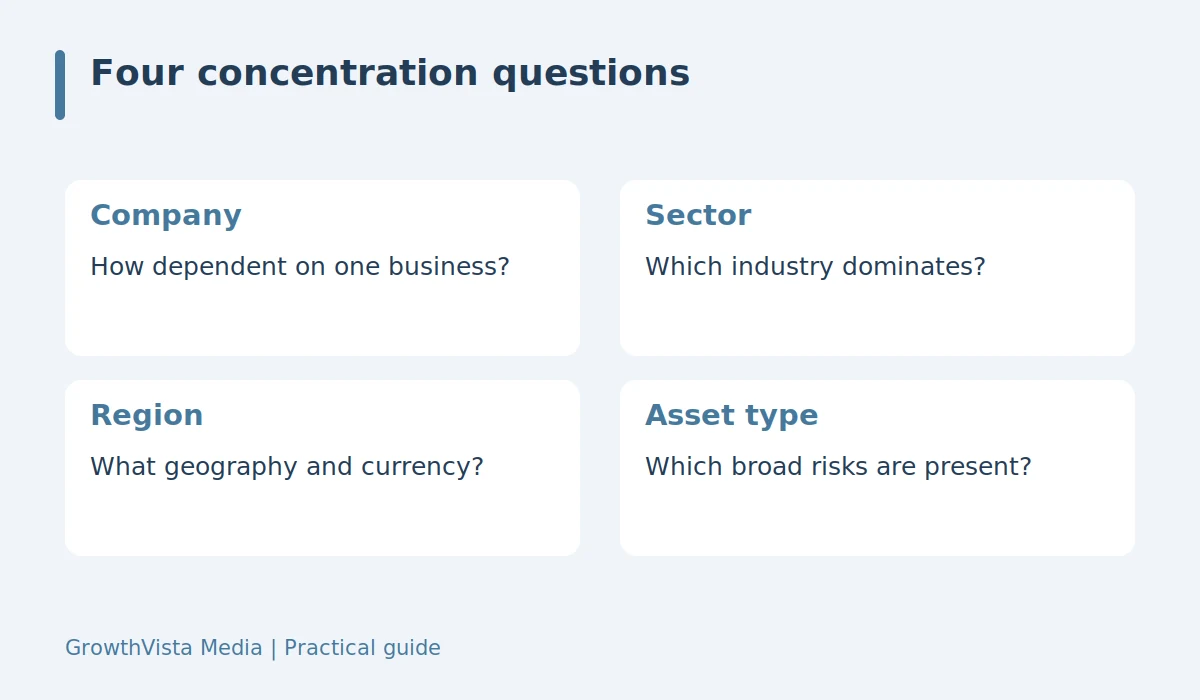
Companies in one industry may respond similarly to the same event. Stocks in one region can share economic or currency influences. Different asset types may also move together at times. Write down the common drivers of your investments rather than assume different names create different behavior. That is the foundation for a meaningful overlap review.

Diversification within and across asset types
Within stock exposure, review company, industry, and geographic concentration. Across asset types, consider how stock, bond, and cash roles fit the goal. There is no universal mix appropriate for everyone. Time horizon, capacity for loss, and near-term needs matter. A portfolio should be understandable enough that you know what each component is intended to do.
Look through pooled investments
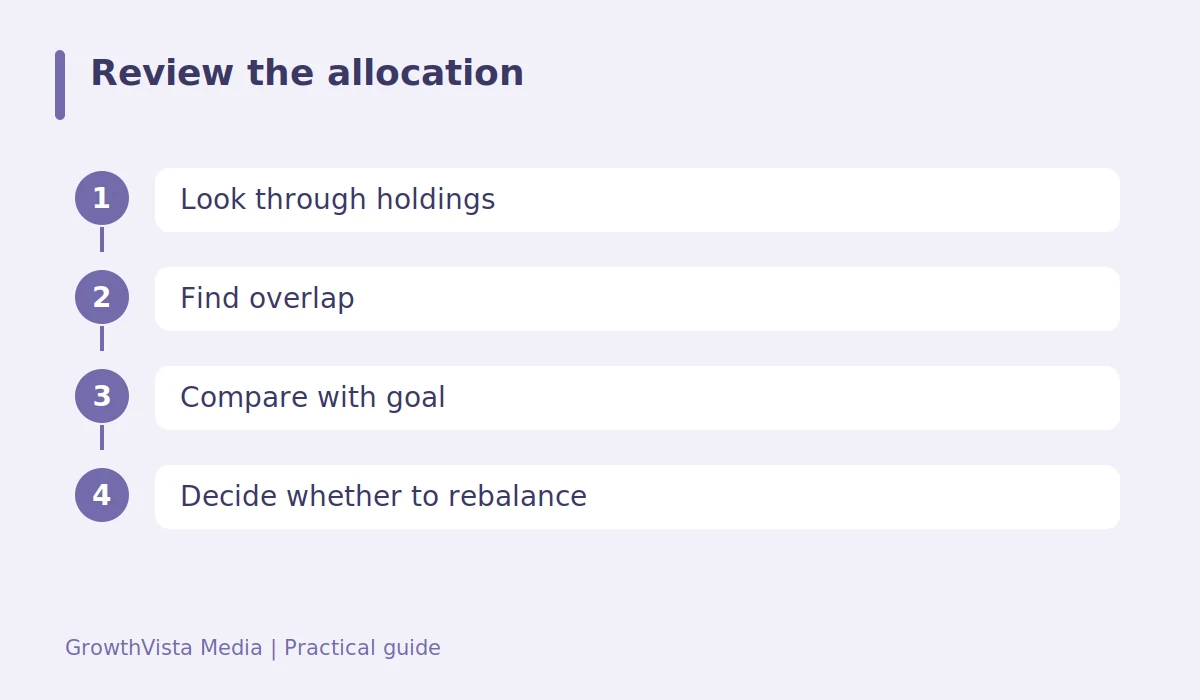
A mutual fund or ETF may hold many securities, but a narrow fund can still concentrate exposure. Several funds can duplicate the same top holdings. Read the portfolio information and compare it with existing assets. Employer stock deserves separate attention when your job income already depends on the same business. Counting funds without this review can disguise concentration.
Rebalancing is a separate decision
Market movements can change the proportions of a portfolio. Rebalancing restores a chosen allocation, but can create transaction costs or taxes. Additional contributions may sometimes adjust proportions without selling. Decide what would trigger a review before reacting to daily price changes. The chosen allocation itself should be reviewed when the goal or household circumstances change.
Know the limit of the protection
Diversification cannot guarantee profit or remove broad market risk. During some periods, many assets can decline together. It also does not fix excessive fees or an unsuitable time horizon. Keep accessible money for near-term expenses where appropriate, so a market decline does not automatically force an investment sale. Think of diversification as one part of risk management, not a complete shield.
Two portfolios can contain the same number of funds
Portfolio A has three funds focused on similar large technology companies. Portfolio B has three funds with different underlying exposures. The fund count is identical, but the risk drivers differ. Neither is automatically right for every investor. A useful comparison identifies actual holdings, concentration, costs, and the purpose of the money rather than choosing the portfolio with more product names.
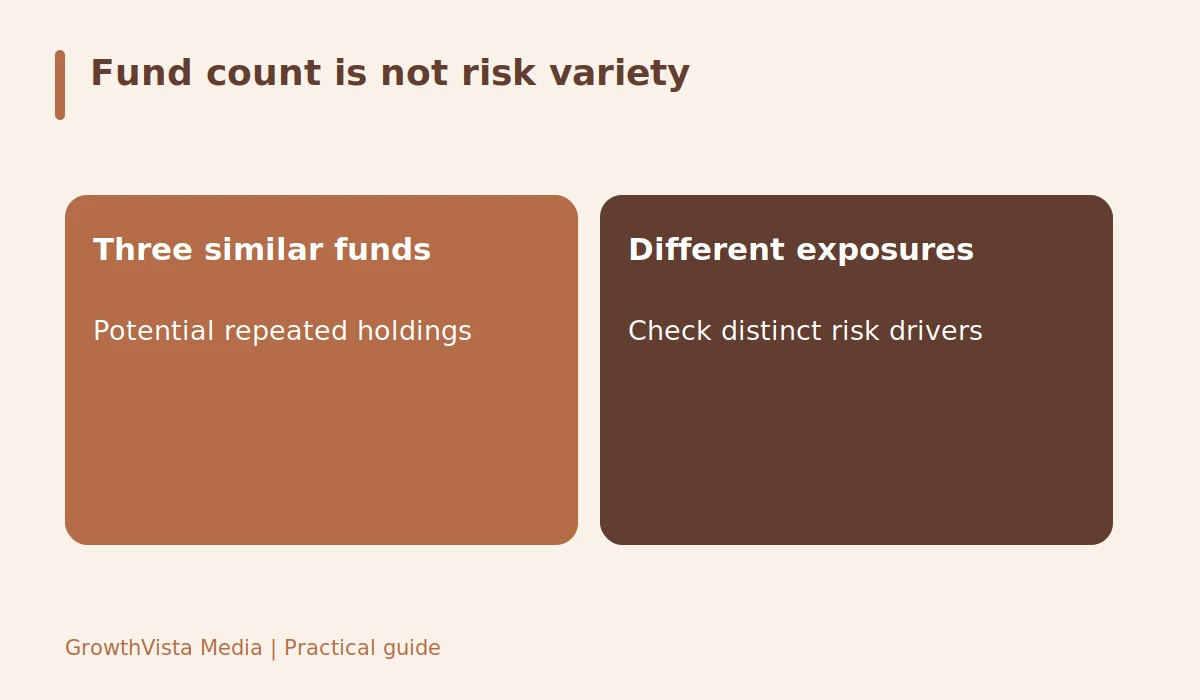
| Item | Detail |
|---|---|
| Three similar funds | Potential repeated holdings |
| Different exposures | Check distinct risk drivers |
Questions readers ask
Does diversification guarantee I will not lose money?
No. Broad market losses can still affect diversified portfolios. It reduces some concentration risks rather than eliminating investment risk.
How many funds do I need?
There is no universal number. The holdings and roles matter more than the count. One broad fund may contain more variety than several narrow funds.
Should I rebalance every time prices move?
A defined review policy is more useful than reacting to every fluctuation. Consider costs, taxes, and whether your goal or risk capacity changed.
Your next steps
- List the underlying holdings and major weights.
- Identify common company, sector, and regional exposure.
- Review employer-stock concentration.
- Compare the portfolio with the time horizon.
- Write a rebalancing review policy.
Related guides: Investing for Beginners: 7 Decisions Before Buying · ETFs vs Mutual Funds: Trading, Costs, and Tax Differences · Index Funds: What They Track and What to Check
Further reading
Editorial update: October 12, 2026. U.S.-focused general education, not individual investment, tax, or legal advice. Examples are hypothetical, not current product offers.