401(k) Match: Decode Your Employer Formula in 4 Steps

A 401(k) match is an employer contribution linked to your own eligible retirement saving. The headline percentage rarely tells the whole story. A match can depend on your contribution rate, eligible pay, employment dates, and calculation schedule. Read the actual formula before assuming a coworker’s match or a benefit brochure describes what you will receive.
Turn the formula into dollars
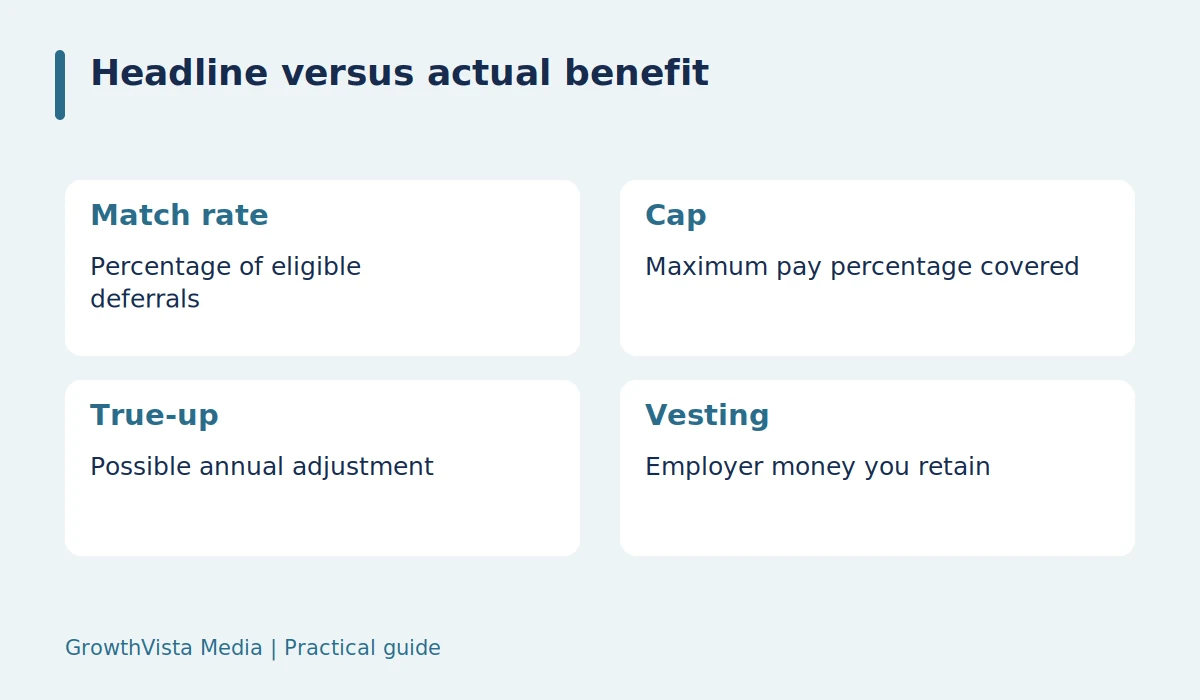
Separate the matching percentage from the pay percentage it covers. A promise to match 50% of contributions up to 6% of pay means the maximum illustrated employer contribution is 3% of eligible pay. It does not mean the employer deposits 50% of your salary. If the document uses tiers, calculate each tier independently. Then compare the result with the maximum contribution that qualifies for matching.

A 50%-up-to-6% example
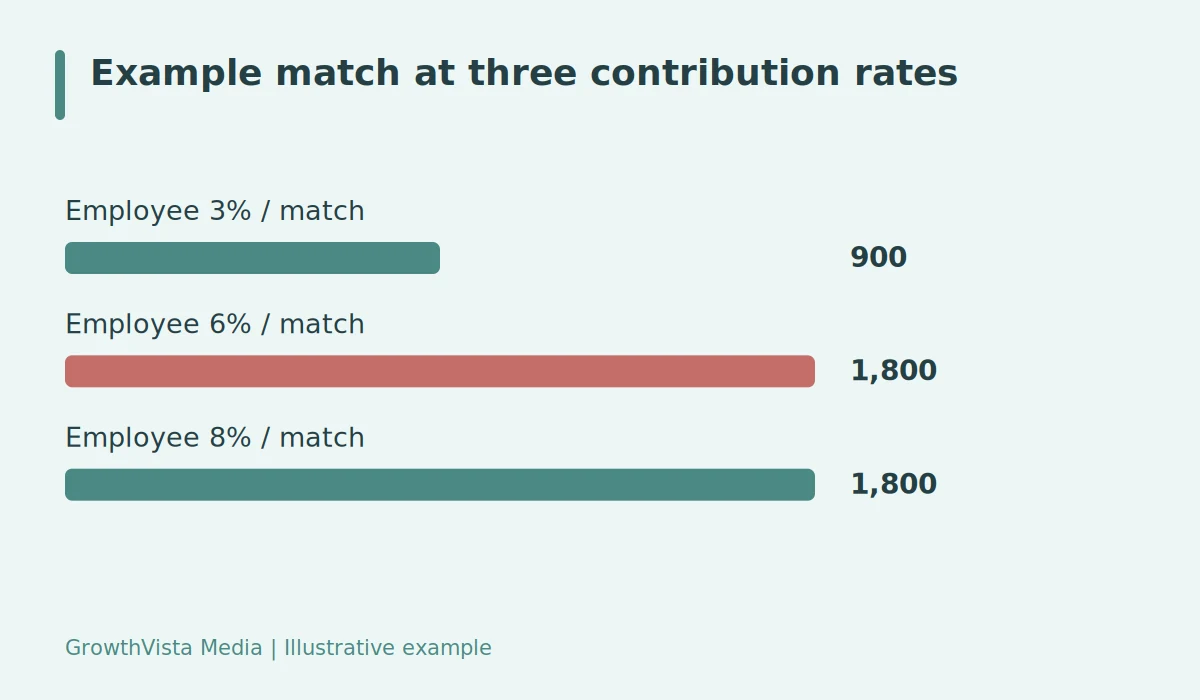
With $60,000 of eligible annual pay, a 3% employee contribution is $1,800 and the illustrated match is $900. A 6% employee contribution is $3,600 and the illustrated match is $1,800. At 8%, the employee contributes $4,800, but the match remains $1,800 under this formula. The extra saving still belongs to the employee; it simply does not earn additional matching dollars in this example.

Which paycheck amounts count?
Base salary, overtime, bonuses, and commissions may be treated differently under a plan’s definition of compensation. The formula may also be affected by eligibility dates or contribution limits. Ask payroll to identify the earnings included in its calculation. Compare an actual paycheck deduction with the matching deposit so you can catch a misunderstanding early instead of relying on an annual headline amount.
401(k) match timing can change the result
Some plans calculate matches per paycheck; some make later deposits or perform an annual true-up. Contributing your entire annual amount early can produce a different match from spreading deductions evenly when there is no true-up. Ask whether a true-up exists, how it works, and whether you must be employed on a particular date. Do not assume front-loading always preserves the full employer benefit.
Vesting decides what you keep
Your own salary deferrals are always vested. Employer contributions can follow the plan’s vesting schedule. An account total can therefore be larger than the balance you would retain after leaving. Find the vested amount and the service-credit method on your statement or plan document. A job offer comparison should use money you can actually keep, along with salary and other benefits.
Align the election with household cash flow
The rate needed for a full match is useful information, but the paycheck deduction still has to work alongside bills and essential reserves. If the full amount is currently difficult, investigate whether you can increase gradually. Review deductions after a raise. Check year-to-date totals if changing jobs, and ask how a contribution change takes effect so payroll timing does not surprise you.
Your next steps
- Locate the written formula rather than an advertising summary.
- Translate each tier into an eligible-pay percentage.
- Ask about payroll calculation and true-up conditions.
- Check the vested employer balance.
- Reconcile at least one deduction and matching deposit.
Related guides: What Is a 401(k)? 7 Basics for New Employees · Traditional vs Roth 401(k): 5 Important Differences · 401(k) When You Change Jobs: 4 Options to Review
Questions readers ask
Does contributing more always increase the match?
No. Once the formula cap is reached, extra employee deferrals may earn no additional match. Calculate the cap rather than assume the percentage continues indefinitely.
Is matching money available immediately?
Deposit timing and ownership are separate. The employer might deposit later, and a vesting schedule can determine how much is yours if you leave.
Can I calculate it from my salary alone?
Not reliably. You also need the exact formula, eligible-pay definition, contribution election, and payroll or annual calculation conditions.
Further reading
Editorial update: October 12, 2026. U.S.-focused general education, not individual investment, tax, or legal advice. Examples are hypothetical, not current product offers.