401(k) When You Change Jobs: 4 Options to Review

Your 401(k) when you change jobs needs a deliberate review, not an automatic cash-out. Start with the vested balance, the former plan’s rules, and any outstanding loan. Then compare where the retirement money could stay or move. Keeping a record of the account now is easier than tracking down a forgotten plan several years later.
Your 401(k) when you change jobs: gather the account facts
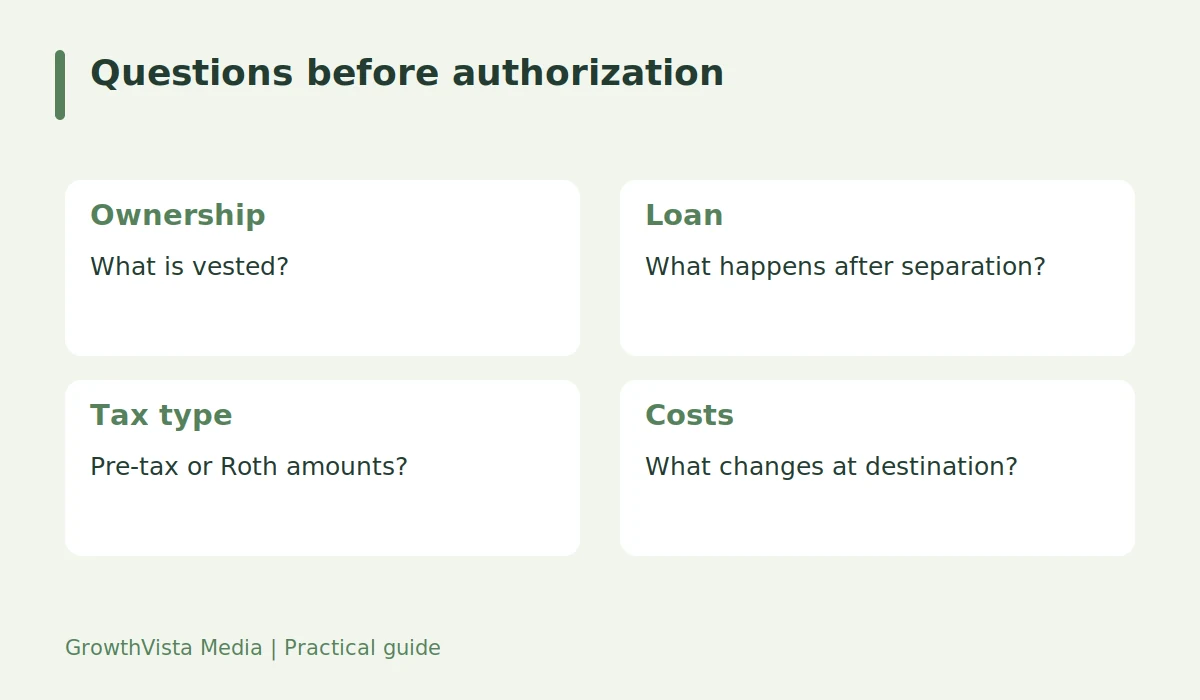
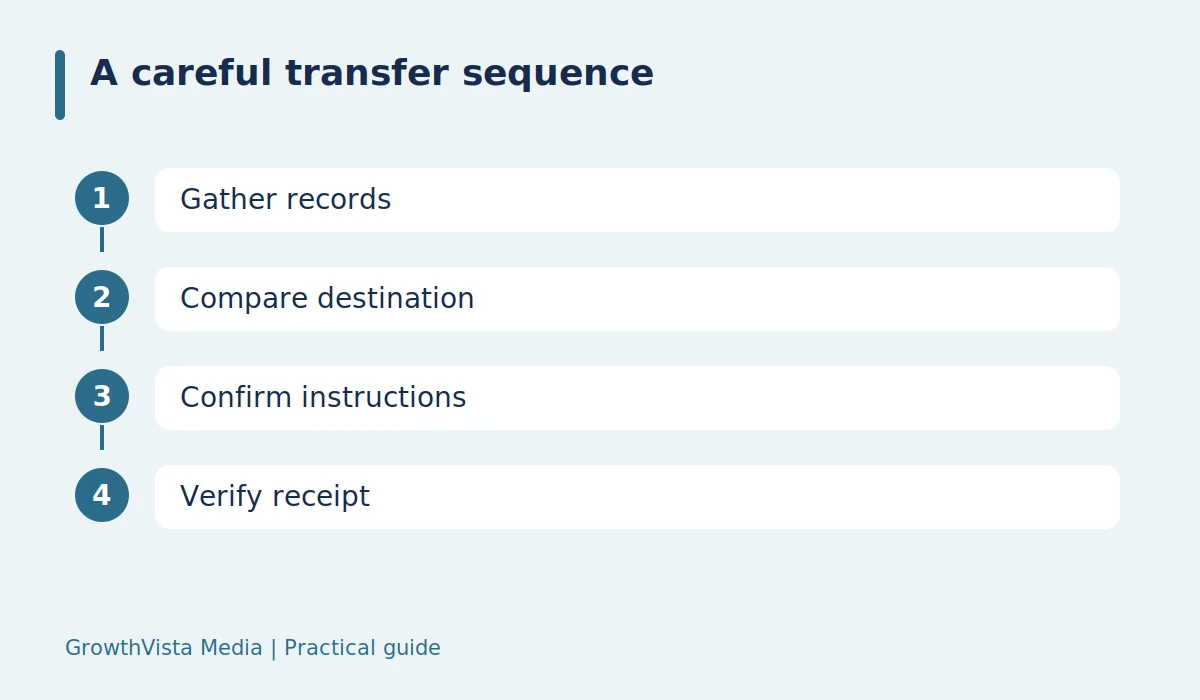
Download the latest statement, investment list, fee disclosure, and administrator contact details. Record the vested amount separately from the total. Update your mailing address and beneficiary information. If you borrowed from the plan, ask what job separation does to repayment and whether an offset could create a distribution. These details should be collected before starting a transfer request.

Compare leaving the money and joining a new plan
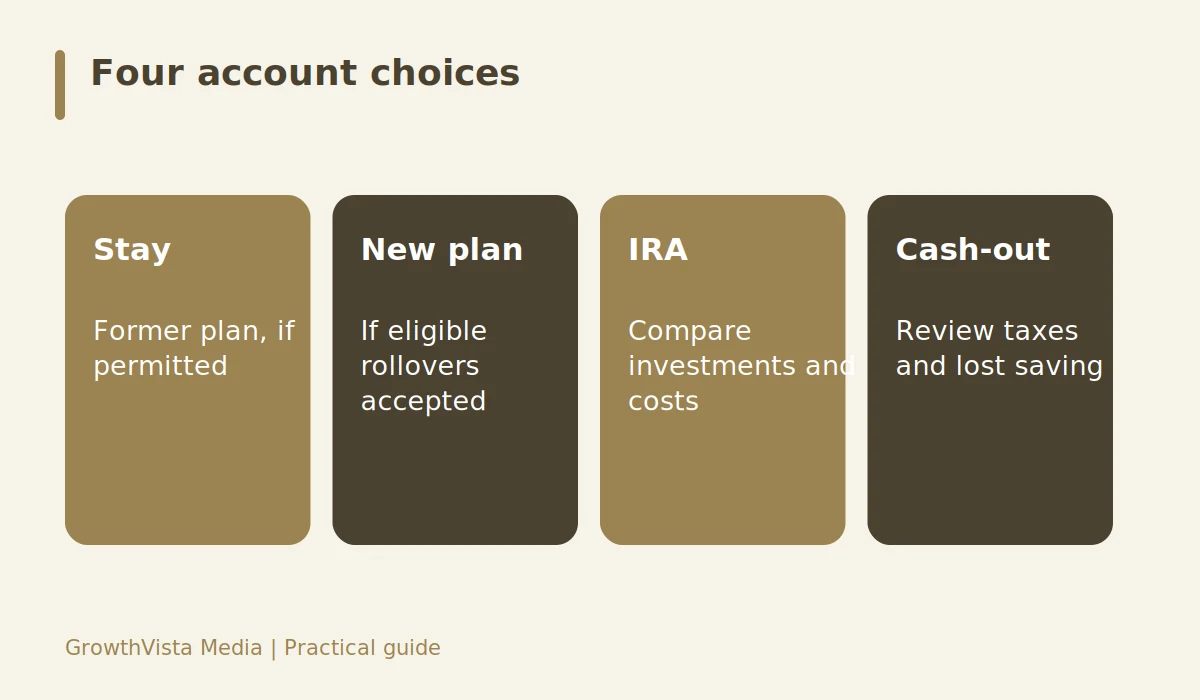
The former employer may allow you to leave the balance, depending on plan rules. A new employer’s plan may accept eligible rollovers. Compare administration costs, investment choices, service, and access rules rather than treat consolidation as automatically beneficial. Some advantages depend on plan type and your circumstances. Get acceptance instructions from the destination administrator before sending money.
Consider an IRA with the full cost picture
An IRA can offer a different investment menu and more control over providers, but that does not mean every IRA is cheaper or better. Evaluate advice charges, transaction fees, available investments, and relevant creditor or withdrawal rules with qualified help where needed. Confirm how pre-tax and Roth amounts should be handled. A rollover to a different tax treatment may create taxable income.
Move an eligible rollover directly when appropriate
A direct rollover generally sends eligible funds to the receiving plan or IRA without first paying them to you. If an eligible employer-plan distribution is paid to you, withholding and a rollover deadline may apply. That can mean needing outside money to roll over the full amount. Follow both administrators’ instructions, retain confirmations, and review the tax forms that report the transaction.
Cashing out spends more than the displayed balance
A cash distribution can trigger income tax and, depending on age and exceptions, an additional early-distribution tax. Withholding is not necessarily the final tax bill. You also remove money from future retirement saving. Compare the net proceeds and consequences before authorizing it, especially if the reason is a temporary cash-flow gap that could be addressed another way.
A transfer checklist for a departing employee
Maya has a vested account and a new employer plan willing to accept an eligible rollover. She compares fees, asks how her pre-tax and Roth balances must be transferred, and requests the destination’s payment instructions. She checks any loan separately. After completion, she verifies receipt, confirms the investment allocation, and keeps both statements and tax records. This process example does not establish that the new plan is best for every worker.
Questions readers ask
Will my retirement money disappear when I leave?
Your vested balance remains yours, but plan rules can affect how it is held or distributed. Keep contact details current and respond to administrator notices.
Does a direct rollover eliminate every tax issue?
No. Eligibility and tax treatment still matter. Moving pre-tax money into a Roth account can create taxable income, even when administrators handle the transfer.
Can I transfer investments without selling?
It depends on the plan, assets, and receiving account. Ask whether the transfer occurs in cash or in kind and whether any market exposure gap is likely.
Your next steps
- Record vested balance, loans, and administrator contacts.
- Compare the old plan, new plan, and IRA costs.
- Confirm destination acceptance and tax treatment.
- Use the correct administrator transfer instructions.
- Verify receipt and the final investment allocation.
Related guides: What Is a 401(k)? 7 Basics for New Employees · 401(k) Match: Decode Your Employer Formula in 4 Steps · Brokerage Account vs Retirement Account: 5 Rule Differences
Further reading
Editorial update: October 12, 2026. U.S.-focused general education, not individual investment, tax, or legal advice. Examples are hypothetical, not current product offers.