Air Purifier Placement: Build a Useful Daily Routine

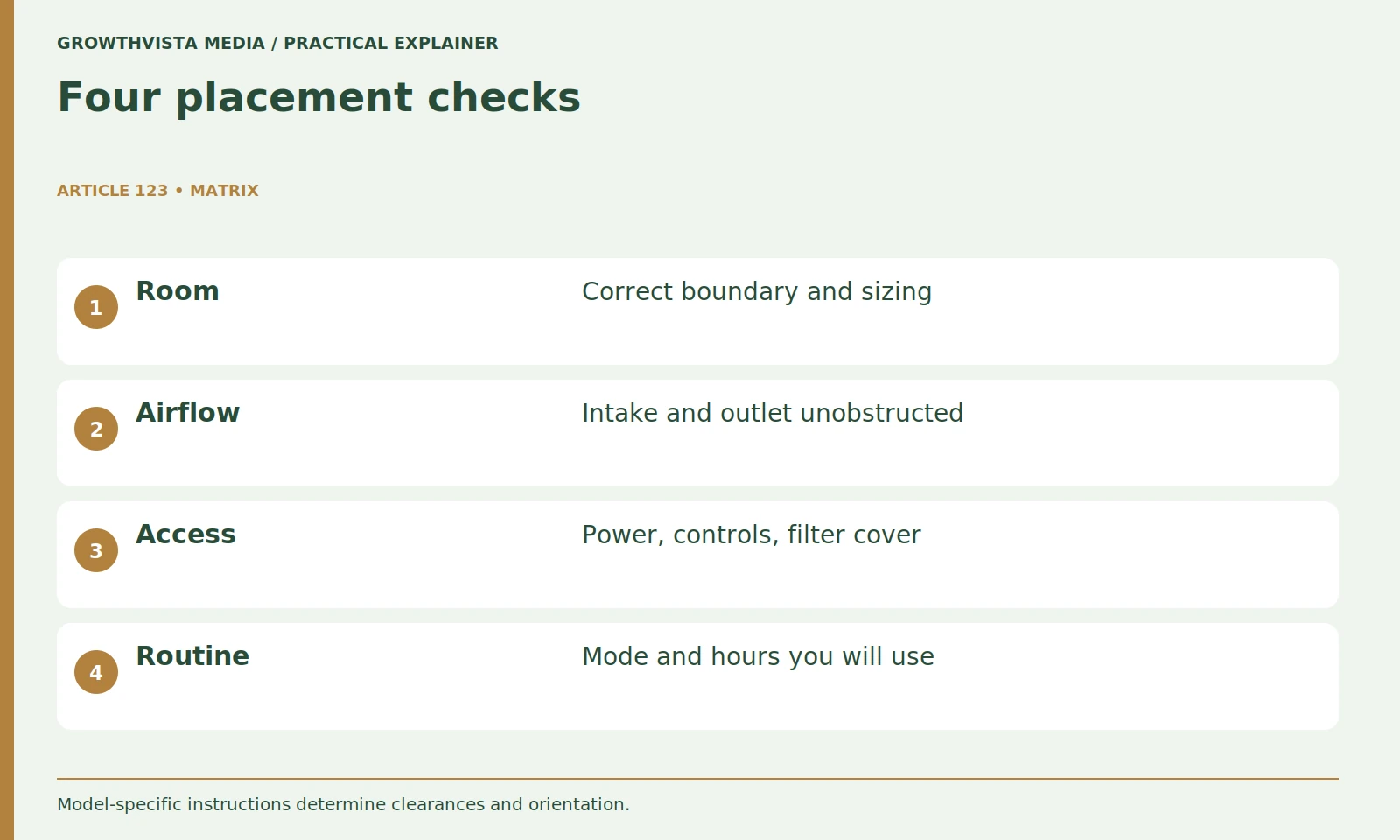
Air purifier placement should follow the exact appliance’s airflow and clearance instructions in the room it is meant to serve. Keep the intake and outlet unobstructed, provide an approved power connection, and leave controls and filters accessible. Then choose a mode and routine the household can realistically maintain.
A tidy corner is not a good position if furniture or curtains block the airflow path. This guide gives a practical setup and observation method, not a universal wall-clearance number or a measured pollution-removal experiment. Device indicators should be interpreted within their documented scope, and filtration should remain part of a broader indoor-air plan.
Your decision checklist
- Confirm the room and manual-specific position.
- Keep intake, outlet, and service access clear.
- Use documented modes that fit the routine.
- Treat indicators and observations within their limits.
Where should air purifier placement planning begin?
Begin with the intended room and the people’s normal use of it. Confirm the served space rather than placing the appliance wherever a spare socket is available. The EPA’s consumer guidance includes room selection and unobstructed airflow as practical considerations. EPA: choosing air cleaners for the home
Use the companion CADR guide to compare room dimensions with documented performance assumptions. Placement does not repair a sizing mismatch. If the room connects to a larger area, keep that fact visible rather than assuming the purifier treats only the smaller footprint.
For an illustrative bedroom, record where occupants spend time, the intended operating period, and places the appliance can stand appropriately. The goal is a practical location that can stay usable, not an ideal spot that must be moved whenever a door opens.
How much clearance does an air purifier need?
Use the exact manual’s requirements for the intake, outlet, and orientation. There is no universal clearance prescribed here. The EPA’s technical guidance supports treating airflow and system operation as relevant factors; apply them through the specific appliance instructions. EPA: residential air cleaners technical summary
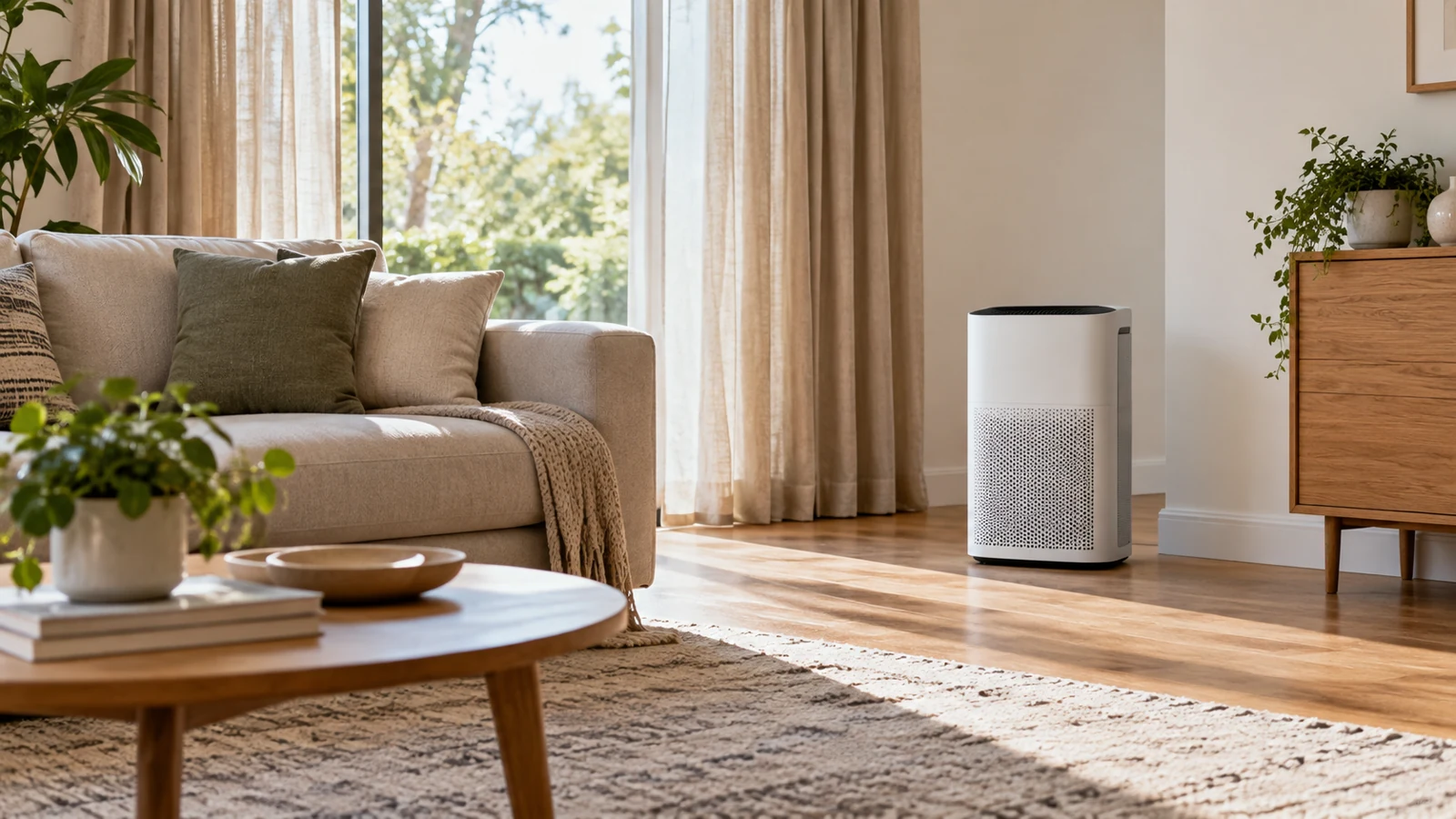
Inspect nearby furniture, curtains, bedding, and storage. Check the arrangement when the room is used normally, including open drawers or moved chairs. A clear setup photograph does not establish that the device remains unobstructed during everyday use.
Do not improvise an enclosure to hide the appliance unless the manufacturer explicitly supports it. A decorative cover can alter the airflow and maintenance access. Choose a location where the function and appearance can coexist without modifying the device.
| Observation | Question | Useful action |
|---|---|---|
| Blocked intake | Does normal furniture obstruct it? | Restore documented clearance |
| Unused quiet mode | Do ratings apply to this mode? | Confirm conditions and routine |
| Hard-to-open cover | Can filters be serviced normally? | Choose an accessible position |
| App says good | What does the sensor measure? | Keep the interpretation within scope |
Why do access and power belong in placement planning?
The position must allow safe approved operation and routine service, not just a clear intake. Check the cable route, controls, filter access, and any restrictions on placement. Do not choose an arrangement that relies on obstructing normal movement or ignoring the power instructions.
Check that controls, filter access, and status indicators remain reachable. If servicing requires moving heavy furniture each time, the location is likely to become a maintenance obstacle. Plan how the filter cover opens and where approved cleaning or replacement can be performed.
Consider children and pets in the ordinary placement decision. Follow the manufacturer's stability and safety instructions. The device should not become a shelf, climbing object, or place to store liquids.
Which operating mode should you use day to day?
Choose a supported mode that fits the room and routine, while keeping its performance claim attached to its conditions. Observe noise, drafts, and indicators during ordinary use. Missing low-mode data should remain a question, not inherit the highest-mode rating.
Do not compare the quietest-mode claim with maximum-speed CADR as though they happen together. If lower-mode information is missing, leave it as a question. Adjust the setup or shortlist rather than pretending the missing evidence supports the same rate.
A simple daily routine can be more useful than complex automation that nobody understands. Record when the device is expected to run and how the household will notice if it stops or needs service.
Does an automatic-mode indicator prove the air is safe?
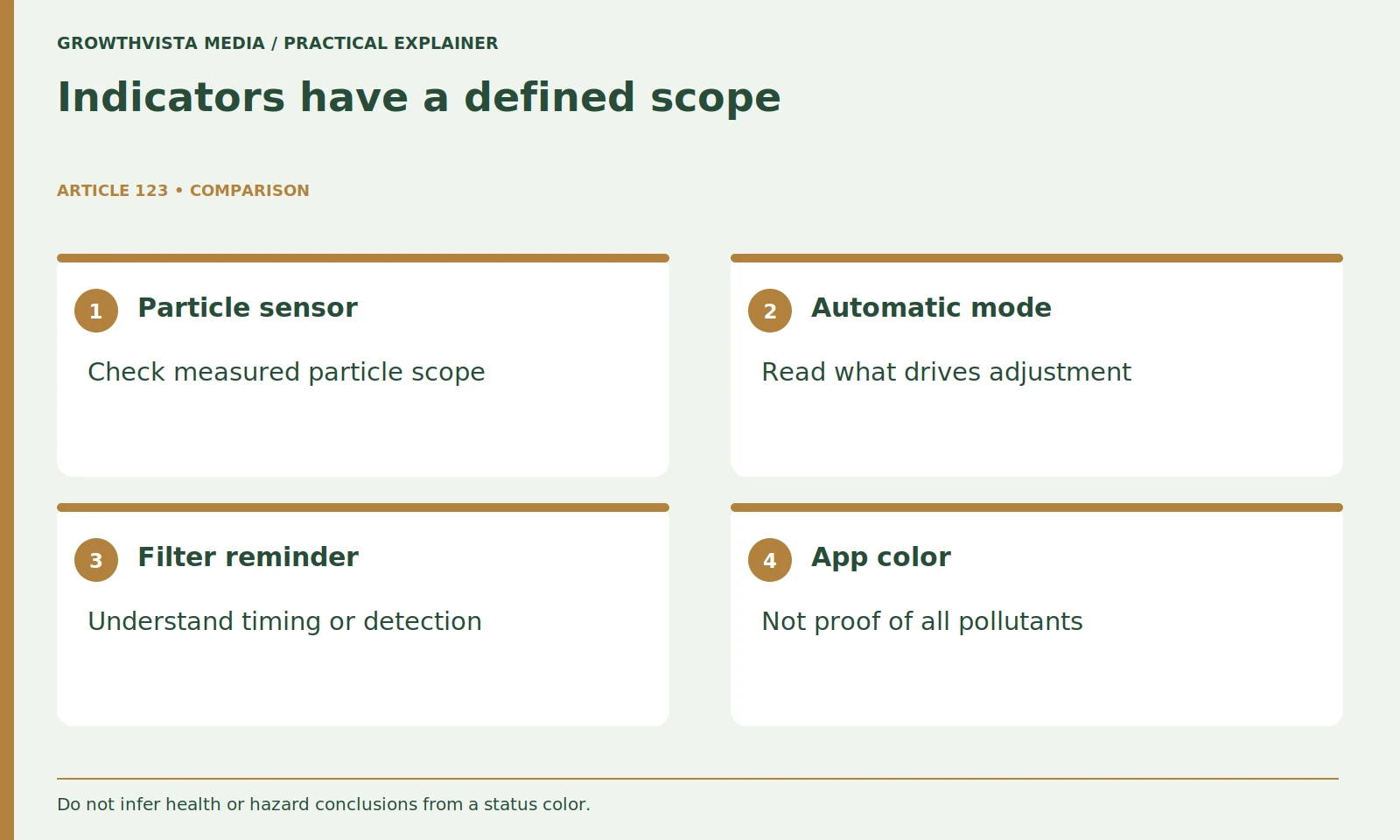
No. Read what the sensor measures and how the mode responds. A status color or a particle reading should not be generalized to unmeasured gases or every hazard. Use the display as the documented device information it is, rather than an all-clear for the building.
Check whether an app is required for the functions you need and what remains available without connectivity. Avoid adding a cloud account merely because it appears in the setup flow if local operation already meets the requirement.
For an illustrative routine, the useful check may be that the selected mode is active and the filter indicator is understood. Do not turn an app screenshot into a claim that a specific pollutant or health concern has been eliminated.
What should a placement observation log record?
Record the room, position, mode, operating period, access, and practical issues. Those observations can identify blocked airflow or an unworkable routine. They do not by themselves establish removal efficiency or health outcomes, especially in an uncontrolled before-and-after comparison.
If using an independent sensor, understand its limitations and avoid overinterpreting a short uncontrolled comparison. Changes in activities, outdoor air, doors, and ventilation can affect readings. A before-and-after number without a suitable method can be misleading.
Use the log to identify practical problems: blocked intake, unacceptable overnight noise, inaccessible controls, or a routine that is not followed. Fix one relevant issue and observe again. Keep the conclusion as specific as the evidence.
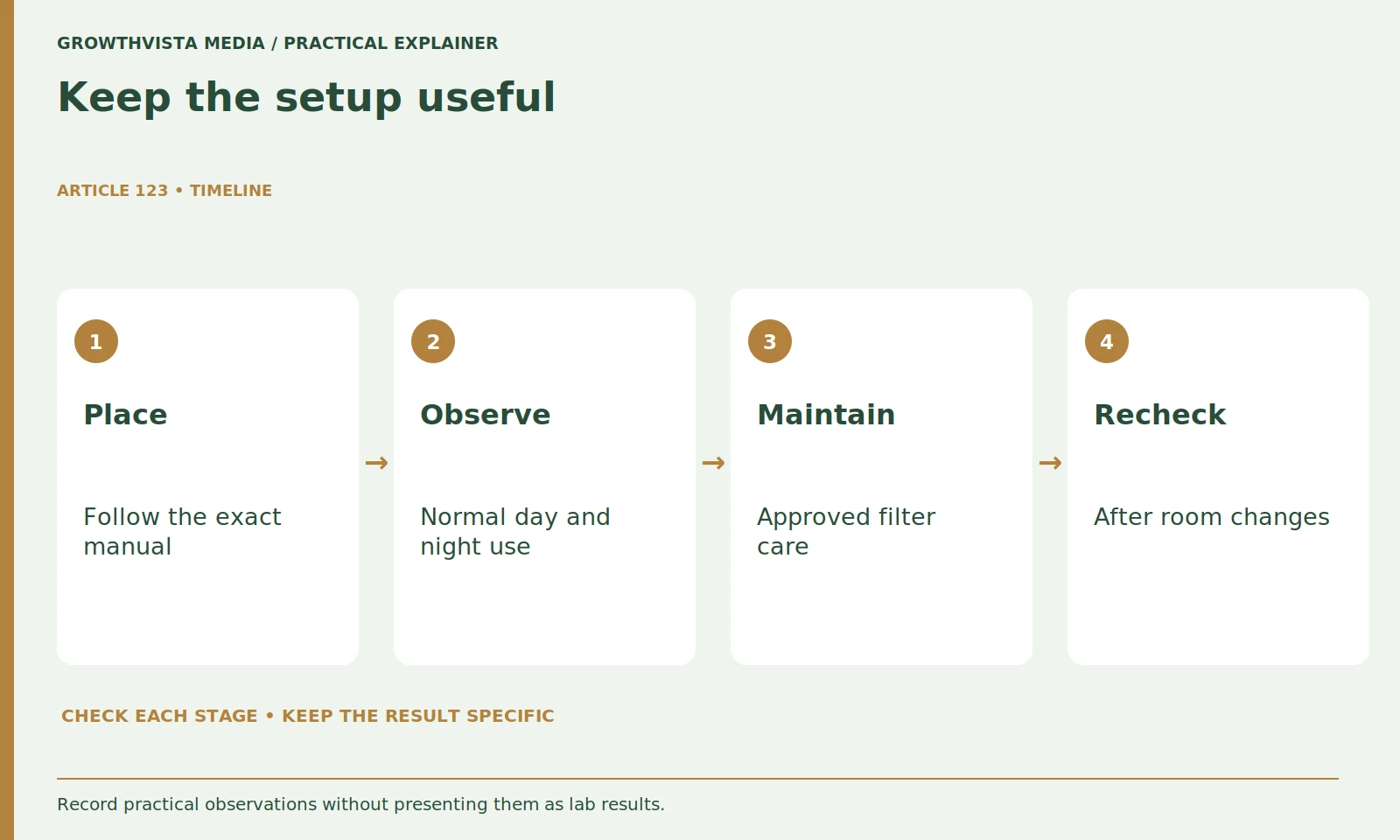
When should you check purifier placement again?
Review it after changes to furniture, curtains, storage, or the daily routine. Confirm that the documented airflow and service access remain available. A previously workable setup can become obstructed without any change to the purifier itself.
Follow model-specific filter care and replacement guidance. Maintain a simple record with the part number and service dates. A timer can organize the routine, but it does not replace understanding the approved care instructions.
Do not operate with required components removed, wet where drying is required, or fitted incorrectly. If an unusual odor, damage, or malfunction appears, stop and use the appropriate manufacturer support route rather than continuing an improvised test.
Does moving a purifier replace source control?
No. Keep the underlying indoor-air concern in view and use appropriate source and ventilation guidance. The EPA advises against devices that intentionally produce ozone. Placement alone does not resolve moisture, gas, structural, or medical problems. EPA: ozone generators sold as air cleaners
Moisture problems, gas hazards, and health concerns need the appropriate response. This placement guide cannot determine whether the building is safe or what treatment a person needs. Use relevant professional and public-health guidance when the concern goes beyond ordinary appliance setup.
Confirm the room and manual-specific position. Keep intake, outlet, and service access clear. Use documented modes that fit the routine. Treat indicators and observations within their limits. Keep verified facts, examples, and unanswered questions distinct when making the final decision.
Frequently asked questions
Is there a universal wall clearance for every purifier?
No. Follow the exact model’s intake, outlet, orientation, and clearance instructions.
Can I put the purifier behind furniture to hide it?
Only if the documented airflow and service requirements remain satisfied. Appearance should not override the approved placement.
Does a green app indicator mean every pollutant is absent?
No. Read the sensor’s documented scope. A status indicator should not be generalized to unmeasured gases or all hazards.
Can an observation log prove a removal percentage?
Not by itself. A practical ownership log records conditions and usability, not a controlled pollutant-removal benchmark.
When should I revisit placement?
Review airflow and service access after changes to furniture, curtains, storage, or the household routine.
Does better placement replace source control?
No. Filtration is one part of an indoor-air plan; appropriate source, ventilation, and hazard guidance still matter.
Sources and further reading
Official documentation supports the technical guidance. Examples and worksheets are editorial methods, not hands-on product benchmarks. Reviewed October 2026.
- EPA: residential air cleaners technical summary
- EPA: choosing air cleaners for the home
- EPA: ozone generators sold as air cleaners