Cash Back vs Travel Rewards: Compare Real Value

Cash back vs travel rewards is a comparison of usable value, not just headline earning rates. Cash rewards are usually easier to relate to dollars. Travel points can offer different redemption values, but availability, restrictions, and fees matter. Start with purchases you already make and trips you actually expect to take; rewards should not create extra spending.
Measure value at redemption
A point is not automatically worth a cent. Travel programs can offer different values depending on how points are used, when travel occurs, and what bookings are available. Cash-back redemptions can also have minimums or restrictions. Read the redemption rules and identify a realistic use before multiplying spending by a rate. A balance you cannot use conveniently is not equivalent to cash in your bank account.

Use your own spending categories
Review a few months of ordinary spending. A card with a high category rate can still earn less than a simpler card if that category is a small part of your budget. Some programs cap bonus earnings, require activation, or exclude transactions. Compare the actual eligible categories and caps. Avoid shifting purchases onto credit just to reach an offer you would not otherwise meet.
An illustrative fee comparison
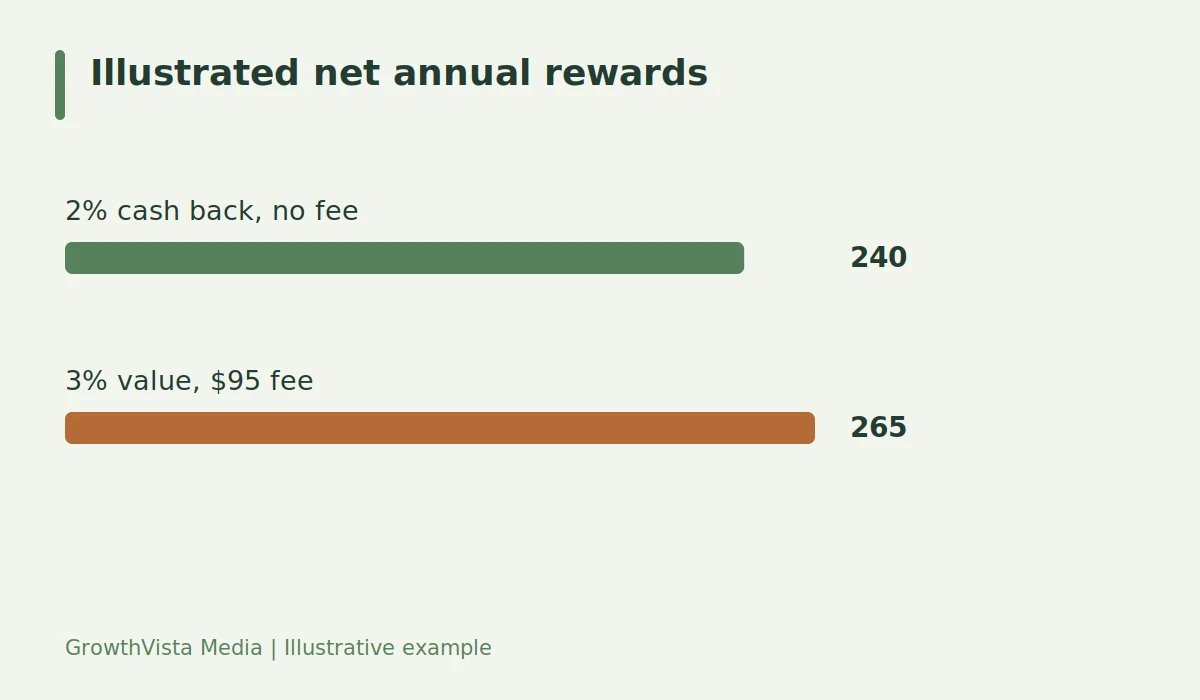
Assume $12,000 of eligible yearly spending, a no-fee card returning 2%, and another returning an effective 3% but charging $95 annually. Ignoring other costs, the first produces $240 and the second $265 net. The difference is only $25. The higher-rate card breaks even against the first at $9,500 of spending under these assumptions. Travel points need a realistic dollar redemption estimate before the same calculation is useful.
| Item | Detail |
|---|---|
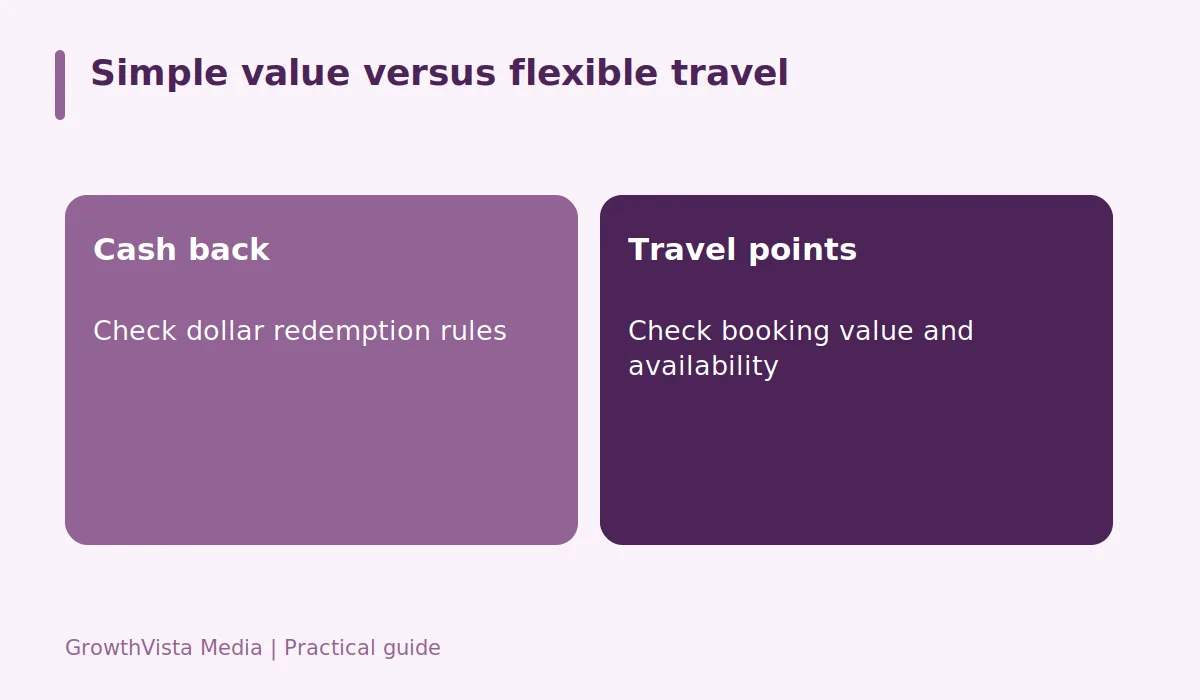
| Cash back | Check dollar redemption rules |
| Travel points | Check booking value and availability |
Cash back vs travel rewards after fees
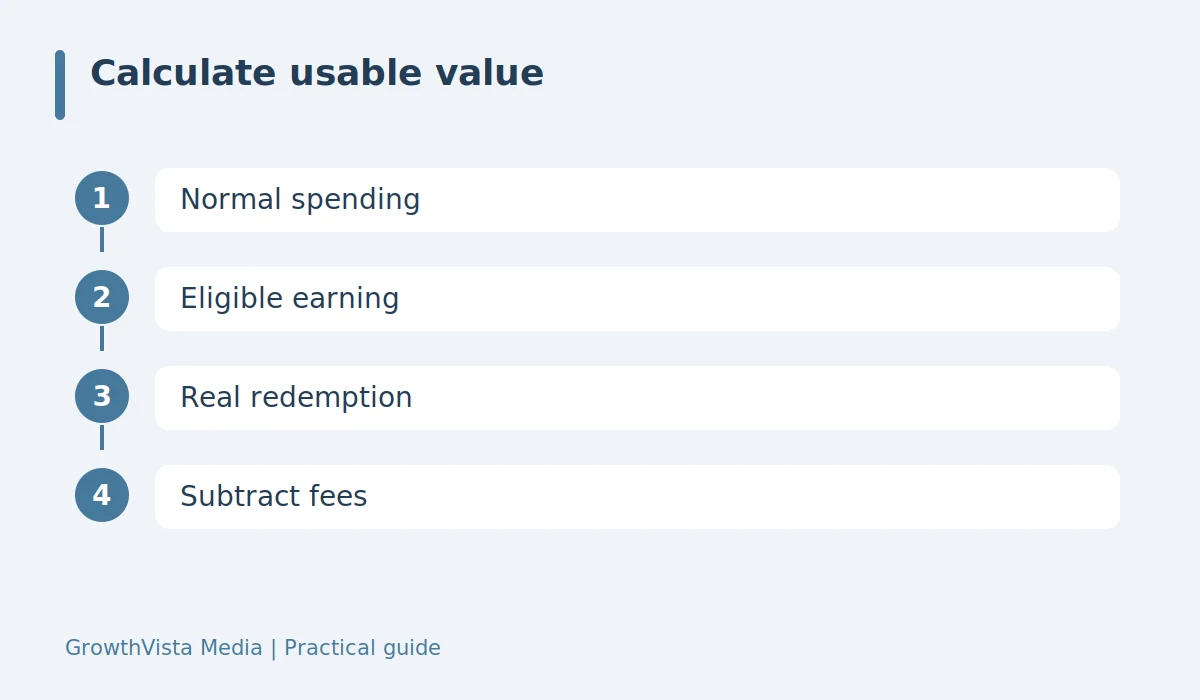
Subtract the annual fee and any redemption or transaction costs from the value you reasonably expect to use. Promotional bonuses should be separated from ongoing value. Airport or hotel benefits should count only if you would otherwise pay for them. A benefit worth hundreds in a brochure can have zero personal value when you cannot use it.
Paying interest changes the equation
Rewards on purchases do not cancel borrowing costs. If you carry a balance, the interest and fees can outweigh what you earn. Read the purchase APR and grace-period conditions before treating a rewards card as a financial improvement. A repayment plan may matter more than optimizing rewards. Compare costs using the same balance and payment assumptions for every option.
Leave room for program changes
Reward rates, partners, redemption prices, and benefits can change. Keep a record of the current terms and avoid treating points as a guaranteed long-term store of value. If travel plans are uncertain, consider how flexible the redemptions are. Set a reminder before a renewal fee and review whether the card still fits your actual habits.
Questions readers ask
Are travel points always worth more?
No. Value depends on available redemptions, program rules, and personal use. A quoted maximum value may not describe a booking you would make.
Should I count a welcome bonus as yearly value?
Keep it separate. It may require qualifying spending and usually does not recur. Compare the second-year costs as well as the first-year offer.
What if I carry a balance?
Calculate borrowing costs first. A rewards rate is not a substitute for a realistic repayment plan, and interest can exceed the rewards earned.
Your next steps
- Use normal spending rather than an aspirational budget.
- Check caps, exclusions, and redemption restrictions.
- Subtract fees from usable rewards.
- Separate one-time bonuses from recurring value.
- Review terms before renewal.
Related guides: First Credit Card: 6 Checks Before You Apply · Credit Card Interest: APR, Daily Balances, and Grace Periods · Credit Card Fees: 7 Costs to Check Before Applying
Further reading
Editorial update: October 12, 2026. U.S.-focused general education, not individual investment, tax, or legal advice. Examples are hypothetical, not current product offers.