First Credit Card: 6 Checks Before You Apply

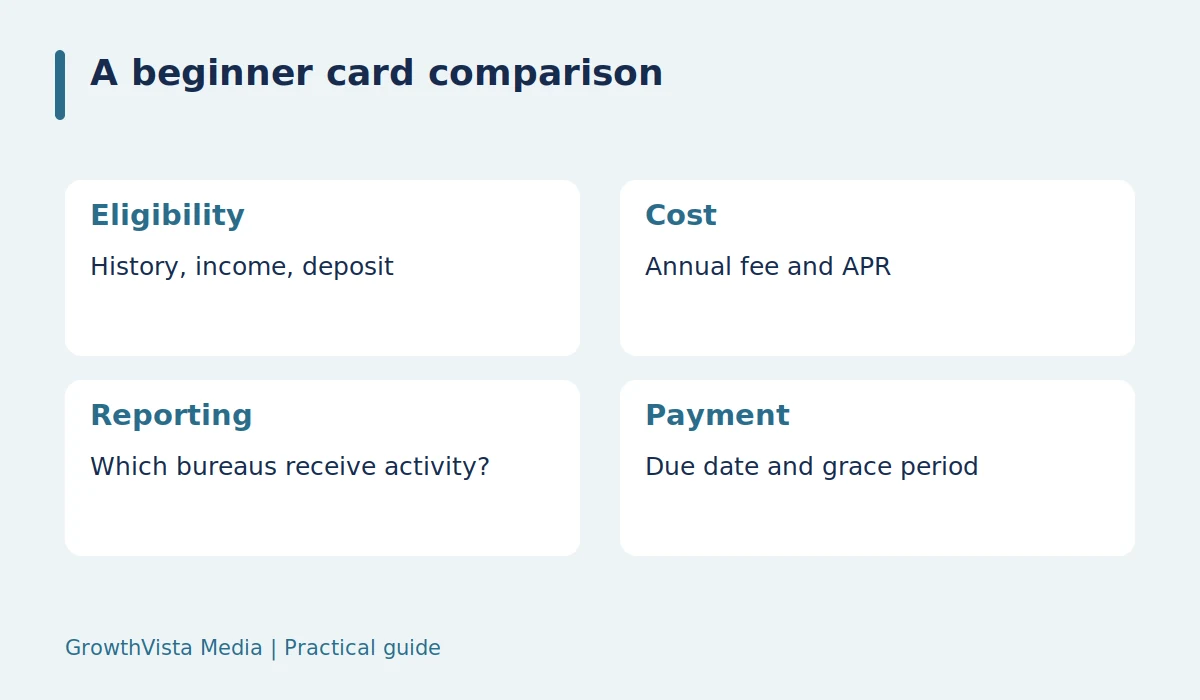
A first credit card should fit your existing spending and repayment habits. The goal is a manageable account, not a larger shopping budget. Before applying, check eligibility, costs, how payments work, and whether the issuer reports to credit bureaus. A reward offer is less important than avoiding fees and interest you cannot comfortably cover.
Start with your current credit position
Review your credit reports for errors and think about what kind of card you can reasonably qualify for. Some beginner products require a security deposit; others use income and credit history to assess eligibility. A prequalification tool may provide an indication, but it is not guaranteed approval. Read whether a check affects your credit before submitting personal information.

A modest first-month routine
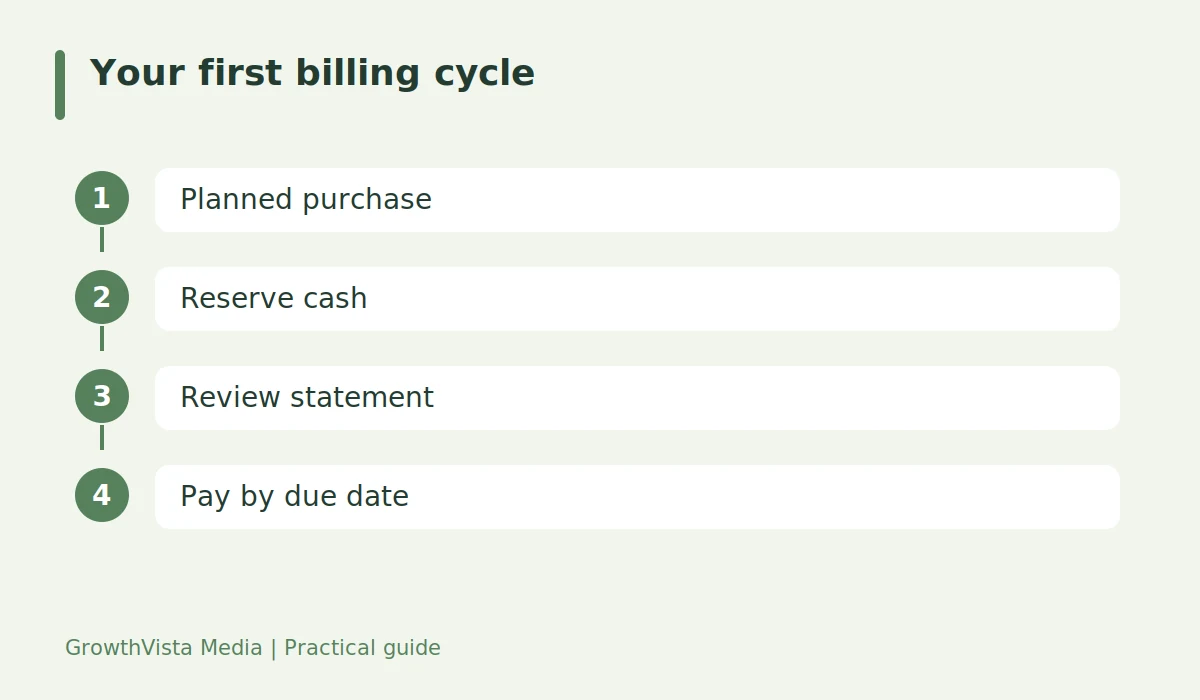
Alex uses a new card for a $40 recurring bill already included in the household budget. The same $40 stays reserved in checking. Alex checks the statement, confirms the due date, and pays the statement balance under the agreement’s terms. The example is a budgeting routine, not a promise of a particular credit-score increase. An unexpected charge or failed automatic payment still needs attention.
First credit card costs deserve priority
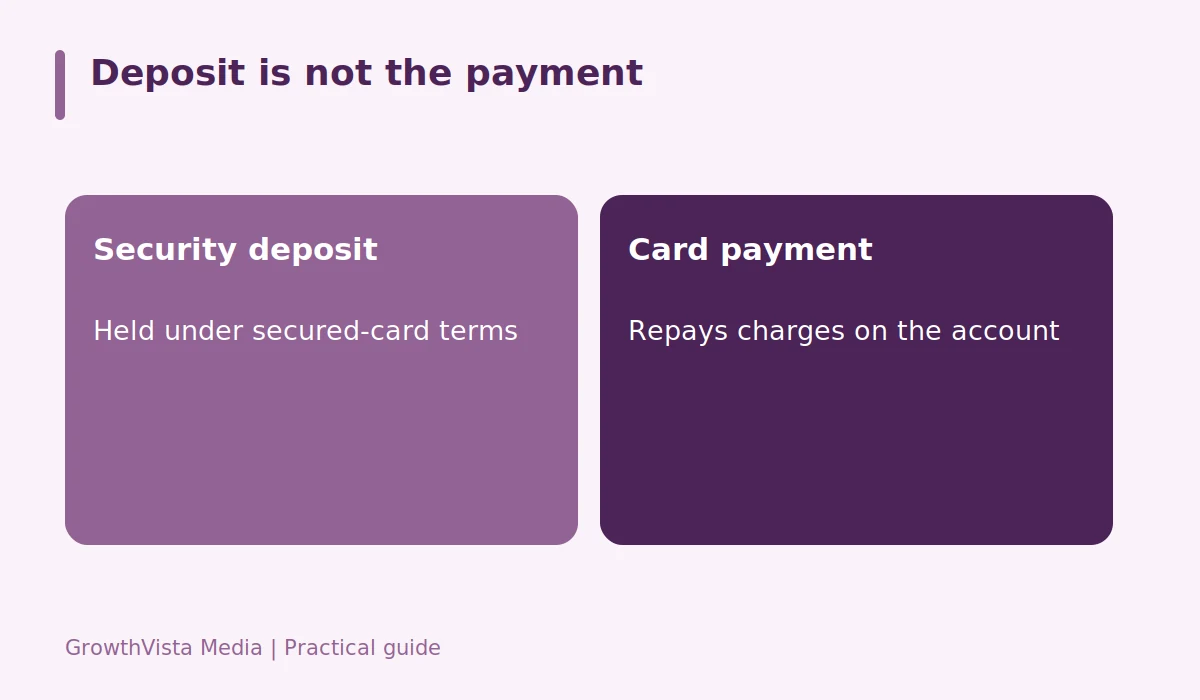
Look for an annual fee, setup charges, ongoing account fees, late-payment fees, and the purchase APR. A secured-card deposit is different from a fee: ask how it is held and when it can be returned. Compare the total cost of keeping the account, not just the advertised limit. Read the agreement for transaction charges and any promotional-rate end date.
Pick a limit you can use carefully
A credit limit is the maximum permitted balance, not money earned. Choose a small predictable use, such as one ordinary bill, and retain the cash to pay it. Avoid using most of the limit simply because it is available. If the issuer reports account activity, balances and payment history can affect your credit profile. Spending more is not necessary to create an account record.
Set up payments before the first purchase
Find the statement closing date and payment due date. Paying the full statement balance by the due date can avoid purchase interest when the card’s grace-period conditions apply. An automatic minimum payment can help prevent a missed required payment, but it does not repay the full balance. Keep sufficient checking funds, turn on reminders, and review statements for unexpected charges.
Compare reporting, controls, and upgrade options
Ask which credit bureaus receive reports and whether the product has a route to a different card later. Check fraud-reporting procedures, spending alerts, replacement-card access, and account-lock controls. Do not assume an upgrade is guaranteed. If you later close the account, request confirmation and make sure recurring bills and remaining balances have been handled.
Your next steps
- Review eligibility and the application-check disclosure.
- List all ongoing and transaction fees.
- Confirm whether the deposit is refundable.
- Set alerts and a realistic payment arrangement.
- Review the first statement before the due date.
Related guides: Credit Card Interest: APR, Daily Balances, and Grace Periods · Credit Card Fees: 7 Costs to Check Before Applying · Monthly Budget: Build a Plan Around Real Payment Dates
Questions readers ask
Do I need to carry a balance to build credit?
No. Paying interest is not a requirement for establishing reported account activity. Focus on required payments, careful use, and the issuer’s reporting practices.
Is a secured card always cheaper?
No. Compare fees, deposit terms, and repayment conditions. A security deposit alone says little about the total account cost.
Should I apply for several cards at once?
Multiple applications can complicate eligibility and create credit inquiries. Compare suitable options first and read the application disclosures before choosing.
Further reading
Editorial update: October 12, 2026. U.S.-focused general education, not individual investment, tax, or legal advice. Examples are hypothetical, not current product offers.