Credit Card Interest: APR, Daily Balances, and Grace Periods

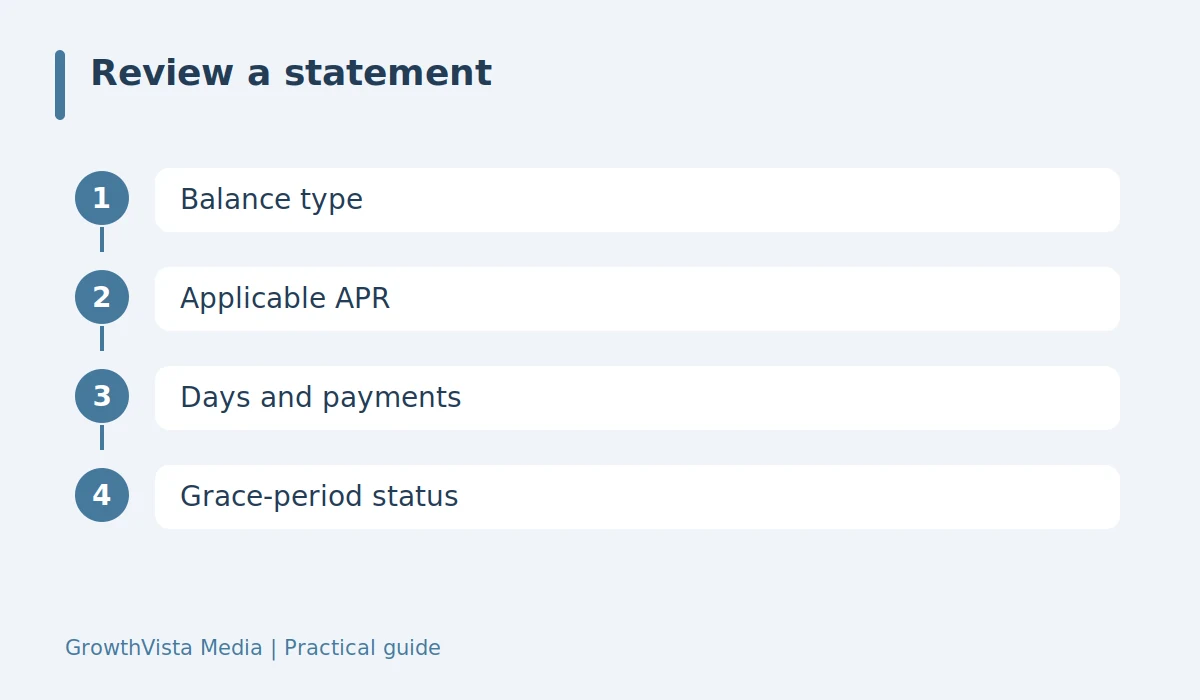
Credit card interest is the cost of borrowing under your card agreement. The advertised APR is an annual rate, but the statement can calculate charges using daily balances. Different transaction types may have different rates. To understand a bill, identify the balance involved, its rate, the number of days, and whether a purchase grace period applies.
APR is a rate, not a monthly dollar charge
A 24% purchase APR does not mean every statement adds 24% of the balance. Many issuers convert the annual rate into a daily periodic rate and apply it under their balance method. The agreement explains the method and the divisor used. New purchases and payments can change the daily balance, so a quick monthly percentage calculation is only an estimate.

Follow the daily balance
Interest can depend on balances across the billing cycle rather than only the closing balance. Paying earlier may reduce the days a balance remains outstanding. Cash advances and balance transfers can have different APRs and fees. Separate those transactions when reviewing the statement. A single account total can hide several balance categories with different borrowing costs.
When credit card interest can be avoided on purchases
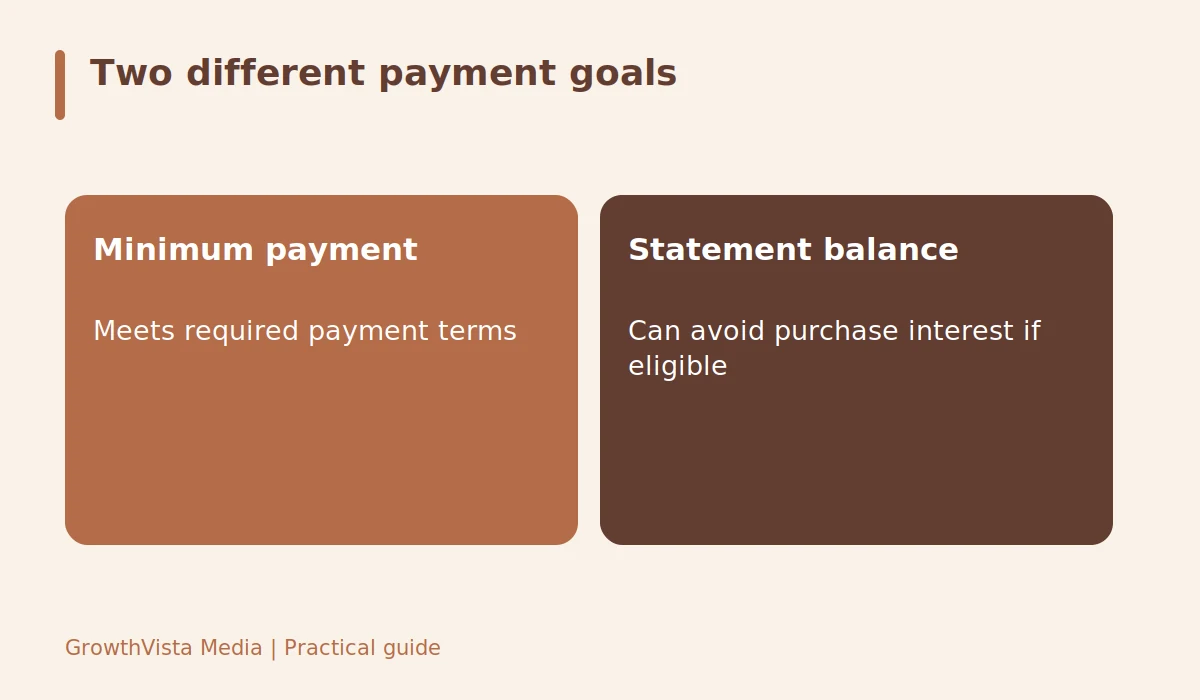
If the card offers a grace period and you meet its conditions, paying the full statement balance by the due date can avoid interest on new purchases. Carrying a balance can remove that benefit, and cash advances often work differently. Check how the grace period is restored after a carried balance. Do not assume paying only this month’s purchases eliminates interest on the account.
Minimum payments leave a remaining balance
The required minimum is designed to satisfy the account’s payment requirement, not necessarily to pay debt quickly. Part of a payment may cover interest and fees before reducing principal. Read the statement’s payoff information and make a plan based on an amount you can sustain. Stop adding new charges while comparing repayment options so the balance does not move underneath the calculation.
Watch promotional terms and residual charges
A temporary low rate has an end date and may apply only to selected transactions. Deferred-interest offers have different conditions from ordinary introductory APR offers. Read the exact agreement. After repaying a carried balance, another statement may show interest that accrued before the payment arrived. Review the following statement and contact the issuer if the calculation is unclear.
A deliberately simplified interest example
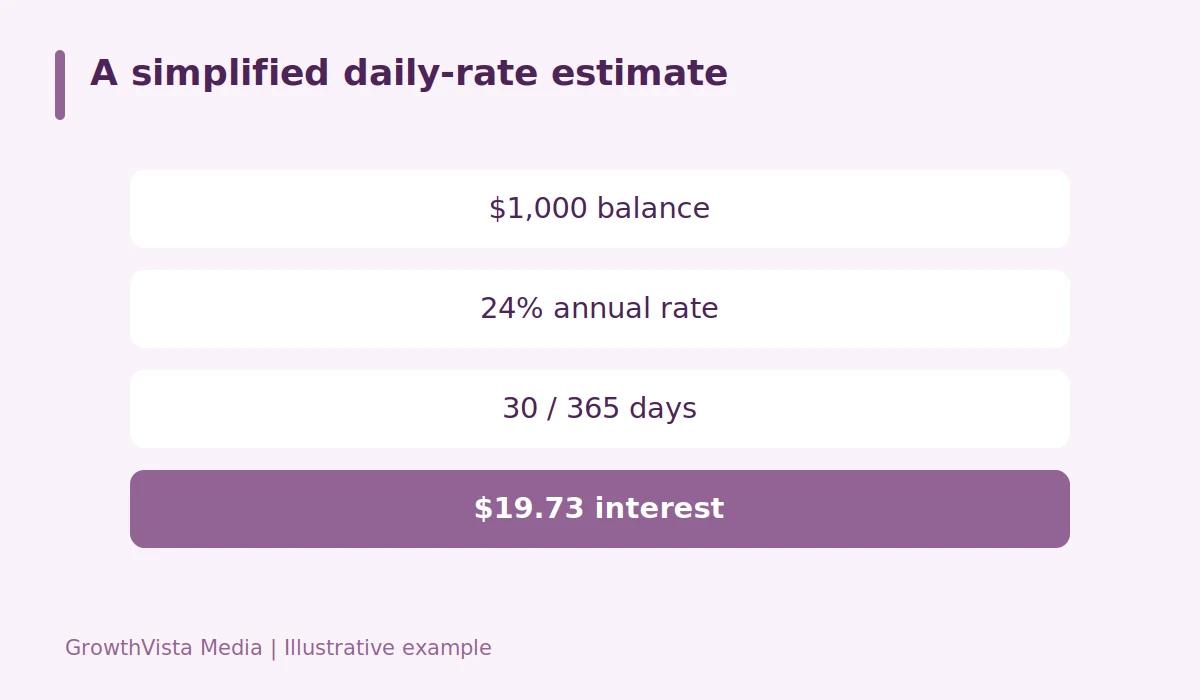
Assume a constant $1,000 interest-bearing balance, 24% APR, 30 days, and a 365-day divisor. Estimated interest is $1,000 × 0.24 ÷ 365 × 30, or about $19.73. This illustration excludes fees, new transactions, payments, compounding details, and grace-period eligibility. Use it to understand the relationship between balance, rate, and time, not to replace the issuer’s actual statement calculation.
Questions readers ask
Why is the charge different from APR divided by 12?
Billing cycles vary, daily balances change, and agreement methods differ. APR divided by 12 can be a rough shortcut, but it is not a statement audit.
Will the minimum payment stop interest?
Not generally. It can keep the account current while an interest-bearing balance remains. Review how much principal the payment actually removes.
Does a 0% offer cover every purchase?
Not necessarily. An offer can apply only to particular balances and dates. Check fees, expiration, and what happens to other transaction types.
Your next steps
- Identify the APR for each balance category.
- Read the balance-calculation method.
- Check purchase grace-period eligibility.
- Pay more than the minimum when affordable.
- Review the next statement after a payoff.
Related guides: First Credit Card: 6 Checks Before You Apply · Cash Back vs Travel Rewards: Compare Real Value · Debt Repayment Plan: Compare Avalanche and Snowball
Further reading
Editorial update: October 12, 2026. U.S.-focused general education, not individual investment, tax, or legal advice. Examples are hypothetical, not current product offers.