Credit Card Fees: 7 Costs to Check Before Applying

Credit card fees can make an attractive reward offer expensive. Some are charged simply for keeping an account; others appear only after a transaction or missed payment. Read the pricing disclosure and agreement together. Compare the fees you are likely to encounter rather than assuming every listed fee will apply or that a no-annual-fee card is cost-free.
Separate ongoing costs from avoidable charges
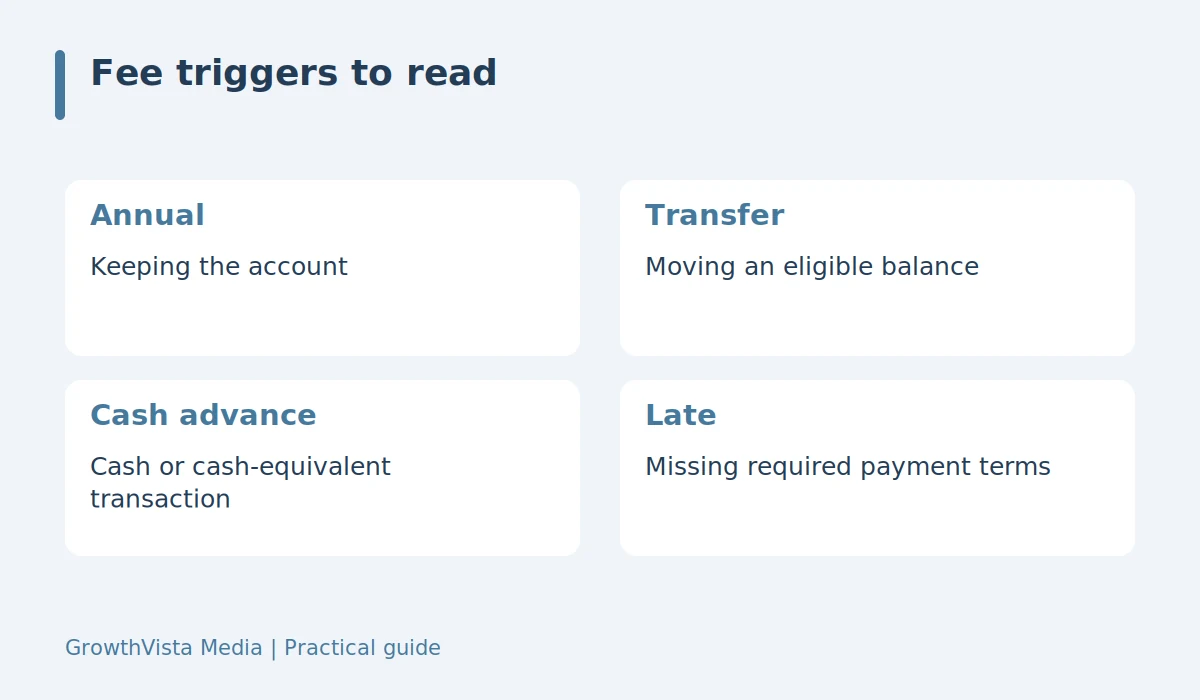
An annual fee is a recurring ownership cost even if you use the card lightly. Some products have setup or maintenance charges too. Late-payment and returned-payment fees depend on account events and contract terms. Write these in separate columns. That makes it easier to compare the cost of ordinary use with the cost of a payment mistake.

A transfer offer can still charge a fee
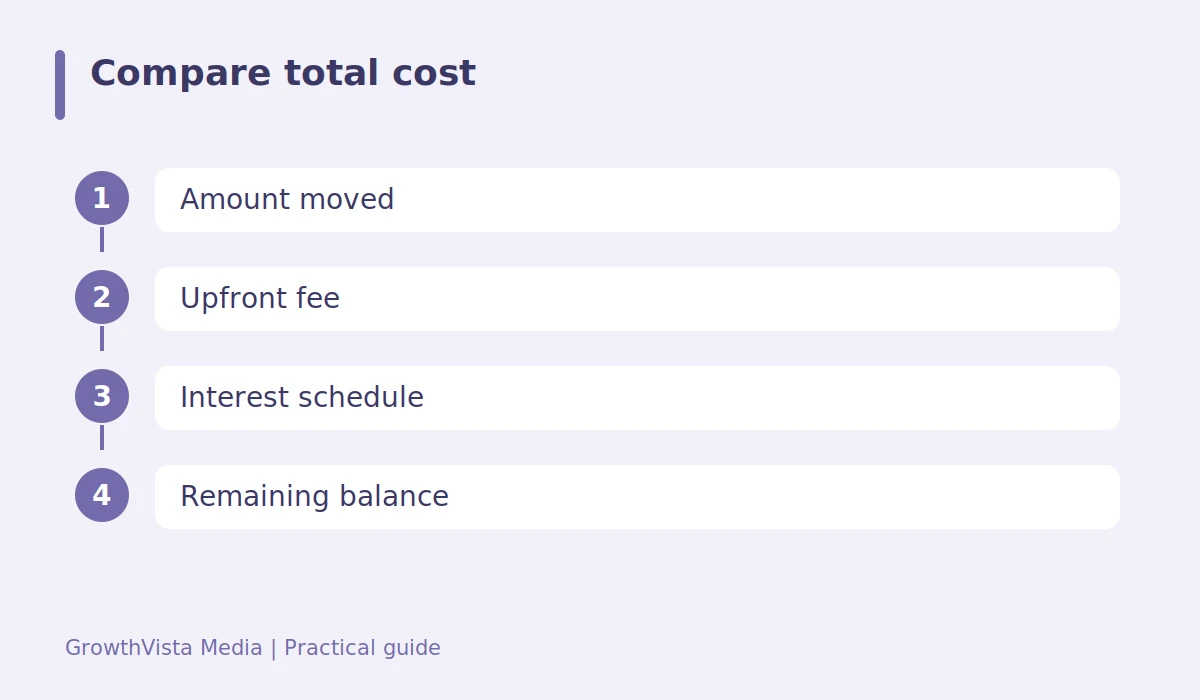
A balance-transfer promotion may charge a percentage of the transferred amount, sometimes with a minimum dollar fee. A low APR does not make that initial cost disappear. Compare the transfer charge, promotional duration, later APR, and expected payoff schedule. Check whether new purchases retain a grace period while the transferred balance is carried.
Cash advances can involve several costs
An ATM withdrawal or another cash-equivalent transaction can carry a fee, a separate APR, and immediate interest under the agreement. ATM operators may add their own charges. Find how the issuer defines a cash advance before using the card to obtain cash. A debit or bank withdrawal follows different rules, so do not assume the experience is the same.
Credit card fees while traveling
Foreign-transaction fees can affect purchases processed under the issuer’s foreign-transaction rules, including some online purchases. Merchant currency conversion can create a separate cost. Compare the issuer’s exchange treatment, card acceptance, and any travel benefits you would actually use. A travel-themed reward card is not automatically the cheapest card for overseas spending.
Review the agreement beyond the headline table
Read conditions for fee waivers, introductory periods, account upgrades, and renewals. Save a copy of the terms when you apply. If a charge appears later, ask the issuer which provision created it. Reminders and sufficient payment-account funds can prevent some avoidable charges, but automated payments should still be checked for successful processing.
A percentage fee in dollars
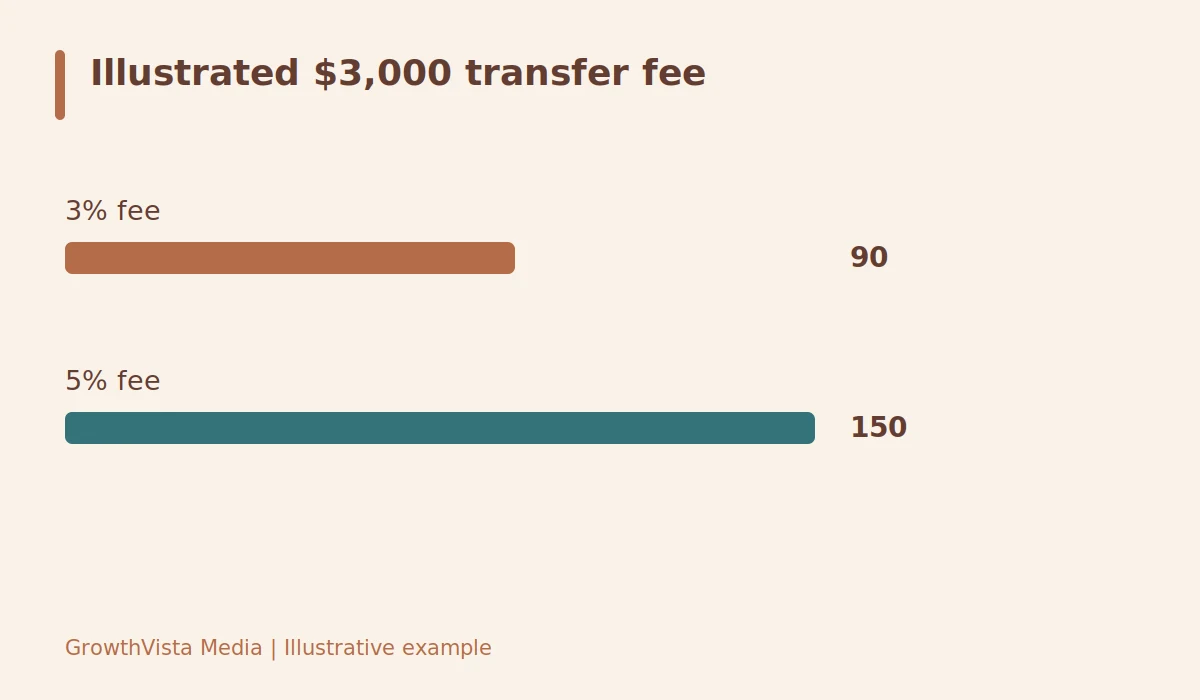
For illustration, transferring $3,000 with a 3% fee costs $90 before any interest. A 5% fee costs $150. If a minimum fee applies, a smaller transfer can have a higher effective percentage. These are hypothetical terms, not current offers. Add the applicable fee to the balance and test whether you can repay it within the promotional period before deciding that a transfer saves money.
| Item | Detail |
|---|---|
| 3% fee | 90 |
| 5% fee | 150 |
Questions readers ask
Does no annual fee mean no fees?
No. Transaction, late, or other charges may still apply. Check the complete disclosure for the activities you expect to use.
Can a fee be waived?
Some agreements or issuers allow waivers in specific situations, but they are not guaranteed. Ask and obtain confirmation rather than budget on an assumed waiver.
Is a transfer fee worthwhile?
It depends on the fee, rates, and repayment schedule. Compare total borrowing cost, including what happens if a balance remains after the promotion.
Your next steps
- List annual and maintenance charges.
- Calculate transaction percentages in dollars.
- Check cash-advance definitions and interest timing.
- Review foreign-transaction and conversion costs.
- Keep the pricing disclosure and agreement.
Related guides: First Credit Card: 6 Checks Before You Apply · Cash Back vs Travel Rewards: Compare Real Value · Credit Card Interest: APR, Daily Balances, and Grace Periods
Further reading
Editorial update: October 12, 2026. U.S.-focused general education, not individual investment, tax, or legal advice. Examples are hypothetical, not current product offers.