Filing Your Taxes: Essential Documents to Gather

When filing your taxes, the documents are the evidence behind each entry. Collecting them early helps prevent missing income, duplicated amounts, and hurried guesses. Build a checklist around your own sources of income and relevant deductions or credits. The goal is a complete record for the correct tax year, not a pile of forms with no explanation.
Start with identity and prior-year records
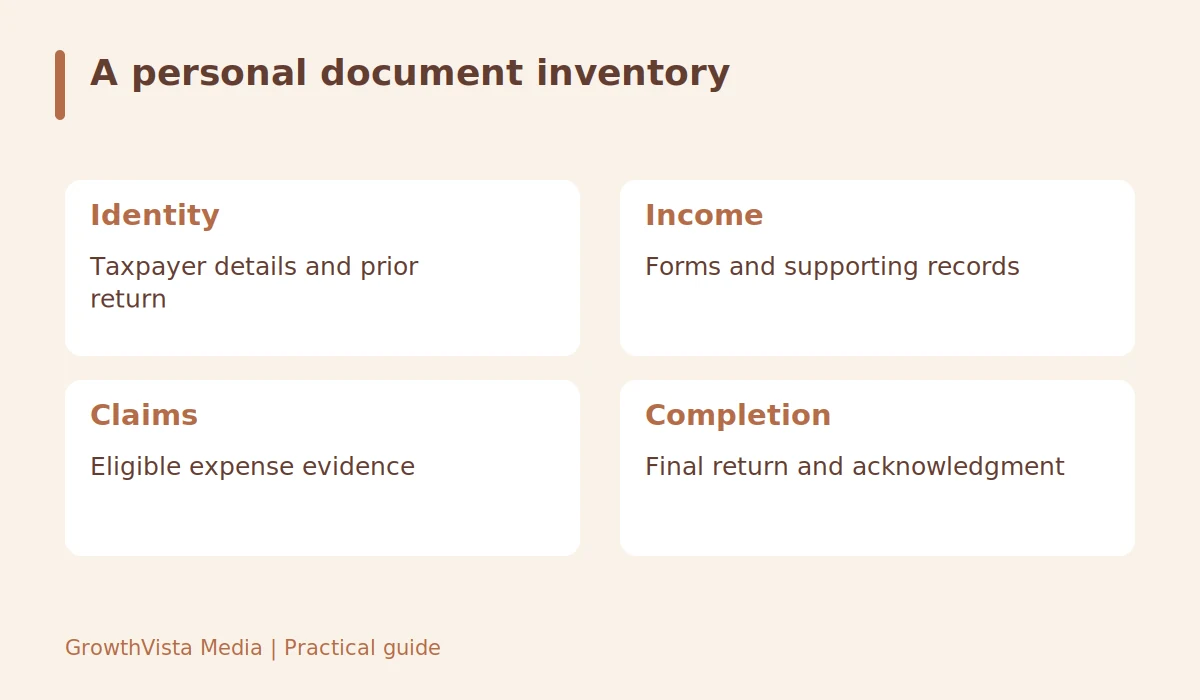
Keep the relevant taxpayer and dependent details, prior return, and any required identity-protection information secure. A previous return can help identify recurring income sources, but it is not a substitute for current records. Check whether names, addresses, filing circumstances, or bank details changed. Share sensitive information only through a secure route that the preparer or provider actually needs.

A document reconciliation example
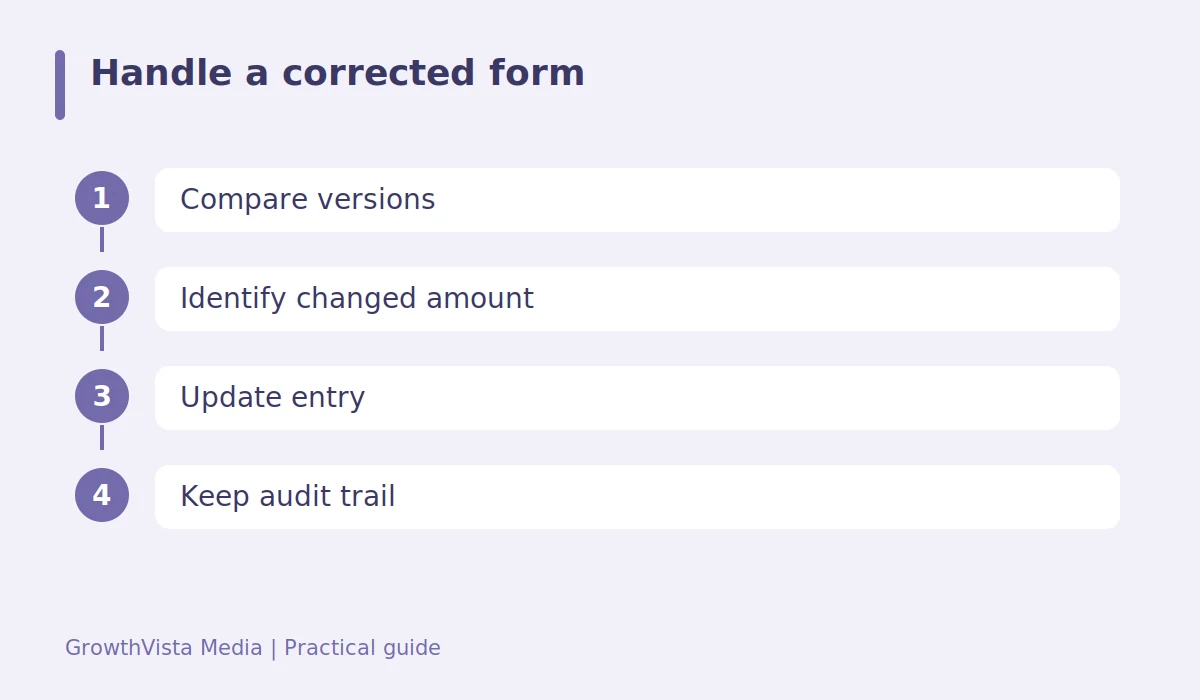
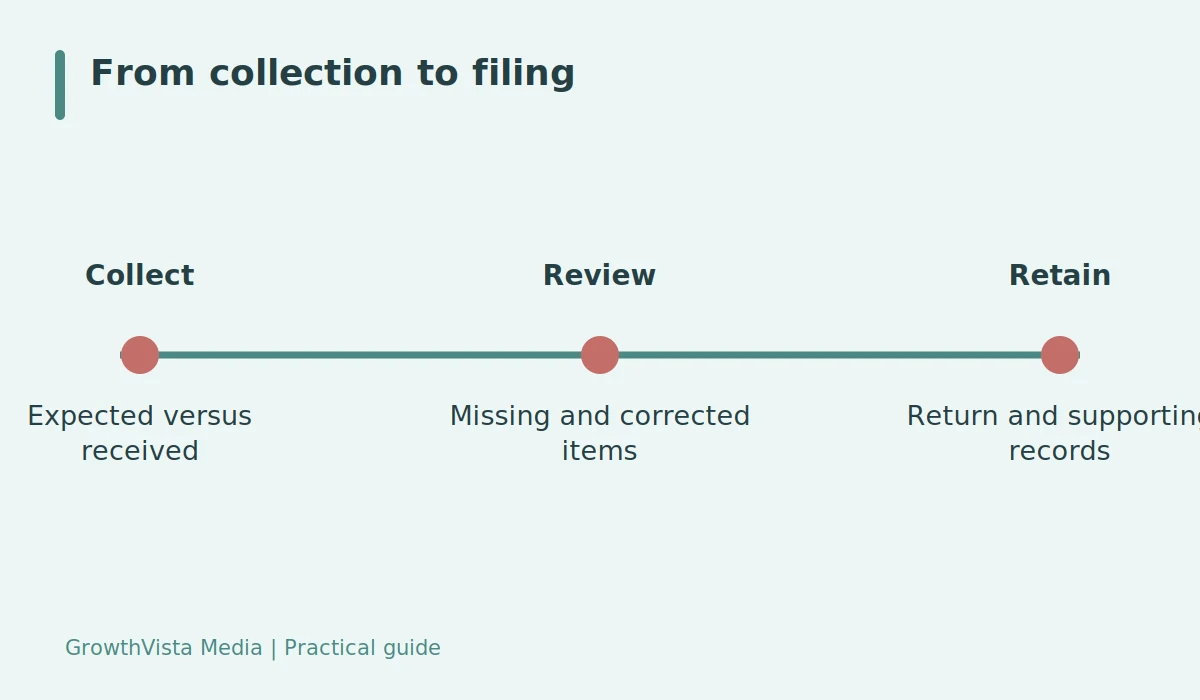
A fictional taxpayer expects two wage statements, one interest statement, and records from freelance work. The checklist shows only one wage statement received. Instead of assuming the absent job has no reportable income, the taxpayer contacts the issuer and checks available records. After a corrected interest statement arrives, the original is marked as superseded. This workflow prevents omissions and duplicate entry without prescribing a tax position.
Filing your taxes starts with every income source
List wages, interest, investments, retirement distributions, self-employment, and other income categories that apply. Match expected forms with received forms. Income can still need reporting when no form arrives, depending on the rules. Do not assume a payment is excluded simply because a statement is missing. Keep transaction or business records that explain the amounts.
Collect support for deductions and credits
Relevant records may include eligible expenses, education information, charitable contributions, business costs, or other items under applicable tax rules. A receipt alone does not prove eligibility. Record the purpose and details needed to substantiate a claim. For self-employment, keep personal and business expenses distinguishable and reconcile totals before entering them.
Check for corrections and duplication
A corrected form can replace earlier information. Compare tax year, taxpayer identifiers, names, and amounts. Some transactions can appear in more than one record and should not be counted twice. If a figure is unclear, contact the issuer or obtain qualified help instead of choosing the number that produces a preferred result. Keep the correction with the original for context.
Finish with a missing-item list
Before filing, review expected forms, unresolved questions, and the records supporting entered amounts. Download or retain the completed return and the submission acknowledgment. Filing and payment deadlines can have different consequences, so confirm current official guidance if more time is needed. Maintain a secure retention plan rather than relying solely on an account that may become unavailable.
Your next steps
- List expected income forms and other records.
- Check tax year and taxpayer details.
- Gather support for relevant deductions or credits.
- Reconcile corrections and overlapping transactions.
- Resolve missing items and save filing records.
Related guides: Tax Software: Choose Around Your Forms and Filing Needs · Free vs Paid Tax Software: 6 Costs and Limits to Compare · Track Spending Without a Complicated Spreadsheet
Questions readers ask
Can I file when a form is missing?
Review the applicable rules and obtain reliable information before filing. Contact the issuer or seek qualified assistance rather than inventing an amount.
Should I enter both original and corrected forms?
A corrected form generally needs reconciliation with the original, not automatic duplicate entry. Check the instructions and what changed.
Do I need to keep the final return?
Keep a secure copy and relevant supporting records under a suitable retention plan. Provider account access alone may not be a durable record.
Further reading
Editorial update: October 12, 2026. U.S.-focused general education, not individual investment, tax, or legal advice. Examples are hypothetical, not current product offers.