Track Spending Without a Complicated Spreadsheet

To track spending, you need a reliable record and a review you will actually complete. You do not need dozens of spreadsheet tabs. A notebook, a short list, or a basic app can show where money went. Choose a method that captures ordinary purchases and helps answer one useful question: what should change before the next payment period?
Pick a record you can keep current
Choose one main place for transactions. Bank exports can help with electronic purchases; cash needs a separate note. If using an app, check account-linking and privacy terms before connecting it. If using paper, retain receipts long enough to enter them. A simple method kept current is more informative than an elaborate system abandoned after a week.

A seven-day review
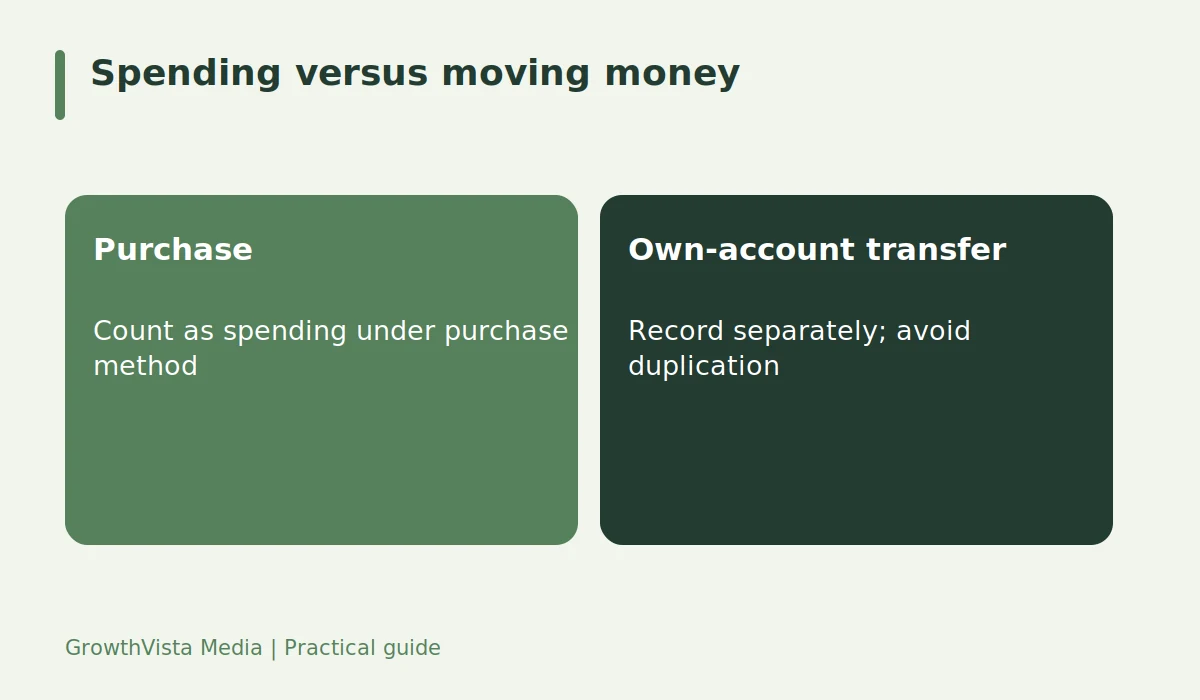
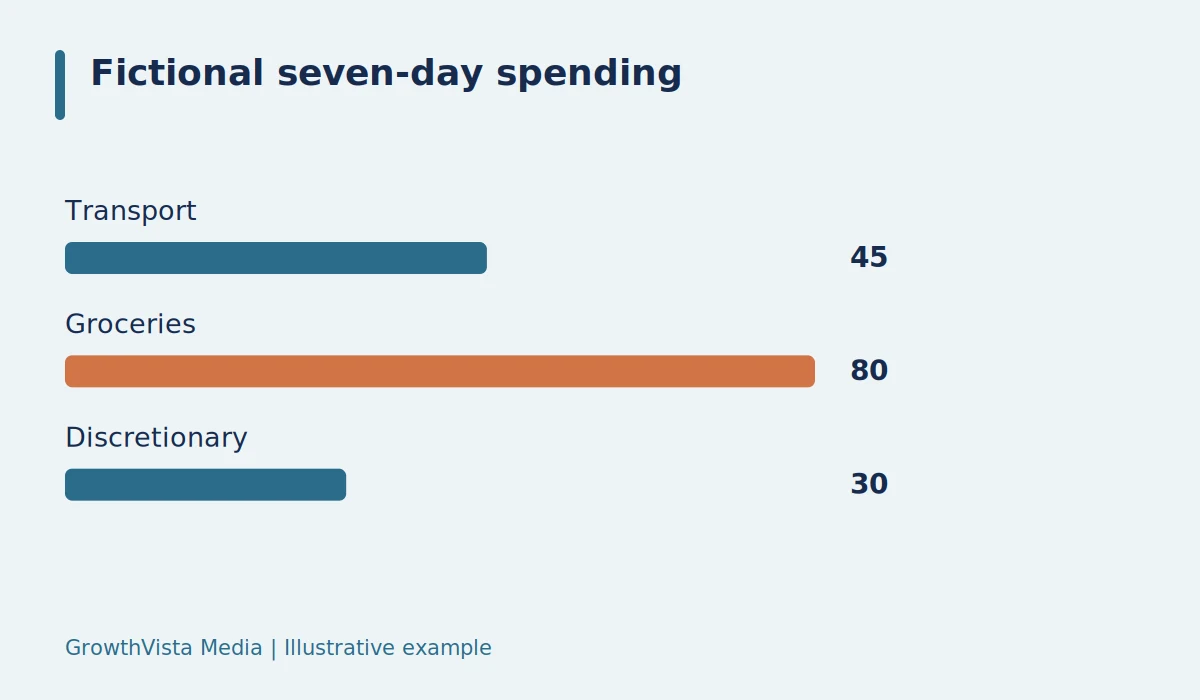
A fictional spending log shows $45 of transport, $80 of groceries, and $30 of discretionary purchases during one week. The total is $155. A $200 transfer between two owned accounts is listed separately and excluded from spending. The reader checks whether any card payments duplicate the purchases before comparing the total with a weekly plan. These amounts illustrate recordkeeping, not a recommended household budget.
| Item | Detail |
|---|---|
| Purchase | Count as spending under purchase method |
| Own-account transfer | Record separately; avoid duplication |
Use a small number of meaningful categories
Separate required bills, groceries, transport, discretionary purchases, and irregular expenses. Add a category only when it changes a decision. A merchant name may not identify the purpose: one supermarket trip can contain food and household goods. Consistent treatment matters more than perfect detail. Keep the category list visible so each transaction is handled the same way.
Track spending without counting transfers twice
Moving money between your own accounts is not usually new spending. A credit-card payment can also duplicate purchases already recorded from the card. Decide whether you record purchases or payments for the view you are building, and explain that choice. Include fees and interest separately so genuine costs do not disappear when transfers are excluded.
Make the weekly review short and specific
Choose a fixed time to check missing cash purchases, unclear transactions, recurring charges, and the remaining money before payday. Compare actual spending with the budget rather than merely collecting data. If one category keeps exceeding the estimate, decide whether the estimate was unrealistic or the purchases can change. Write one action instead of a long list of resolutions.

Keep records without exposing unnecessary data
A spending log may contain sensitive details. Use secure storage and avoid uploading complete statements to tools that do not need them. For shared household finances, agree on the purpose and level of detail. Review subscriptions and bank fees periodically, and delete data according to a sensible retention plan. Convenience should not require handing every transaction to another service.
Your next steps
- Choose one transaction record.
- Keep categories short and consistent.
- Define how transfers and card payments are handled.
- Review missing or recurring charges weekly.
- Make one adjustment for the next period.
Related guides: Monthly Budget: Build a Plan Around Real Payment Dates · Debt Repayment Plan: Compare Avalanche and Snowball · Financial Goals: A Practical Annual Review Checklist
Questions readers ask
Should I record every small cash purchase?
Include enough detail to keep totals useful. A daily cash-spending total can work if individual purchases are not needed for a decision.
Why does my total exceed the bank statement?
Check timing, pending transactions, cash entries, and duplicate card payments or transfers. Different recording methods can create different totals.
Which tracking app is best?
The best fit depends on privacy, exports, cost, and the routine you will maintain. Test the needed tasks before connecting all your accounts.
Further reading
Editorial update: October 12, 2026. U.S.-focused general education, not individual investment, tax, or legal advice. Examples are hypothetical, not current product offers.