Financial Goals: A Practical Annual Review Checklist

Financial goals change when income, family responsibilities, or priorities change. An annual review is a chance to update the plan, not to judge the year by one account balance. Collect the important records and compare each goal with its deadline. Then choose a small number of actions that fit the next twelve months.
Replace vague goals with a purpose and date
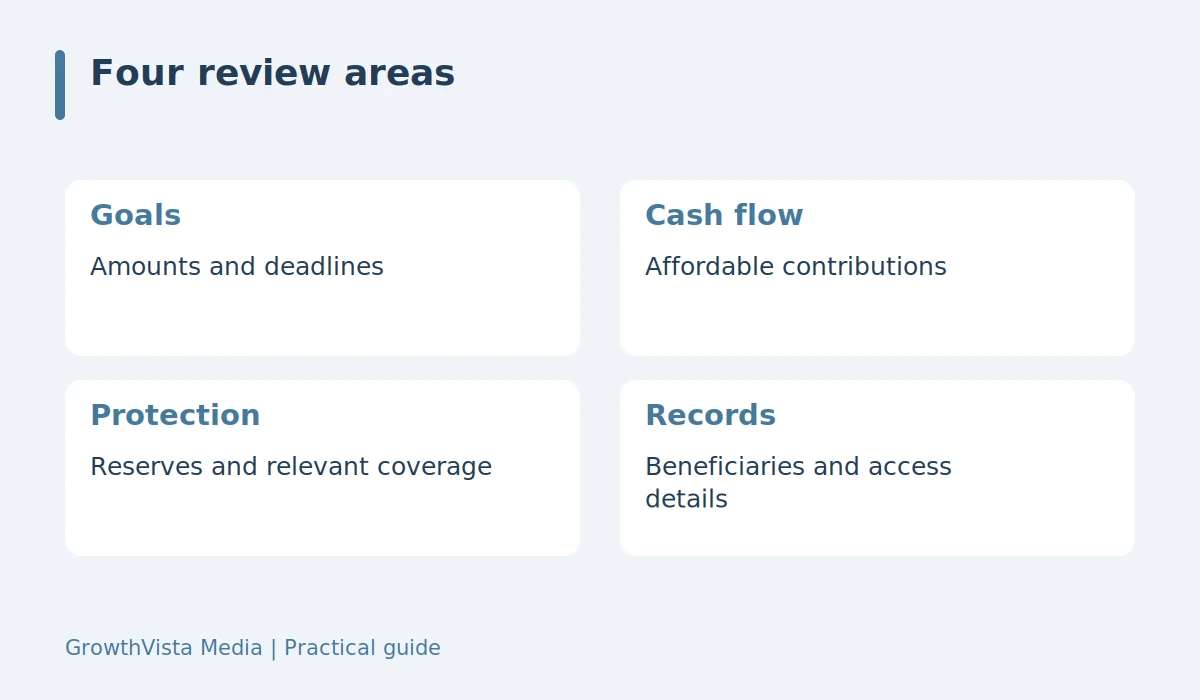
Saving more is difficult to measure. Identify what the money is for, an estimated amount, and when it may be needed. Mark estimates honestly and update them as information improves. Separate near-term purchases from long-term goals. The same account or investment approach may not suit both, even when each is called saving.

Review financial goals against current cash flow
Compare the planned contribution with actual take-home income and essential costs. A raise does not automatically make all of it available if housing or family expenses also rose. Identify predictable nonmonthly bills. If a goal is behind schedule, consider the amount, deadline, or contribution rather than assuming a riskier investment is the answer.
Check debt and reserves together
Update debt balances, rates, required payments, and the accessible reserve. A goal may compete with expensive borrowing or an income buffer. There is no universal priority list for every household, but the trade-offs should be explicit. Record what would happen if income stopped temporarily and whether a planned purchase would require new debt.
Refresh account and household records
Check contact information, beneficiaries where applicable, shared access arrangements, and official account statements. Review whether major life changes require professional advice or updated legal documents. A well-funded account can still create administrative trouble if records are outdated. Store important instructions securely and make sure the appropriate household person knows how to find them.
Choose a limited action list
Pick two or three measurable changes rather than promising a total financial overhaul. Give each an owner and review date. Set a midpoint check so the next annual review is not the first time you discover a problem. Keep notes about assumptions; they make it easier to distinguish an unexpected event from a plan that was unrealistic from the beginning.
Adjusting a target after a change
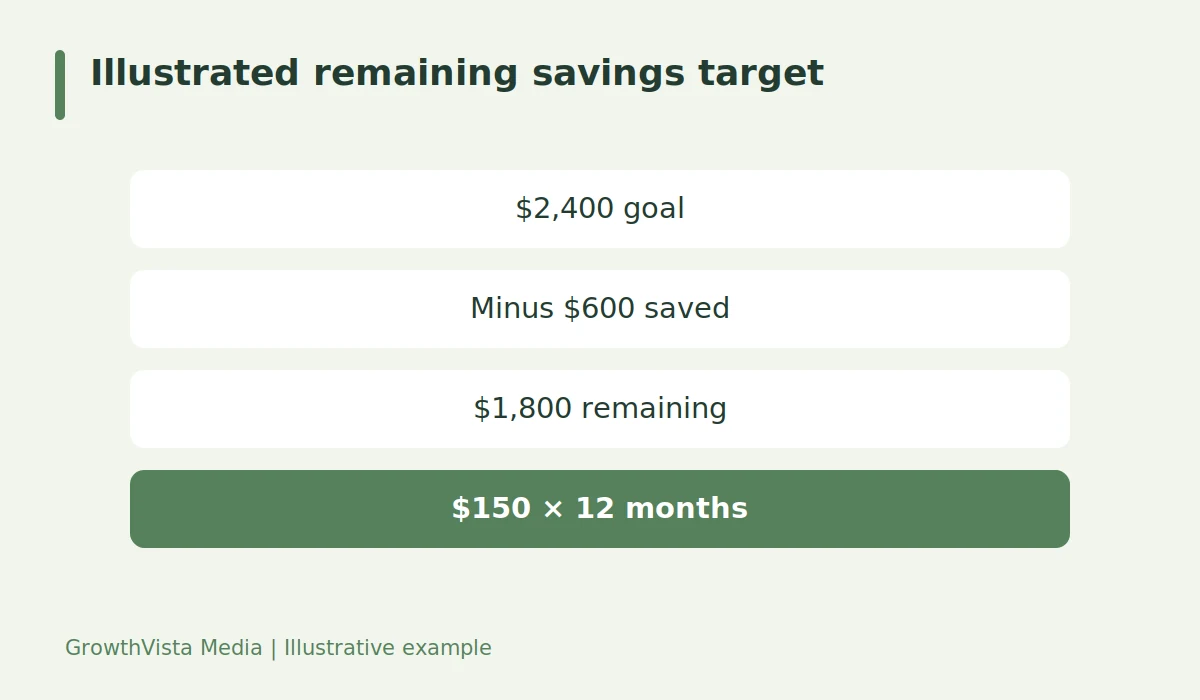
A fictional household wants $2,400 for an expense twelve months away and currently has $600 reserved. The remaining $1,800 requires an average $150 a month if no interest is assumed. If that amount is not affordable, the household can revisit the goal, date, or other spending. The example shows a planning calculation, not a requirement to borrow or chase a return.
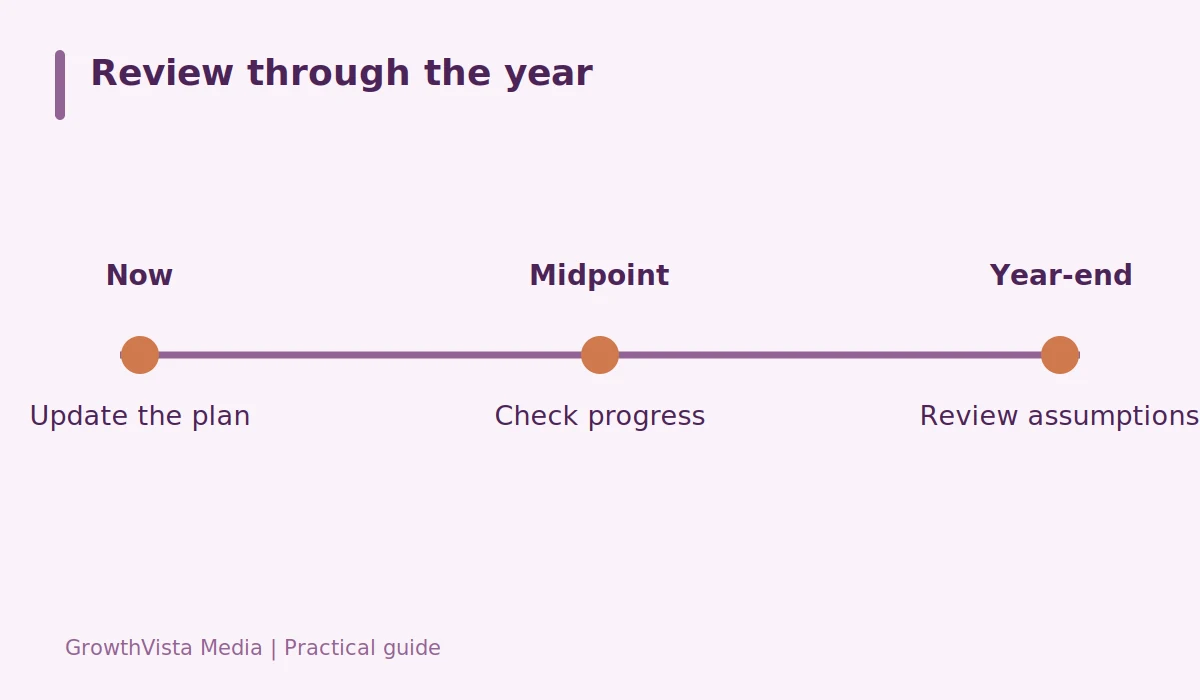
| Item | Detail |
|---|---|
| Now | Update the plan |
| Midpoint | Check progress |
| Year-end | Review assumptions |
Questions readers ask
Should every goal have a separate account?
Not necessarily. Separate records can sometimes do the job. Consider fees, complexity, and how easily you can avoid spending earmarked money.
What if I missed the original target?
Review the cause and update the plan. Change the amount, deadline, or contribution if needed; a missed target is useful information about the assumptions.
Is an annual review enough?
Major changes deserve a review when they occur. A shorter midpoint check can also reveal problems before the next yearly review.
Your next steps
- Update goal amounts and dates.
- Compare required saving with actual cash flow.
- Review debt and accessible reserves.
- Refresh account and beneficiary records.
- Assign two or three actions and a midpoint review.
Related guides: Monthly Budget: Build a Plan Around Real Payment Dates · Emergency Fund: Set a Target That Fits Your Risks · Track Spending Without a Complicated Spreadsheet
Further reading
Editorial update: October 12, 2026. U.S.-focused general education, not individual investment, tax, or legal advice. Examples are hypothetical, not current product offers.