Monthly Budget: Build a Plan Around Real Payment Dates

A monthly budget directs money toward the things it must and should do. It becomes more useful when it includes payment dates rather than only monthly totals. A household can have enough income over a month and still face a shortage before payday. Start with actual take-home money, expected bills, and a small set of spending categories you can maintain.
Use income you can reasonably expect
Write down take-home pay and other reliable income, including when it arrives. For irregular earnings, distinguish a cautious baseline from unusually strong months. Avoid treating every possible payment as guaranteed. Keep business and household obligations clear if self-employed. A usable budget needs a view of both the amount available and the date it becomes available.

A timing gap hidden by a monthly total
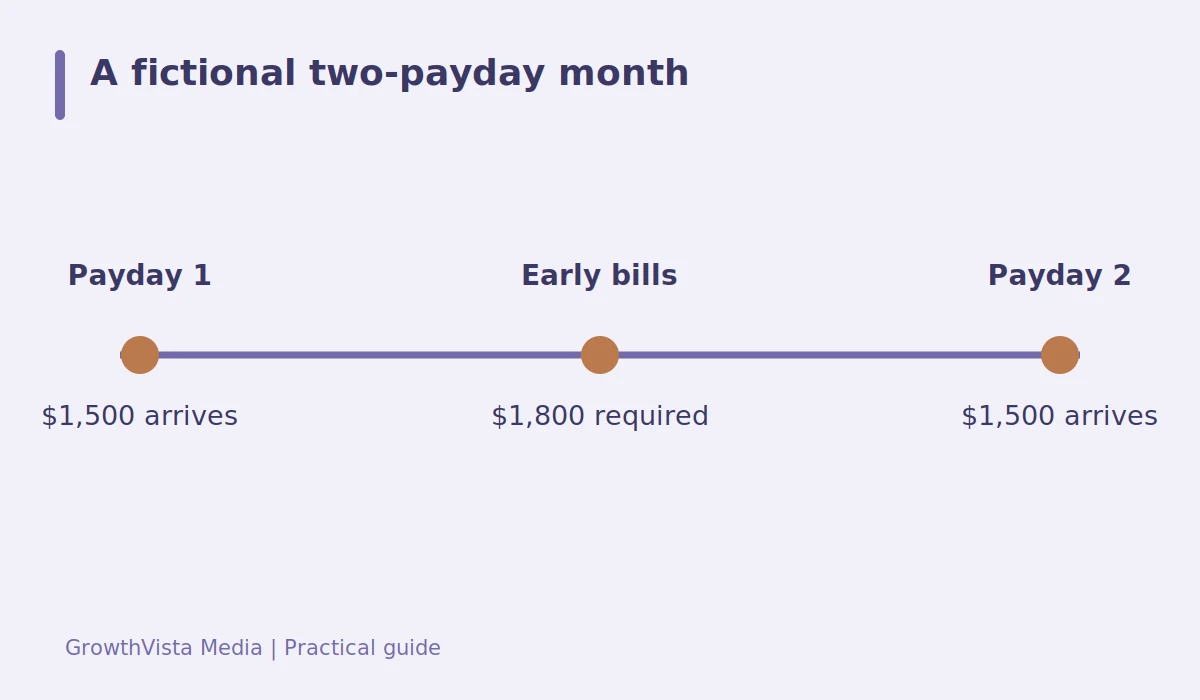
Suppose $3,000 arrives across two $1,500 paydays, while $1,800 of bills falls before the second payday. The monthly income total can look sufficient even though the early payment period is short by $300. Mapping dates reveals the problem. A fictional household could review a cash buffer, due-date changes, or the spending schedule. The example illustrates timing, not a prescribed borrowing solution.
Put fixed bills on a calendar
List housing, utilities, insurance, minimum debt payments, and other commitments. Record due dates and whether charges vary. Identify bills due before the next income payment. A buffer in the payment account can help with timing, but it should be visible in the plan rather than counted as spare spending money. Contact providers early if a payment-date change would help.
A monthly budget needs irregular expenses
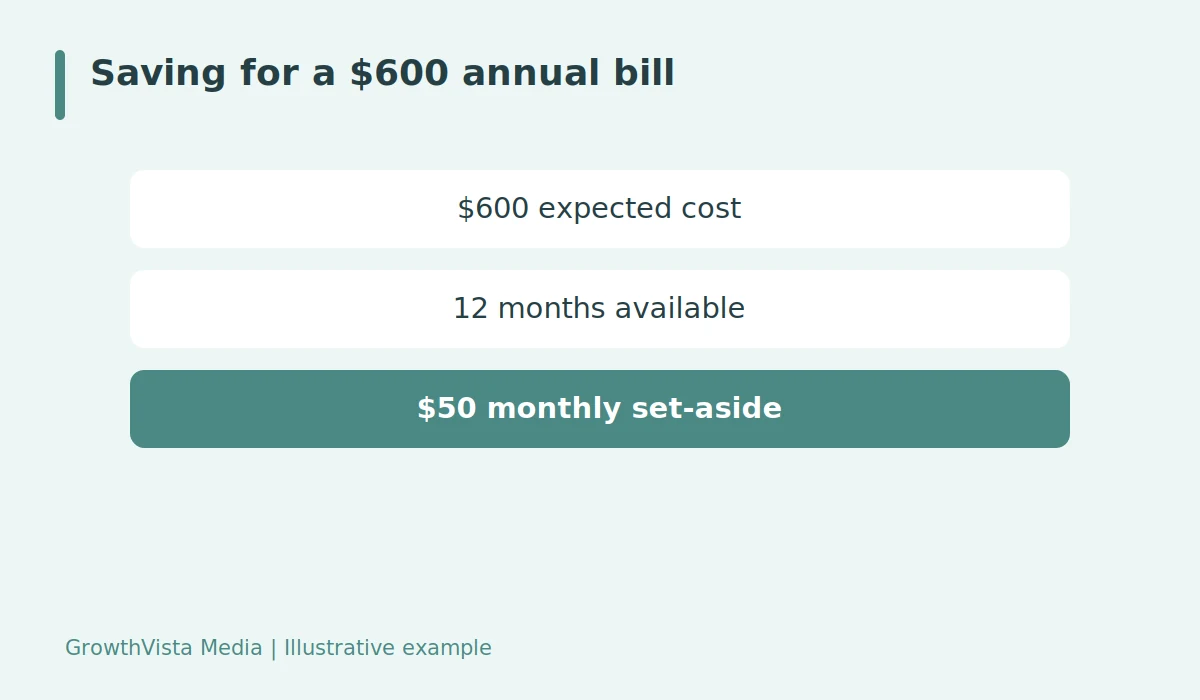
Annual insurance, repairs, school costs, and holidays can be predictable even when they are not monthly. Estimate a reasonable set-aside and keep the goal separate in your records. For a $600 annual bill, a simplified twelve-month set-aside is $50 per month. If the bill is due sooner, the remaining months change the required amount. Do not divide by twelve automatically after the deadline is near.
Choose categories you will actually review
Begin with a manageable number such as groceries, transport, household purchases, and discretionary spending. Too many categories can create work without improving decisions. Use actual transactions to check the estimate. Give savings and planned debt reduction a place in the plan, but keep essential costs and minimum obligations visible. A percentage rule can be a starting prompt, not a requirement that every household can meet.
Review the plan rather than judge yourself
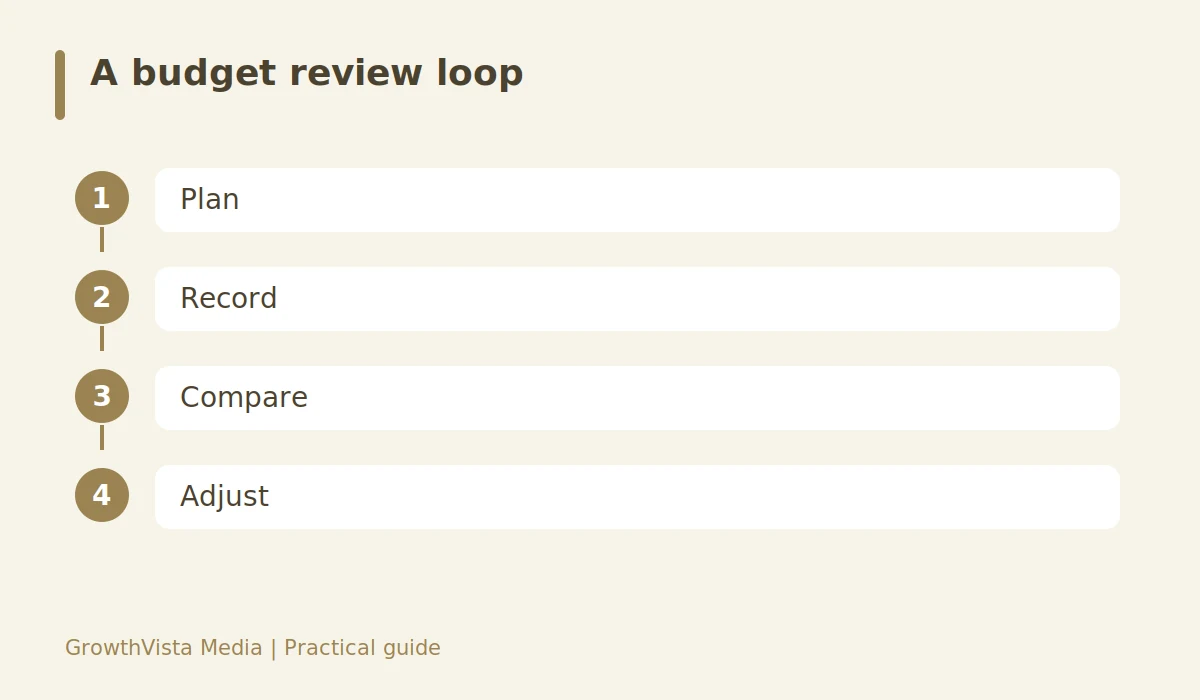
At month-end, compare planned and actual amounts. Identify whether a difference came from an unrealistic estimate, an unusual event, or spending that can be changed. Adjust one or two categories instead of rebuilding everything. Keep notes about timing problems. A budget is successful when it improves decisions and makes obligations clearer, not when every month matches perfectly.
Your next steps
- Record take-home income and arrival dates.
- List fixed bills with due dates.
- Add upcoming nonmonthly expenses.
- Choose a few flexible-spending categories.
- Compare actuals and adjust the next month.
Related guides: Emergency Fund: Set a Target That Fits Your Risks · Debt Repayment Plan: Compare Avalanche and Snowball · Track Spending Without a Complicated Spreadsheet
Questions readers ask
Do I need a spreadsheet?
No. A notebook, simple app, or calendar can work. Choose a tool that you will keep current and that shows both amounts and payment dates.
What if my income changes every month?
Use a cautious baseline, record expected payment dates, and decide how stronger months fund reserves or future obligations. Update the plan when income becomes certain.
Should every expense fit a percentage rule?
No. Housing, health, family, and location costs vary. Use percentages as a discussion aid, then build a plan that covers your actual obligations.
Further reading
Editorial update: October 12, 2026. U.S.-focused general education, not individual investment, tax, or legal advice. Examples are hypothetical, not current product offers.