Nutrition Label: Read Serving Size, Nutrients, and %DV
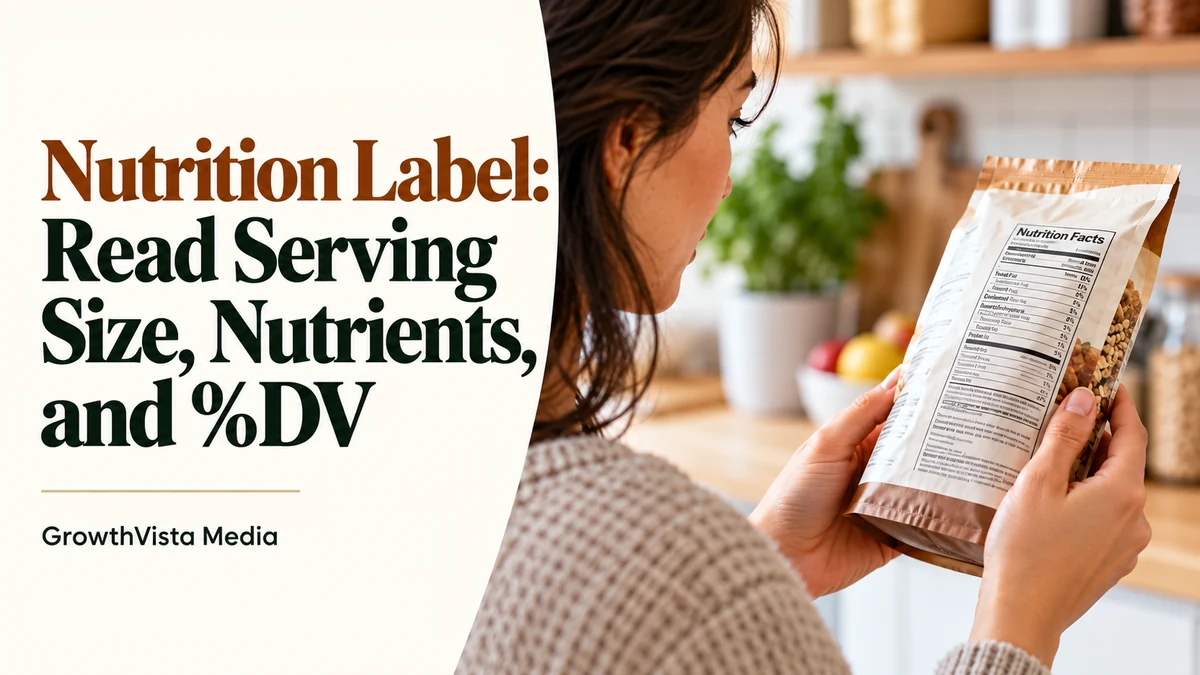
A nutrition label becomes useful when you connect its numbers to the amount you actually eat. Start with serving size and servings per container, then review the nutrients relevant to your needs. The front of a package can emphasize one attractive feature while the Nutrition Facts panel provides a broader view. Compare similar foods on the same serving basis.
>
Start with the serving information
The Nutrition Facts amounts are usually stated per serving, and some packages also provide a per-package column. A serving is a reference amount, not a personal instruction. If you eat two stated servings, multiply the relevant amounts accordingly. Check the number of servings before assuming a small package is a single portion.
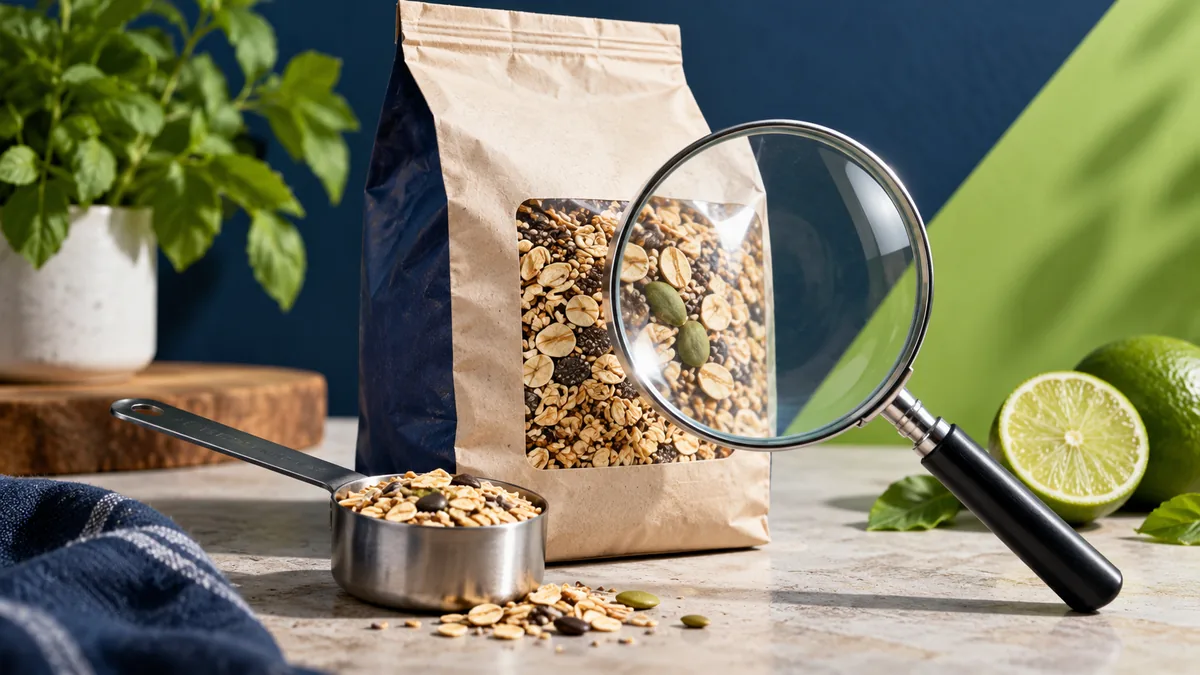
A serving-size calculation
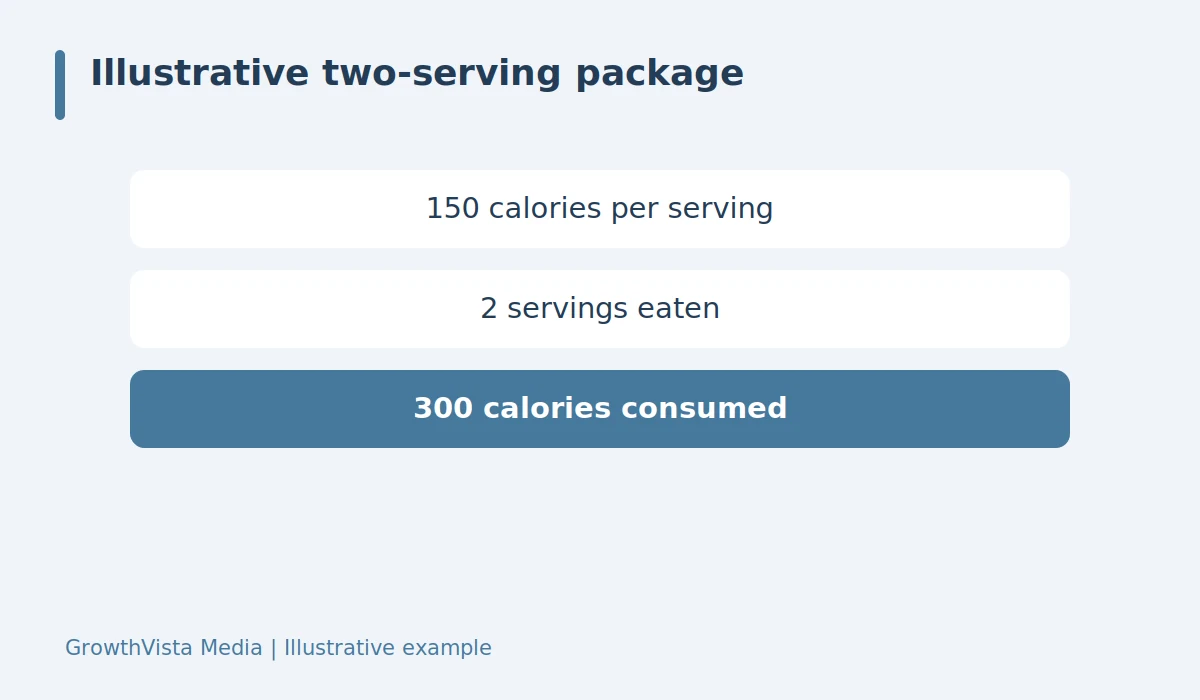
An invented label lists 150 calories and 200 mg of sodium per serving, with two servings in the package. Eating the entire package gives 300 calories and 400 mg of sodium under that example. These figures are for arithmetic practice and do not represent a real product or a recommended intake. The calculation should come before comparing the package with another food.
| Item | Detail |
|---|---|
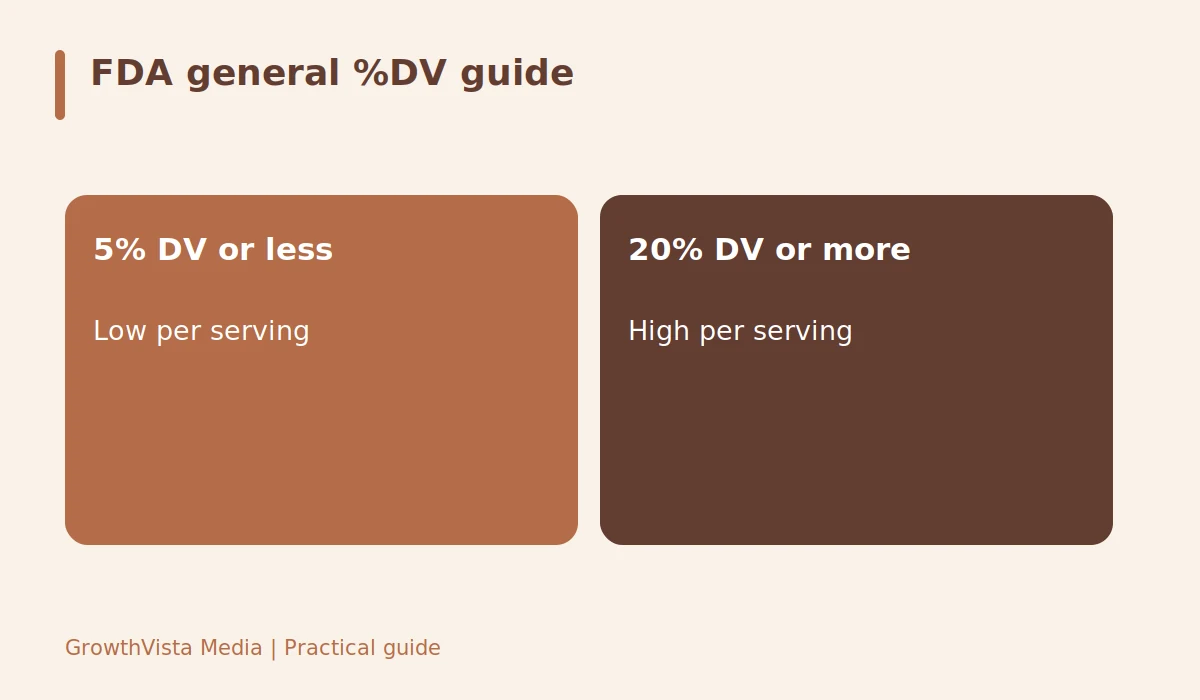
| 5% DV or less | Low per serving |
| 20% DV or more | High per serving |
Read the nutrition label for your actual portion
Calories and nutrient amounts describe the listed quantity. A larger or smaller portion changes what you consume. When comparing products, align the serving basis and consider preparation instructions. A dry mix and a prepared food can show different information. Do not compare the large calorie figure without checking what amount and preparation it represents.
Use percent Daily Value as context
Percent Daily Value shows how much a nutrient in one serving contributes to a reference daily amount. It is not an individualized target for every person. The FDA’s general guide treats 5% DV or less as low and 20% DV or more as high for a nutrient per serving. Which nutrients matter most depends on your dietary needs and the broader pattern.
Separate total sugars and added sugars
Total sugars include sugars present in the food, while added sugars are identified separately under label rules. A low number in one row does not establish the quality of the whole food. Review fiber, sodium, saturated fat, and other relevant information in context. The ingredient list and allergen information answer additional questions not captured by one nutrient number.
Use the panel for a specific decision
Decide what you are comparing: sodium, fiber, a serving amount, or another requirement. Avoid treating the panel as a scorecard where every food must maximize every nutrient. A label can help with planning and product comparison, but medical dietary restrictions need individual guidance. Save a clear photo or note only if it helps you make the next purchase.
Your next steps
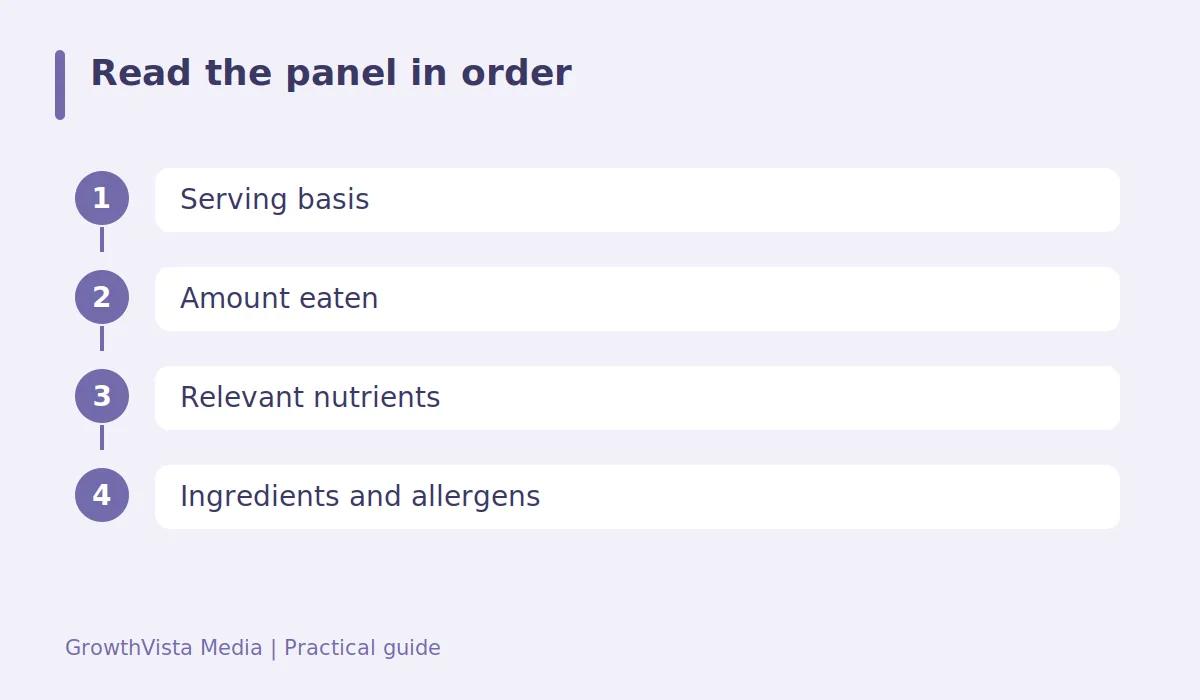
- Check serving size and servings per container.
- Calculate the amount for the portion eaten.
- Review relevant nutrient amounts and %DV.
- Check ingredients and allergen information.
- Compare products on a consistent basis.
Related guides: Balanced Plate: Build a Flexible Meal With Everyday Foods · Protein Basics: Food Sources and Everyday Planning · Portions: Understand Amounts Without Strict Tracking
Questions readers ask
Is serving size the amount I should eat?
No. It is the reference amount used for the label. Your portion and dietary needs can differ.
Can I compare products using calories alone?
That leaves out serving amounts and other relevant nutrients. Compare similar quantities and the factors that matter for the decision.
Does %DV match my personal requirements?
Not necessarily. It is based on reference values. Specific dietary requirements may need tailored advice.
Further reading
- USDA MyPlate: meal planning and food groups
- FDA: Nutrition Facts label
- FDA: low and high percent Daily Values
Editorial update: October 12, 2026. General educational information, not diagnosis or individualized treatment. Examples are illustrative; consult an appropriately qualified professional for personal health questions.