Meal Planning for Busy Weeks: A Flexible 5-Step Routine

Meal planning should reduce decisions, not add another demanding project. A busy week rarely needs seven completely different dinners. Start with the food already available and a few meals your household will eat. Leave room for leftovers and an easy backup. A useful plan fits the calendar, storage, and cooking time you actually have.
Check the kitchen and the calendar together
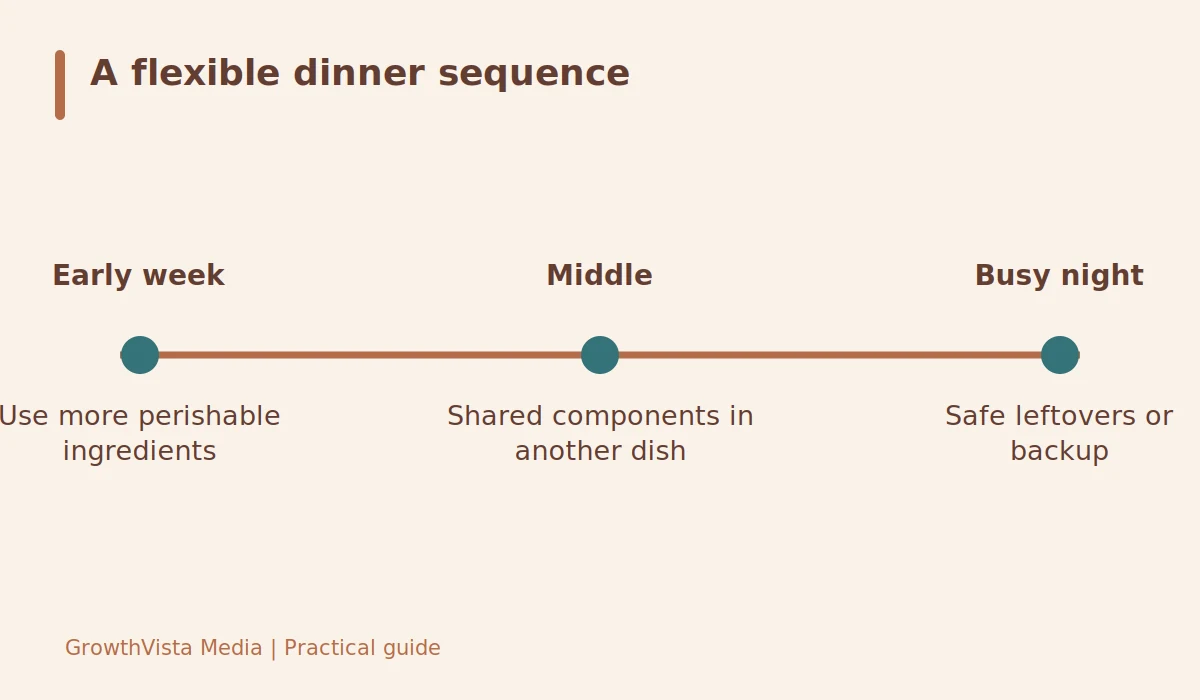
Look at the refrigerator, freezer, and pantry before writing a shopping list. Note foods that need using soon. Then mark evenings with limited preparation time or a different household schedule. A meal that is simple on Sunday may be unrealistic after a late workday. Plan the busiest evenings first so convenience does not depend on improvisation.
A flexible three-dinner plan
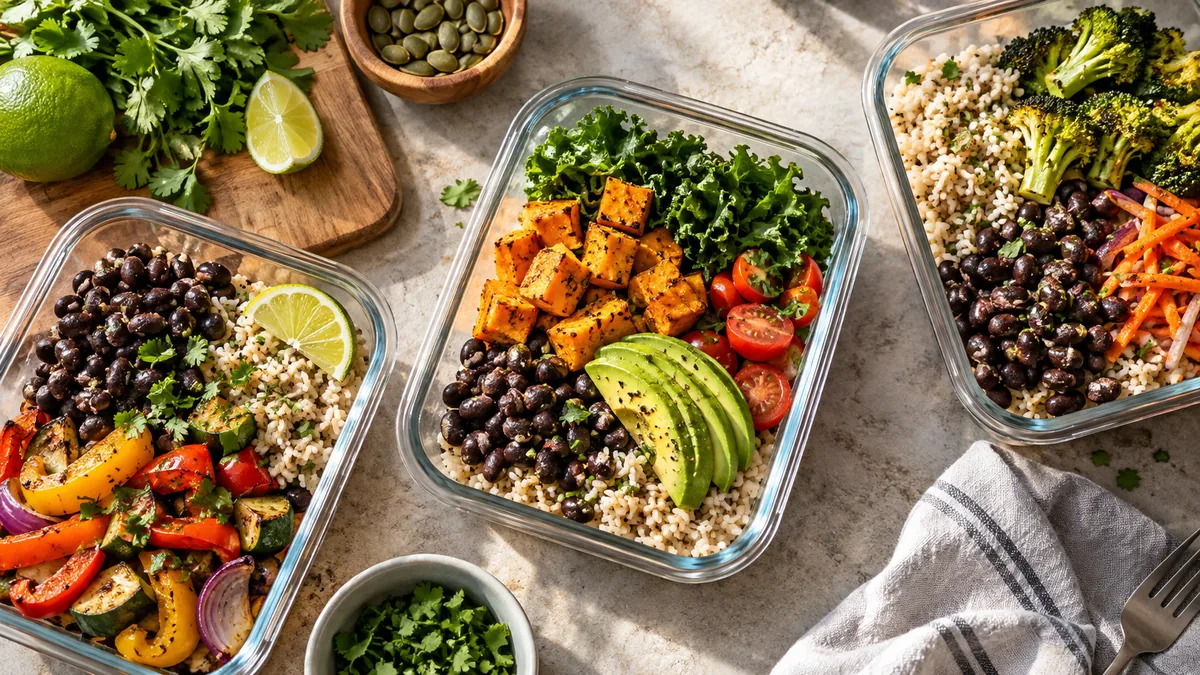
A fictional household schedules one grain-and-bean bowl, one vegetable-and-tofu meal, and one suitable soup, with a leftover evening and a freezer backup. Shared vegetables reduce shopping complexity while the dishes remain different. Portions, ingredients, and storage need to fit the household. The example is a planning pattern, not a prescribed diet or a food-storage timetable.
Meal planning works with shared ingredients
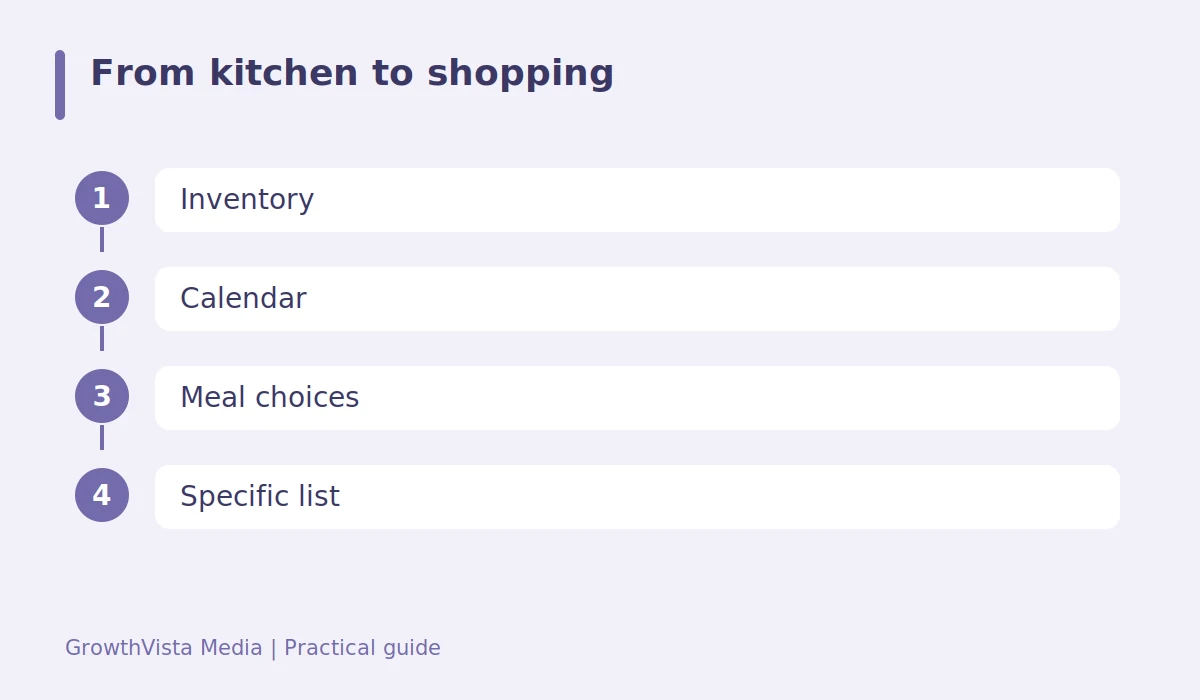
Choose a few meals that use overlapping ingredients without making every meal identical. A cooked grain or suitable vegetables may serve different dishes across the week. Keep flavors and protein sources varied within your preferences. Avoid buying an ingredient for only one complicated recipe unless you have a realistic use for the rest.
Build a list from the meals, not promotions
Write the quantities and ingredients needed after checking what is already available. A discount is useful only if the food will be stored and eaten. Include simple breakfast or lunch needs if those are frequent gaps. Keep the list short enough to follow and compare package sizes with actual storage space. Waste can cancel the benefit of a bulk price.
Plan leftovers with food safety in mind
Use safe cooling, storage, and reheating practices from reliable food-safety guidance. Label dates where useful, keep raw and ready-to-eat foods separate, and do not extend storage just to complete the plan. A leftover slot is practical only when the food remains suitable. Freeze appropriate portions when that fits the food and your schedule.
Keep a backup and review what worked
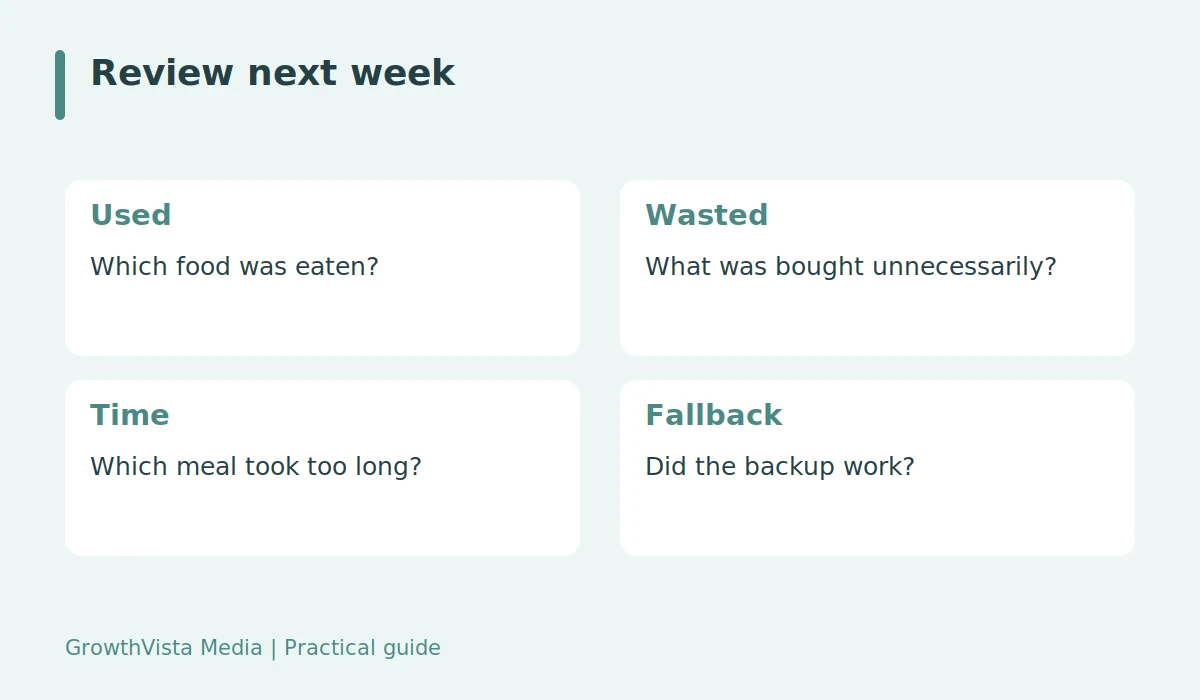
Choose an easy pantry or freezer meal for disrupted days. A backup is part of the plan, not a failure. At the end of the week, note what was used, what was wasted, and which meals took too long. Change one part of the next plan. A repeatable routine is more useful than an impressive menu that your household cannot maintain.
Your next steps
- Check food already available.
- Plan the busiest evenings first.
- Choose meals with useful ingredient overlap.
- Follow safe storage and reheating guidance.
- Keep one simple backup meal.
Related guides: Balanced Plate: Build a Flexible Meal With Everyday Foods · Protein Basics: Food Sources and Everyday Planning · Portions: Understand Amounts Without Strict Tracking
Questions readers ask
Do I need to cook everything in advance?
No. You can prepare selected components or simply plan the shopping and meal order. Choose the approach that fits time and safe storage.
What if the week changes?
Use the backup, move a suitable meal, or safely freeze ingredients where appropriate. Flexibility prevents the plan from becoming another deadline.
Is buying in bulk always cheaper?
Only when the unit cost, storage, and actual use make sense. Food that is wasted does not create a useful saving.
Further reading
- USDA MyPlate: meal planning and food groups
- FDA: Nutrition Facts label
- FoodSafety.gov: safe leftovers
Editorial update: October 12, 2026. General educational information, not diagnosis or individualized treatment. Examples are illustrative; consult an appropriately qualified professional for personal health questions.