Fitness Routine: Start Small and Build a Usable Week

A fitness routine is easier to maintain when it fits an ordinary week. Start with movement you can repeat, a place to do it, and a realistic time slot. The first goal is a reliable habit, not an intense transformation. Adapt activity to your abilities and seek appropriate medical guidance when symptoms or health conditions make the plan uncertain.
Begin with your current week
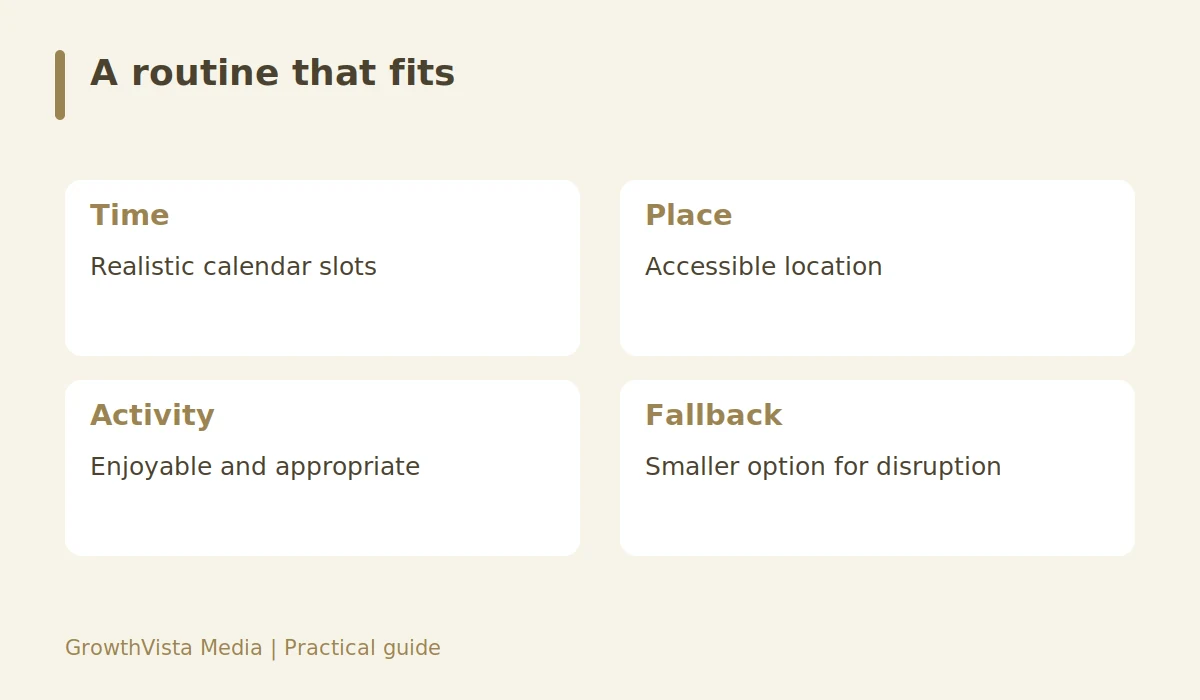
Find two or three realistic windows rather than assuming every day has an open hour. Consider transport, caregiving, work, and access to equipment. Choose an activity you are willing to do again. A ten-minute starting session can be a useful personal practice point, but it is not a universal prescription. Record what made it easy or difficult.

A fictional starting week
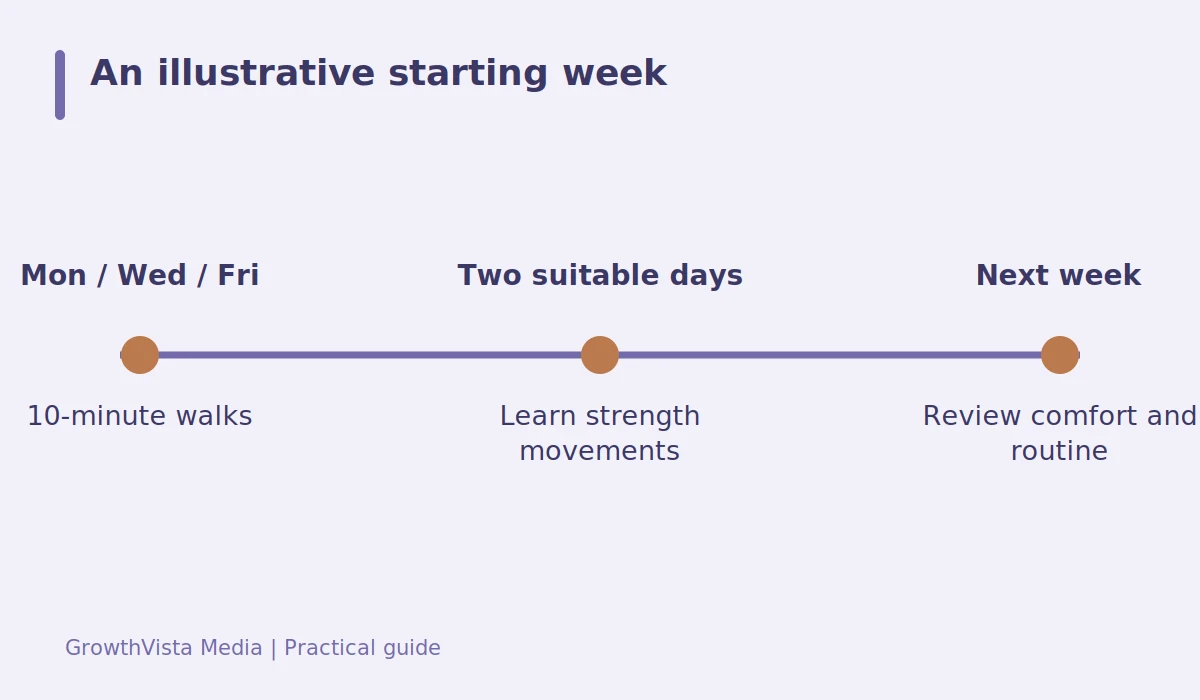
An adult chooses three ten-minute walks on days with predictable breaks and two brief opportunities to learn suitable strengthening movements. The following week is adjusted according to comfort, recovery, and availability. This is an illustration of scheduling, not an individualized exercise program or a claim that the initial week meets all activity targets. The useful step is recording a repeatable starting point.
A fitness routine needs more than one kind of movement
Current U.S. adult guidance includes at least 150 minutes of moderate aerobic activity a week, or an equivalent vigorous combination, plus muscle-strengthening activity on at least two days. Those are general adult targets, not a demand to begin there immediately. Shorter sessions can accumulate, and activity should be adapted to individual ability and health circumstances.
Progress one variable at a time
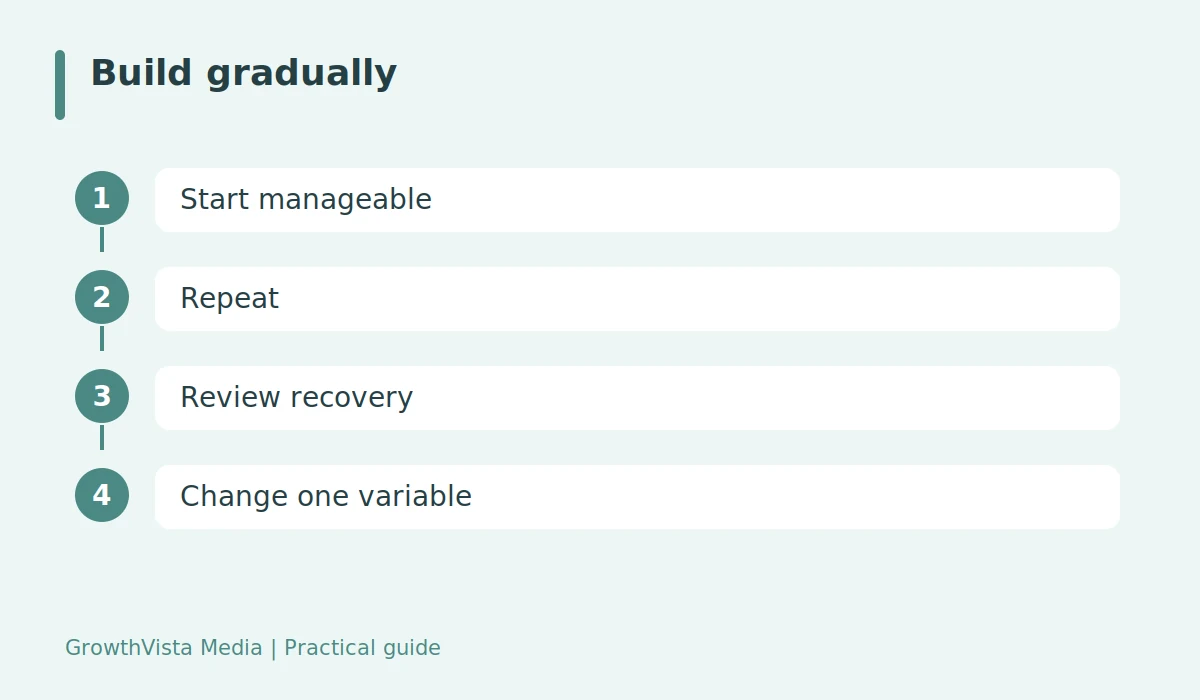
Increasing duration, frequency, and difficulty all at once makes it hard to identify what caused discomfort or fatigue. Start with a manageable version and review how you recover. Keep technique and confidence ahead of heavier loads or faster pace. If pain or concerning symptoms occur, stop and get appropriate advice rather than treating persistence as the goal.
Design a fallback session
A busy day should have a smaller option: a shorter walk, a simple mobility break, or another activity appropriate to you. The fallback is a continuity tool, not a punishment for missing the original plan. Keep clothes or equipment accessible. A routine that includes recovery and flexibility is more likely to survive ordinary disruption than one requiring perfect attendance.
Review consistency and enjoyment
Track sessions completed, energy, comfort, and practical barriers. Do not judge every week by weight or a wearable score. If you dislike an activity, try another format that serves a similar purpose. Social support or a beginner class can help with access and technique. Revisit the schedule after changes to work or family responsibilities.
Your next steps
- Choose realistic weekly time slots.
- Select movement you can repeat comfortably.
- Include different activity types as appropriate.
- Keep a smaller fallback option.
- Review recovery and barriers before progressing.
Related guides: Strength Training for Beginners: Technique Before Load · Walking for Exercise: Pace, Routes, and a Repeatable Routine · Home Workouts vs Gym Workouts: Choose a Routine You Can Use
Questions readers ask
Does a short session count?
Activity can be accumulated in smaller amounts. Choose a safe starting point and gradually build according to ability, recovery, and relevant guidance.
What if I miss a day?
Resume with the next manageable session. A fallback plan can help, but there is no need to compensate with an unusually difficult workout.
Do I need equipment?
Not always. Many activities use little equipment, but access, technique, health needs, and personal preference should shape the choice.
Further reading
Editorial update: October 12, 2026. General educational information, not diagnosis or individualized treatment. Examples are illustrative; consult an appropriately qualified professional for personal health questions.