Walking for Exercise: Pace, Routes, and a Repeatable Routine

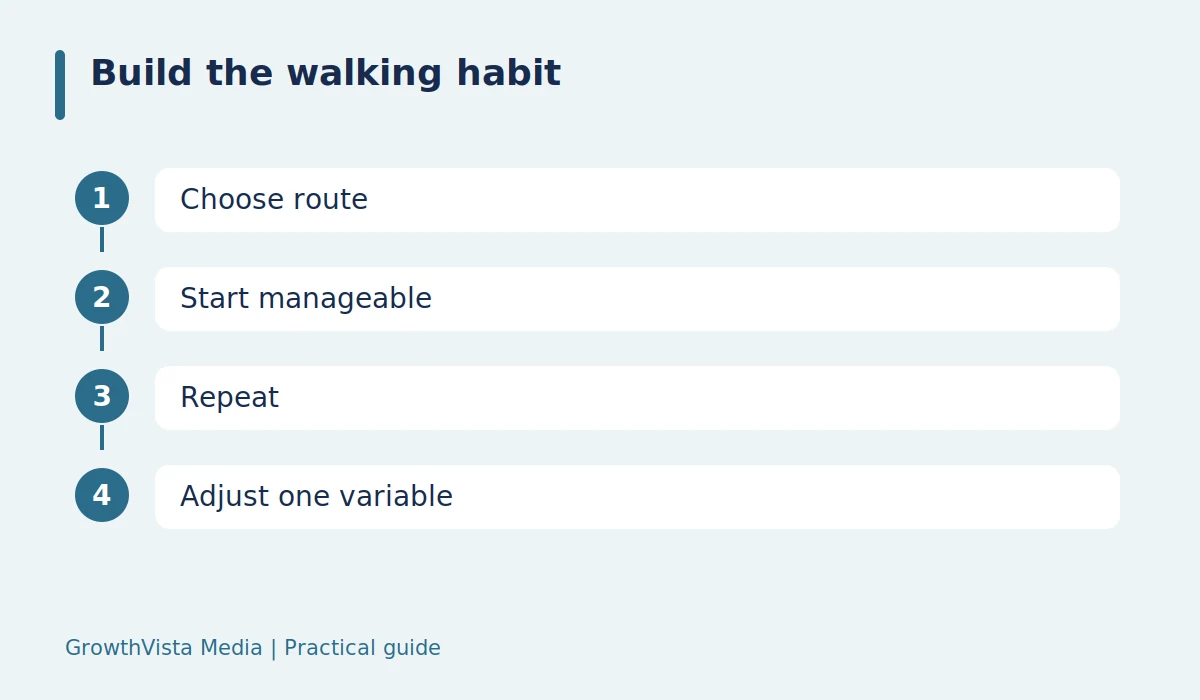
Walking for exercise can fit into everyday life without a gym membership. The best starting route is one you can use safely and repeat. Decide when you will walk, how long feels manageable, and what conditions might require a shorter option. Build the routine around your abilities rather than a step count copied from someone else.
Choose a route before setting a target
Check surfaces, crossings, lighting, weather, and places to rest if needed. A familiar loop can reduce planning effort. Indoor routes may help when heat, rain, or access makes outdoor walking difficult. Comfortable footwear and appropriate clothing support the routine. If mobility or a health condition changes what is safe, seek guidance about suitable alternatives.

A route-based progression example
A fictional walker begins with one comfortable neighborhood loop on three predictable days. After reviewing comfort and recovery, the person adds a small extension to the route rather than increasing speed and frequency at once. The example explains a decision process, not a universal exercise prescription. The important record is what was manageable and what changed.
Walking for exercise has different intensities
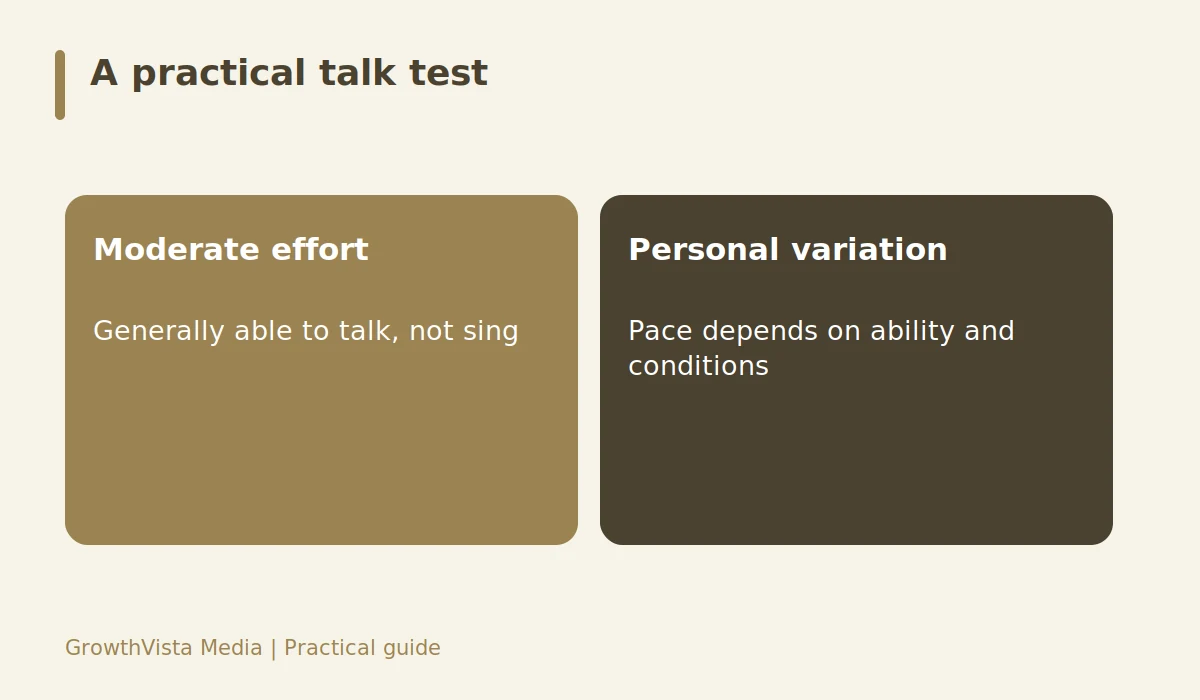
Brisk walking can count as moderate activity. The talk test is a practical guide: during moderate-intensity activity, you can generally talk but not sing. Pace differs by fitness and conditions. A phone’s speed reading should not override symptoms or ability. Start at a comfortable level and adapt duration and intensity separately.
Build from a repeatable starting point
Choose a duration you can manage without creating excessive fatigue or discomfort, then repeat it. Add time or another session gradually when the routine feels stable. Current adult guidance includes 150 minutes of moderate activity weekly, but the route toward that target can be gradual. Shorter activity periods can contribute, and some activity is better than none.
Make a weather and time fallback
Keep a shorter loop or indoor alternative ready. If the original slot disappears, another brief opportunity may still work. Do not turn a missed walk into a requirement to double the next session. Pairing a walk with an existing break can make scheduling easier. The fallback should remain appropriate to your environment and abilities.
Track the pattern rather than every fluctuation
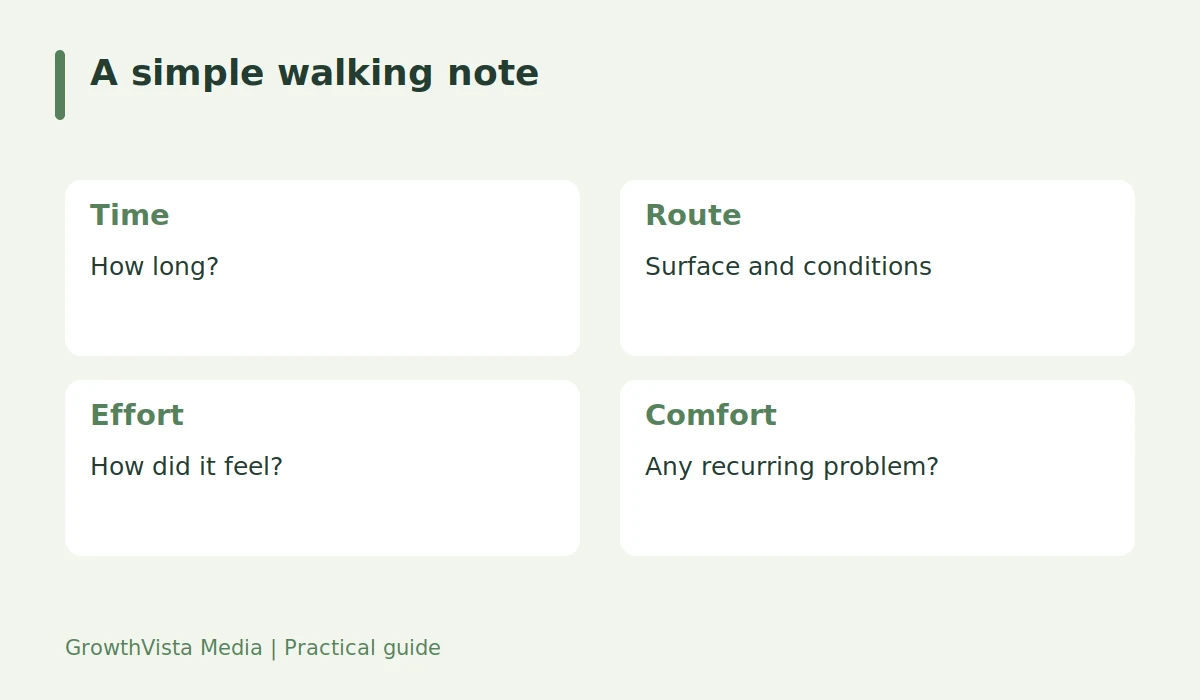
A simple record of time, route, perceived effort, and comfort can be enough. Step estimates differ by device and do not explain every aspect of activity. Review whether the route and timing are repeatable. If discomfort keeps recurring, investigate it rather than only changing the target number. Walking is useful movement, but it does not replace every other type of activity.
Your next steps
- Choose a safe, repeatable route.
- Start with comfortable duration and pace.
- Use effort and symptoms as well as device data.
- Prepare a short or indoor fallback.
- Review consistency before adding difficulty.
Related guides: Fitness Routine: Start Small and Build a Usable Week · Strength Training for Beginners: Technique Before Load · Fitness Apps vs Wearables: Which Data Helps Your Routine?
Questions readers ask
Do I need 10,000 steps?
There is no universal step requirement for every person. Duration, intensity, ability, and broader activity guidance are more useful than treating one device number as mandatory.
Can I split a walk into shorter periods?
Yes, activity can be accumulated. Choose safe, usable periods that fit your day and gradually build a routine.
Does walking replace strengthening?
Walking and muscle-strengthening activity serve different roles. General adult guidance includes both, adapted to individual ability and circumstances.
Further reading
Editorial update: October 12, 2026. General educational information, not diagnosis or individualized treatment. Examples are illustrative; consult an appropriately qualified professional for personal health questions.