Strength Training for Beginners: Technique Before Load
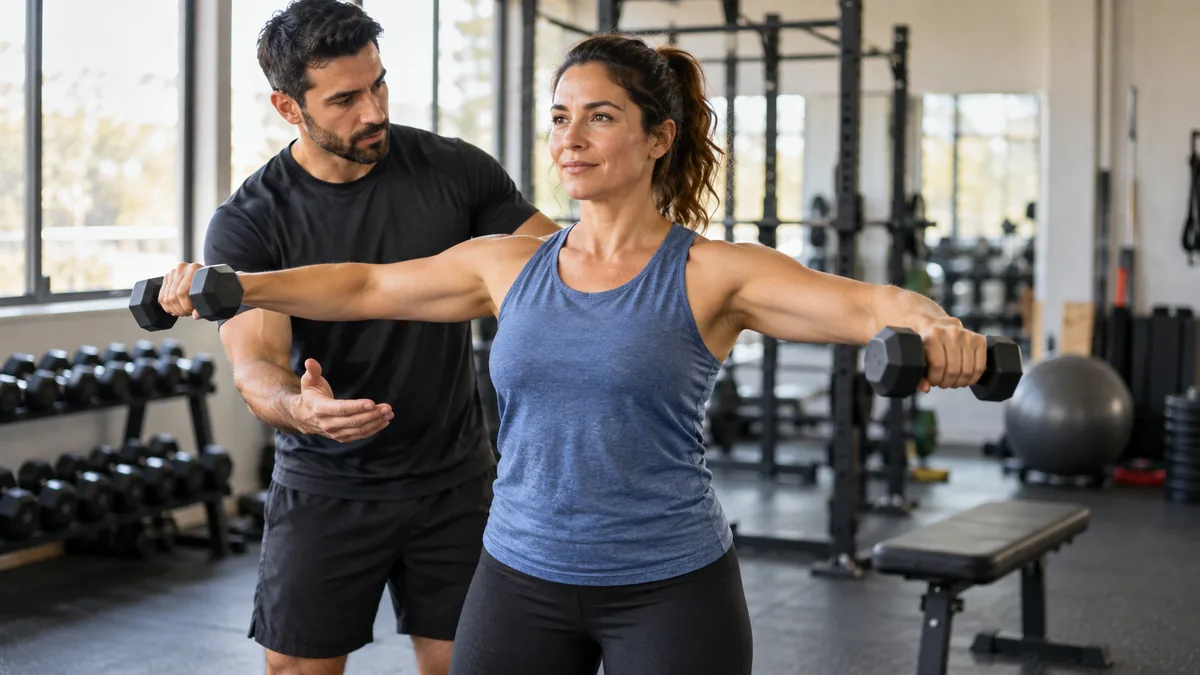
Strength training for beginners is about learning controlled movement with suitable resistance. It does not require the heaviest weights in the room. A useful start identifies the movements, equipment, and support appropriate to your abilities. Focus on technique and recovery before increasing difficulty, and get individual guidance when injury, symptoms, or a health condition affects the choice.
Learn the movement before chasing a number
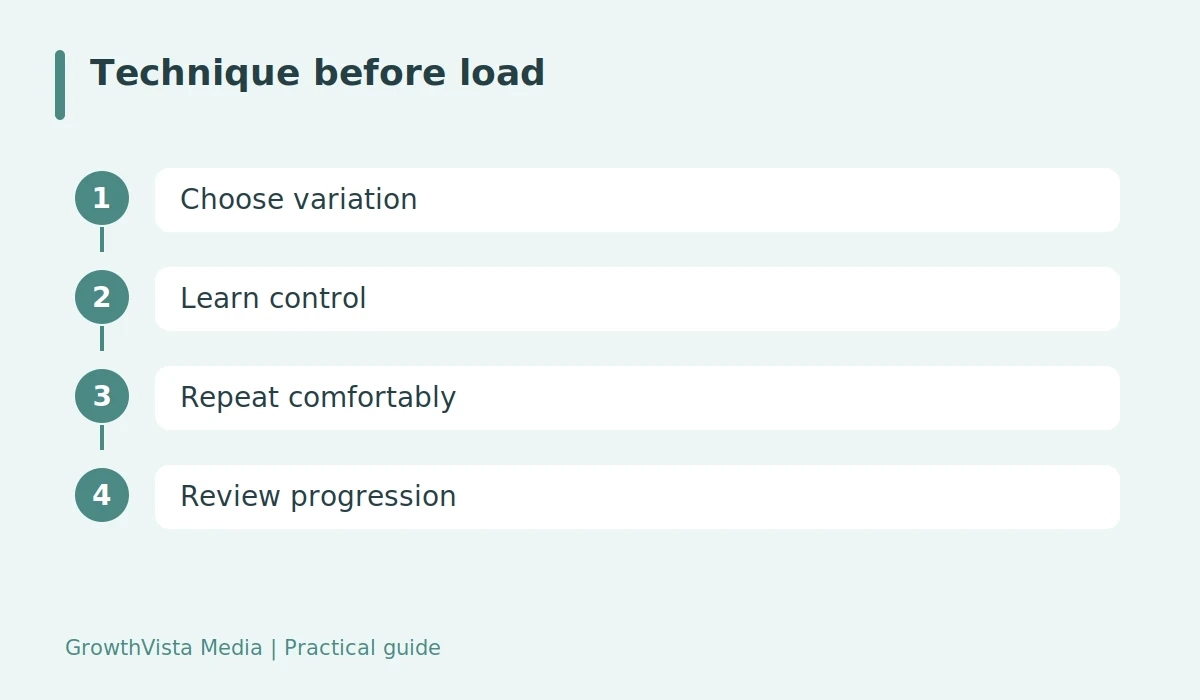
A qualified instructor can help choose an appropriate variation and explain setup, range, and control. A chair, resistance band, machine, or light free weight may each serve a different starting need. No single tool is automatically best. Ask what a good repetition should feel like and how to recognize when form is deteriorating.

A technique-first session note
A fictional beginner records the version of a movement used, the light resistance selected with an instructor, and a note about control. At the next session, the instructor reviews technique before discussing progression. This is a documentation example rather than a prescribed set-and-repetition program. The note provides a more useful starting point than recording only the largest weight touched.
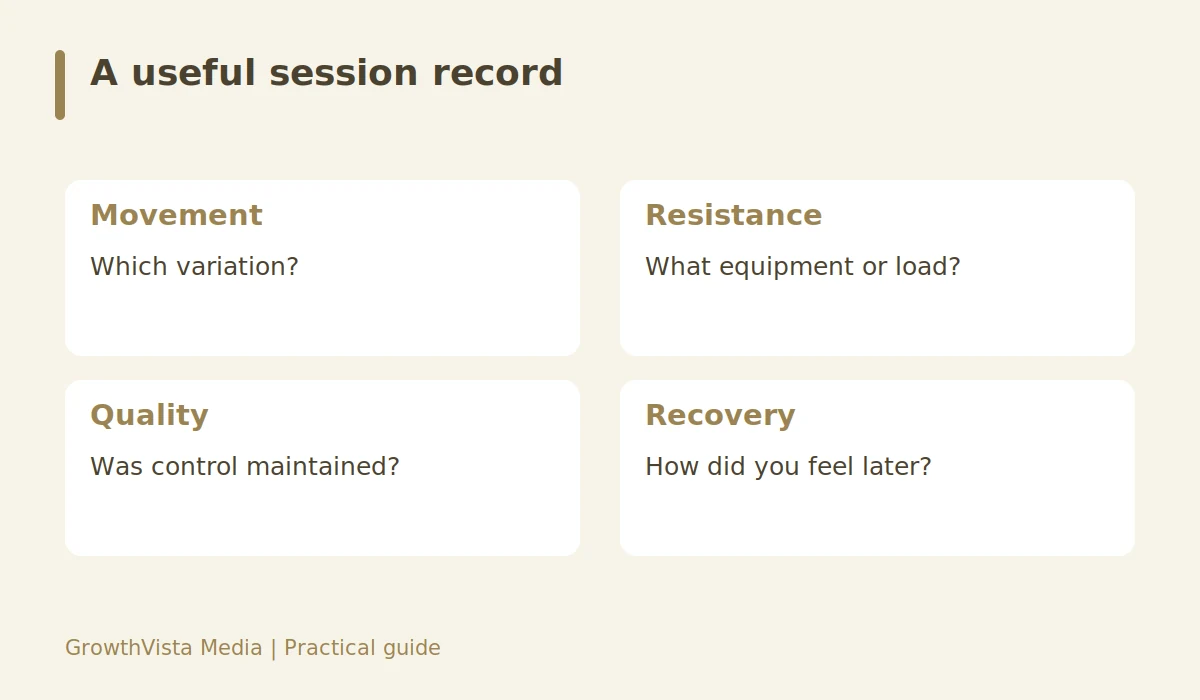
| Item | Detail |
|---|---|
| Movement | Which variation? |
| Resistance | What equipment or load? |
| Quality | Was control maintained? |
| Recovery | How did you feel later? |
Strength training for beginners covers the whole body
General adult activity guidance includes muscle-strengthening work for major muscle groups on at least two days weekly. That broad recommendation does not specify an individual exercise list or load. A beginner plan should consider the whole body, access to equipment, and recovery. Avoid selecting only the exercises that look impressive online while leaving the rest of the routine unexplained.
Keep resistance manageable
Choose a level that allows controlled technique in the movement being learned. The appropriate amount varies by person and exercise. Do not copy a friend’s load or an influencer’s routine as a starting prescription. If the final repetitions become uncontrolled or painful, the variation or resistance may need adjustment. Ask for a clearer progression rule instead of guessing.
Record enough to see progress
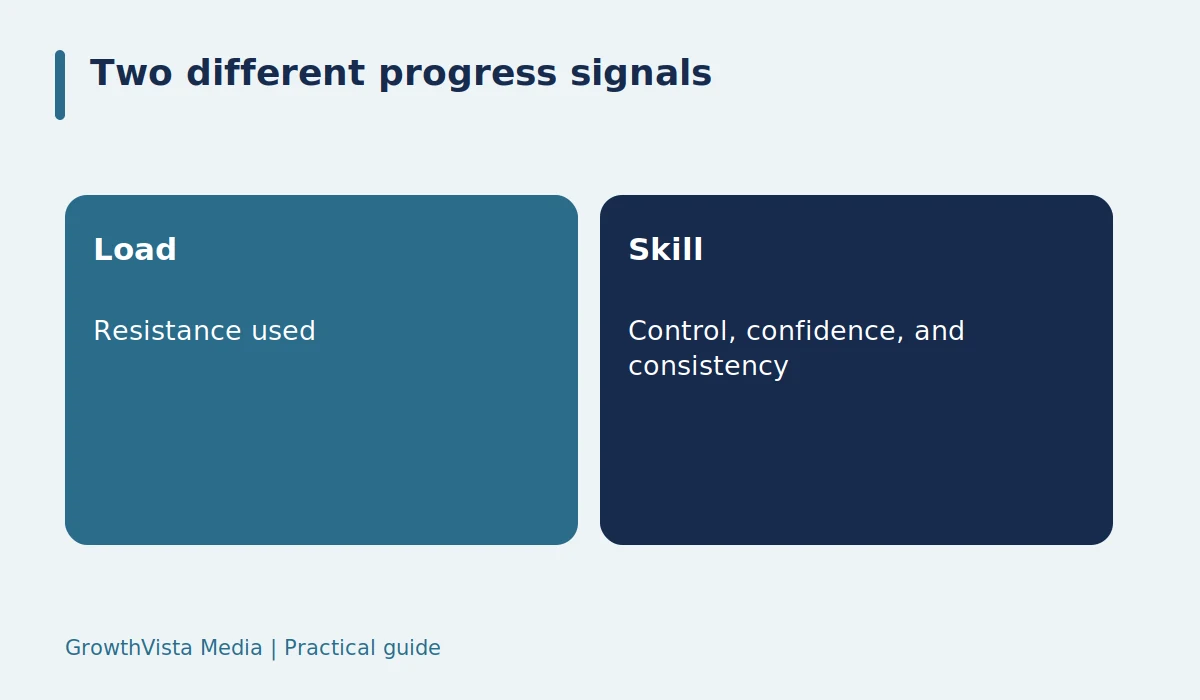
Write the exercise variation, resistance when relevant, repetitions or duration, and how the session felt. That makes changes easier to understand. Improvement can include steadier technique or greater confidence, not just more weight. Increase difficulty gradually and avoid changing every variable together. A record is useful only if it supports an appropriate next decision.
Plan rest and recognize warning signs
Training and recovery work together. Leave room for rest and sleep, and distinguish normal effort from pain or concerning symptoms. Do not train through sharp pain to complete a target. Get appropriate professional guidance when something is unclear. If a schedule becomes too demanding, reduce complexity before abandoning the routine entirely.
Your next steps
- Choose suitable movements and variations.
- Learn setup and control with qualified support.
- Use manageable resistance.
- Record technique and recovery as well as load.
- Progress gradually and respond to pain appropriately.
Related guides: Fitness Routine: Start Small and Build a Usable Week · Walking for Exercise: Pace, Routes, and a Repeatable Routine · Home Workouts vs Gym Workouts: Choose a Routine You Can Use
Questions readers ask
Are machines or free weights better?
They have different practical features. The appropriate choice depends on ability, technique support, equipment access, and the movement goal.
Should every session feel exhausting?
Exhaustion is not the only sign of useful training. Technique, repeatability, and recovery deserve attention, especially while learning.
When should I increase resistance?
Use a progression rule appropriate to the movement and your ability, ideally with qualified guidance. Stable technique and recovery should come before a larger number.
Further reading
Editorial update: October 12, 2026. General educational information, not diagnosis or individualized treatment. Examples are illustrative; consult an appropriately qualified professional for personal health questions.