Manage Stress: Practical Supports for an Ordinary Week

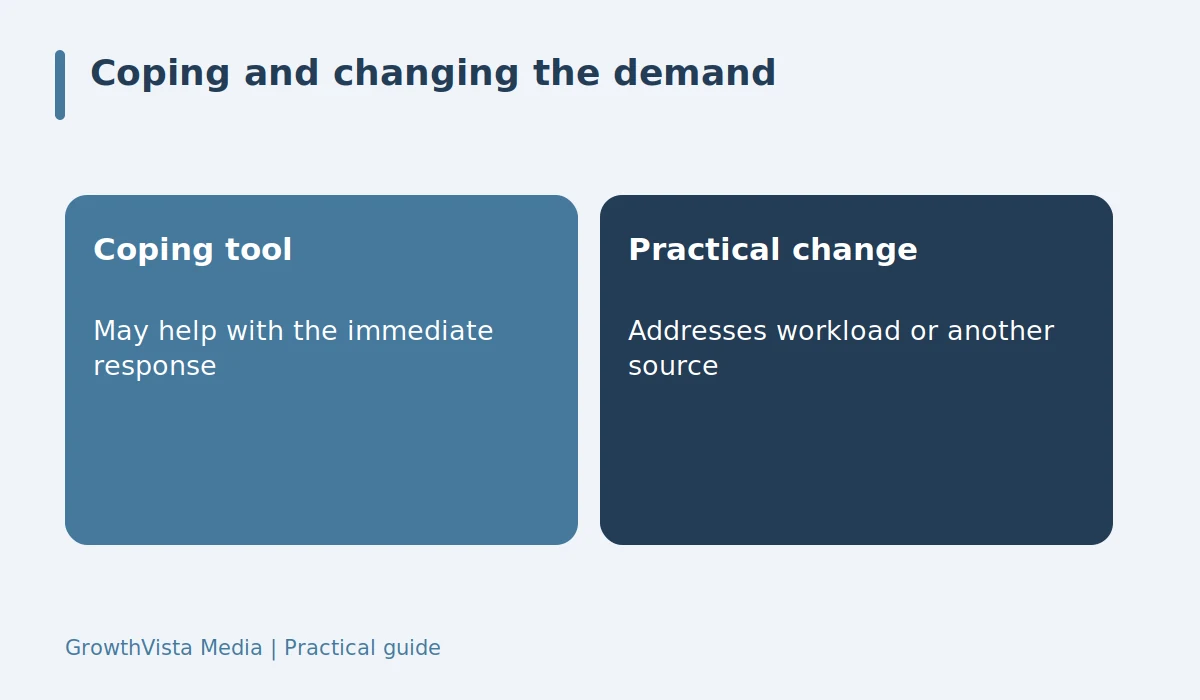
To manage stress, start by identifying the pressures and what support is realistically available. A breathing exercise cannot remove every workplace or family demand. Small routines may help you cope, while persistent symptoms can need professional support. The goal is a more manageable day, not a promise that you should feel calm all the time.
Name the pressure before choosing the tool
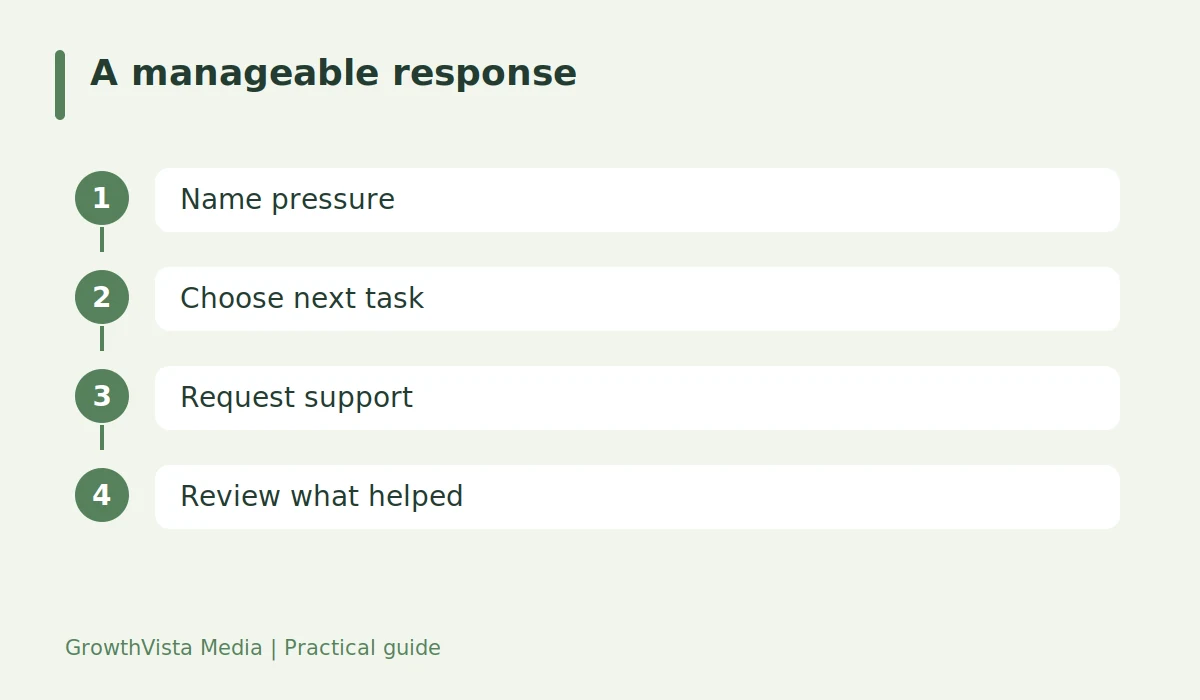
Write down the situations that repeatedly create strain. Separate tasks you can change from demands requiring support or negotiation. A long list can be reduced to the next practical action. Identifying the source prevents every problem from being treated as a personal relaxation failure. Some pressures need a conversation, workload adjustment, or external assistance.

Manage stress with a usable pause
A brief break, comfortable movement, or a simple attention exercise may help create space before the next task. Choose something you can use without special equipment. If a practice feels uncomfortable, stop or change it. A pause is not a treatment for every symptom and should not delay appropriate care. Keep the expectation modest and practical.
Make essential routines easier
Regular meals, sleep opportunities, and appropriate activity can support daily functioning. Demanding schedules may require smaller versions or practical help. Avoid setting a perfection standard for self-care. The routine should reduce friction rather than become another obligation. If a barrier is structural, such as excessive workload, acknowledge that instead of assuming better planning will remove it.
Questions readers ask
Should a stress tool work immediately?
Not necessarily. Choose a tolerable practice and realistic expectations. If symptoms persist or affect functioning, seek appropriate support rather than repeatedly changing apps.
Is stress always a personal planning problem?
No. Workload, finances, health, and other pressures can require practical or professional help. A routine cannot remove every external demand.
When should I ask for help?
When distress persists, feels difficult to manage, or interferes with daily life, a professional conversation is appropriate. Immediate danger requires urgent support.
Use social and practical support
A trusted person can help think through a problem or share a task. Explain the kind of help needed: listening, a practical favor, or help finding professional care. Boundaries and workload conversations may be relevant too. Support does not require discussing every personal detail with every coworker. Choose an appropriate person and a realistic request.
Recognize when coping tools are not enough
Persistent distress, changes in functioning, or symptoms that feel hard to manage deserve professional discussion. A primary care professional can be a starting point. If there is immediate danger, seek emergency help. In the United States, call or text 988 for suicide or crisis support. Everyday coping strategies can support care, but they do not replace it.
One task and one support request
A fictional worker feels overwhelmed by several unfinished tasks. The person identifies the most urgent task, asks a colleague to clarify one deadline, and takes a short break before returning. The example does not claim stress is solved. It shows how a small practical action and a specific request can be more usable than a vague instruction to relax.
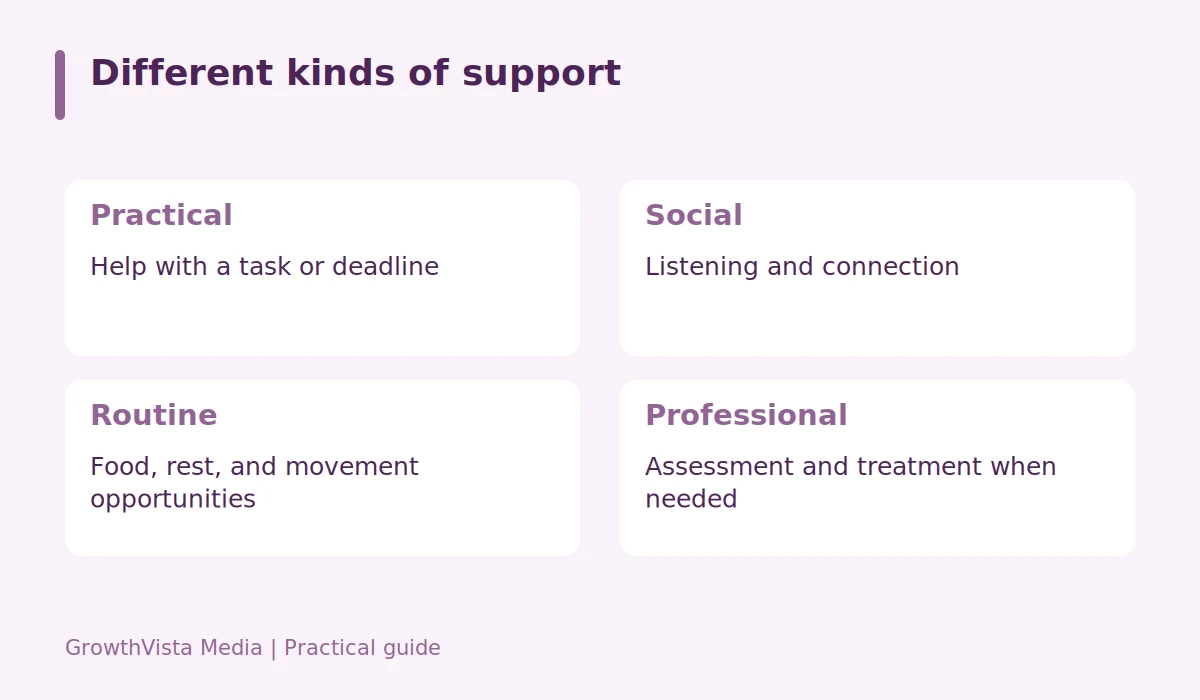
| Item | Detail |
|---|---|
| Practical | Help with a task or deadline |
| Social | Listening and connection |
| Routine | Food, rest, and movement opportunities |
| Professional | Assessment and treatment when needed |
Your next steps
- Identify the repeated source of pressure.
- Choose one manageable next action.
- Use a tolerable brief pause where helpful.
- Ask for specific practical or social support.
- Seek professional help when distress persists.
Related guides: Signs of Burnout: Recognize Work Strain and Seek Support · Mindfulness for Beginners: A Gentle Way to Try the Practice · Mental Health Support: How to Find Help and Prepare
Further reading
Editorial update: October 12, 2026. General educational information, not diagnosis or individualized treatment. Examples are illustrative; consult an appropriately qualified professional for personal health questions.