Mental Health Support: How to Find Help and Prepare

Mental health support is appropriate when thoughts, emotions, or behavior feel difficult to manage or interfere with daily life. You do not need to identify a diagnosis before asking for help. A primary care professional can be a starting point, or you can contact an appropriate mental health service. Choose a route that fits the urgency and your access needs.
Decide whether the need is urgent
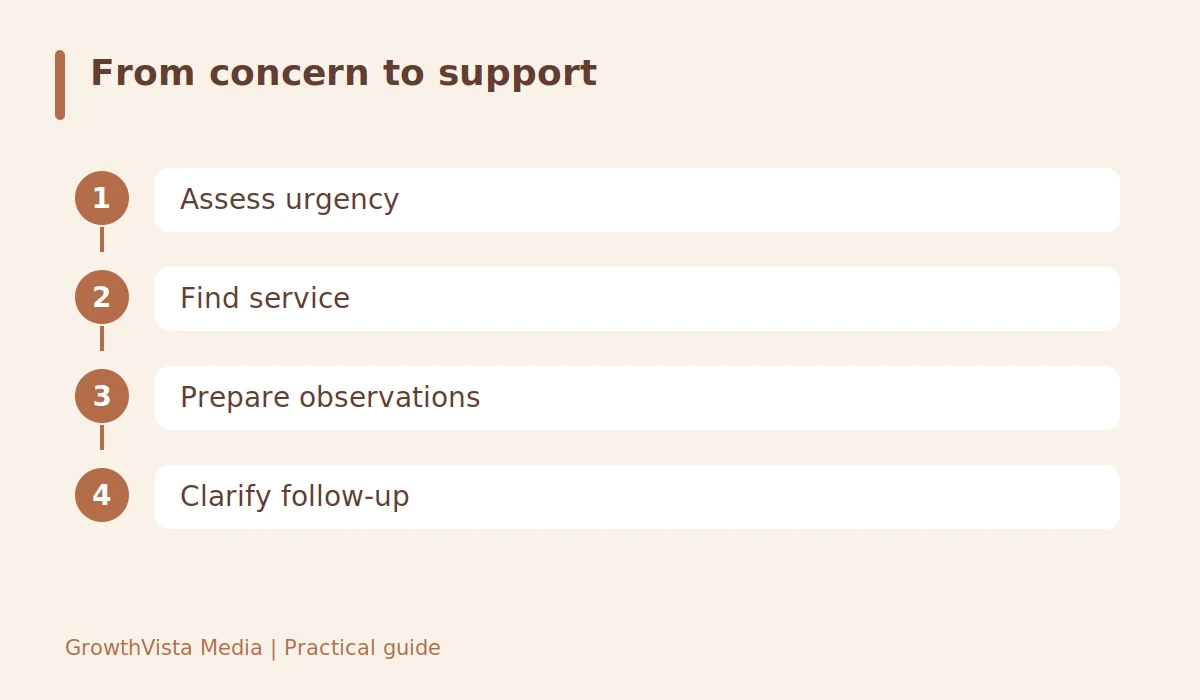
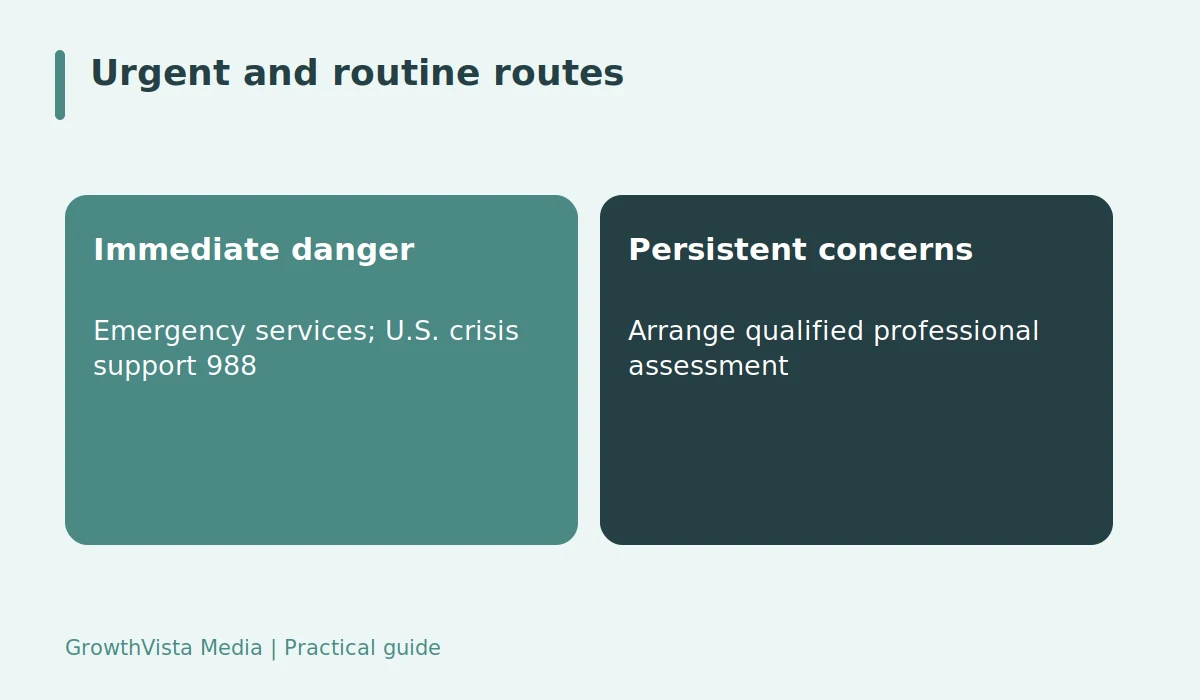
If there is immediate danger or a life-threatening situation, contact emergency services. In the United States, call or text 988 for suicide or crisis support. Do not wait for a routine appointment when safety is at risk. For nonurgent but persistent concerns, arrange a professional discussion rather than assuming you must cope alone until symptoms become severe.

Find a mental health support route
A primary care professional, insurance directory, local service, or reliable treatment locator may help identify options. Check the provider’s qualifications and the services offered. Therapy, medication management, and other support have different roles. Ask whether the service treats the concerns you want to discuss and whether appointments are available in a suitable format or language.
Prepare a short note, not a self-diagnosis
Record what has changed, how long it has been happening, and how it affects sleep, work, relationships, or ordinary tasks. Include current medications and relevant health information. Write down questions you want answered. A note can help when it is difficult to explain everything in an appointment. It should describe observations rather than force them into an online diagnosis.
Questions readers ask
Do I need a diagnosis before contacting someone?
No. You can describe concerns and changes in functioning. A qualified professional can help assess what is happening and discuss suitable next steps.
What if the first provider is not a good fit?
Discuss the difficulty and ask about alternatives or referral options. Access, communication, and service scope all matter.
Where can I get urgent U.S. crisis support?
Call or text 988 for suicide or crisis support. For immediate life-threatening danger, contact emergency services.
Check costs and practical access
Ask about insurance participation, appointment charges, cancellation terms, and available assistance. For remote care, confirm privacy, location requirements, and how urgent concerns are handled between appointments. The easiest booking page is not necessarily the right service. Practical access matters because a suitable plan must be one you can attend and understand.
Review the next steps together
After an appointment, clarify the proposed plan, follow-up timing, and what to do if symptoms change. Ask questions when instructions are unclear. A first meeting may begin an assessment rather than provide every answer immediately. If the service does not fit, discuss alternatives or another referral. Support is a process, not a test of whether you can describe distress perfectly.
A first-appointment note
A fictional person writes: concentration has become difficult, sleep has changed, and ordinary work tasks feel harder over several weeks. The note lists relevant medications and asks what assessment and follow-up would be appropriate. This is a preparation example, not a diagnosis. If safety becomes an immediate concern, the person uses urgent support rather than waiting for the scheduled visit.
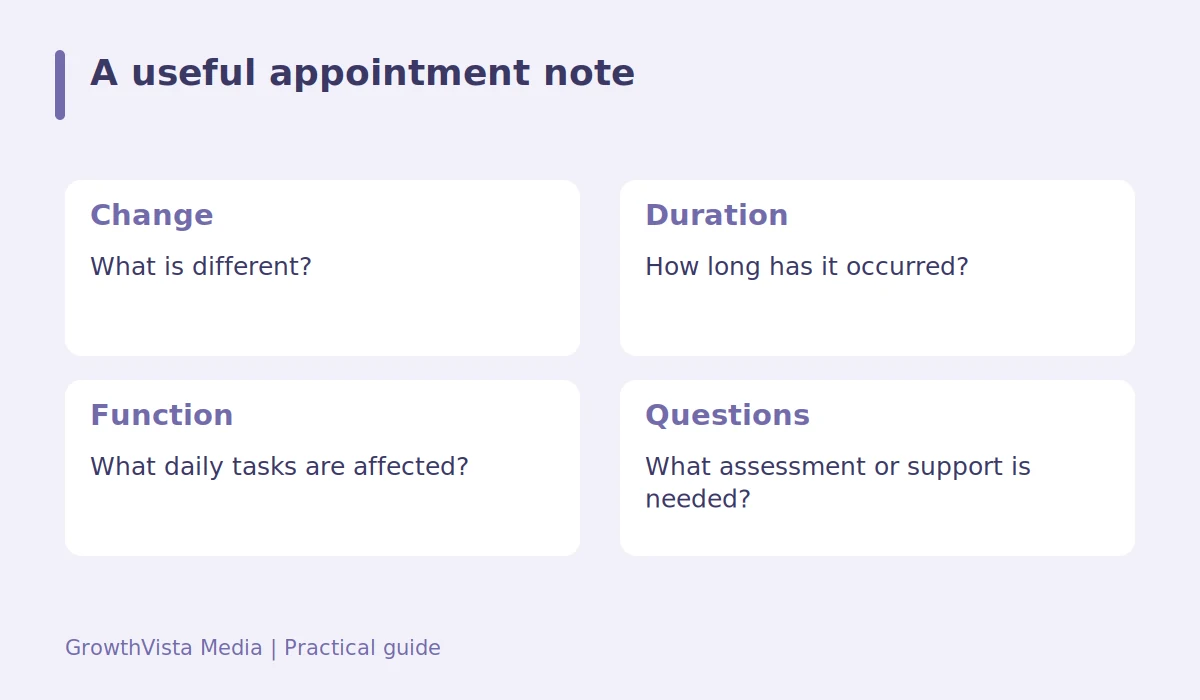
| Item | Detail |
|---|---|
| Change | What is different? |
| Duration | How long has it occurred? |
| Function | What daily tasks are affected? |
| Questions | What assessment or support is needed? |
Your next steps
- Identify whether the situation needs urgent help.
- Find an appropriately qualified service.
- Write a short note about changes and functioning.
- Check costs, privacy, and appointment access.
- Clarify follow-up and how to seek help between visits.
Related guides: Manage Stress: Practical Supports for an Ordinary Week · Signs of Burnout: Recognize Work Strain and Seek Support · Mindfulness for Beginners: A Gentle Way to Try the Practice
Further reading
Editorial update: October 12, 2026. General educational information, not diagnosis or individualized treatment. Examples are illustrative; consult an appropriately qualified professional for personal health questions.