Signs of Burnout: Recognize Work Strain and Seek Support

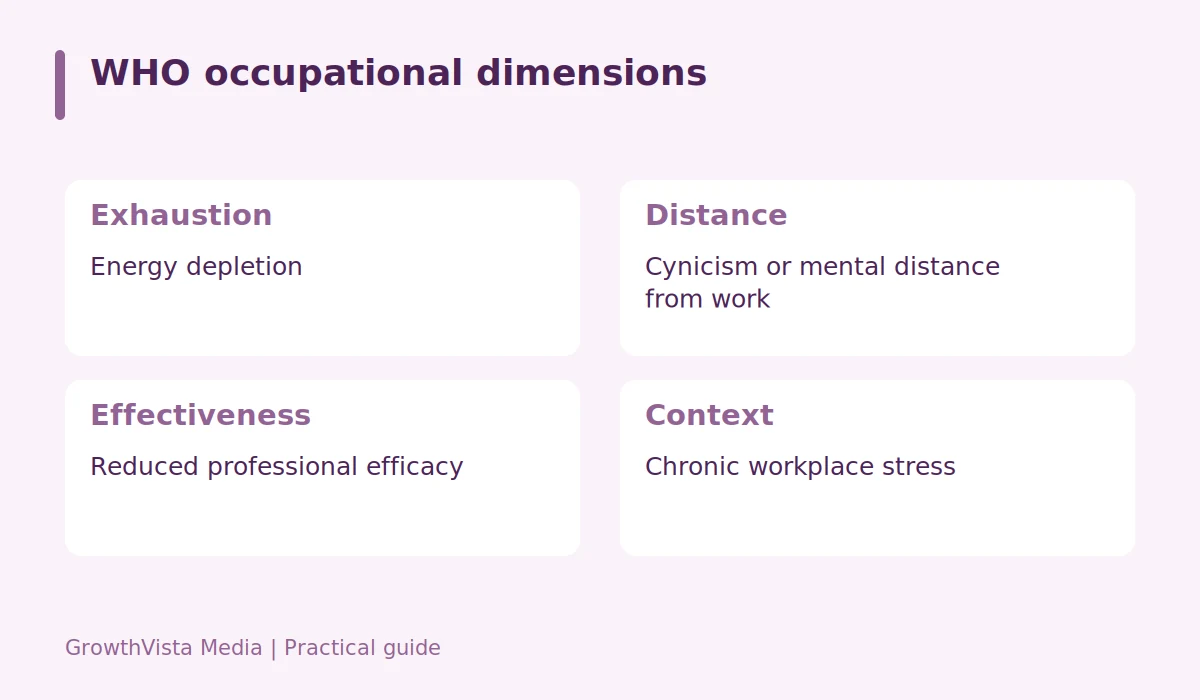
Signs of burnout can include exhaustion, distance or cynicism toward work, and a reduced sense of effectiveness. The World Health Organization describes burnout as an occupational phenomenon related to chronic workplace stress that has not been successfully managed. It is not a diagnosis for every kind of tiredness. Symptoms can overlap with other concerns, so avoid deciding the cause from a checklist alone.
Look for a pattern, not one difficult day
A busy week can leave anyone tired. Review whether the experience persists, how it relates to work, and what recovery opportunities exist. Keep a short note of demands and effects on functioning. The purpose is to make a conversation clearer, not to assign yourself a diagnosis. Physical or mental health conditions can also affect energy and concentration.

Signs of burnout need workplace context
Workload, role uncertainty, limited control, difficult relationships, and insufficient support may be relevant. Identify which pressures can be discussed or changed. A personal wellness routine cannot by itself fix an unreasonable workload. Document concrete examples when appropriate, such as conflicting deadlines or recurring duties without enough time, instead of presenting only a general statement of feeling overwhelmed.
Consider other causes with a professional
Persistent exhaustion, sleep problems, mood changes, or reduced functioning can have different explanations. A qualified professional can assess the situation and recommend care when needed. Do not assume every symptom is caused only by work. If distress is severe or safety is affected, seek urgent support rather than waiting for a workplace meeting.
Questions readers ask
Is burnout a medical diagnosis?
WHO describes it as an occupational phenomenon, not a medical condition. Symptoms still deserve attention and may overlap with conditions requiring assessment.
Will a holiday always resolve it?
No. A break may provide rest, but recurring demands and other causes may remain. Review the pattern and available support.
Should I diagnose myself from an app?
No. A checklist can organize observations but cannot establish the cause of persistent symptoms. Seek appropriate professional assessment.
Ask for specific changes and support
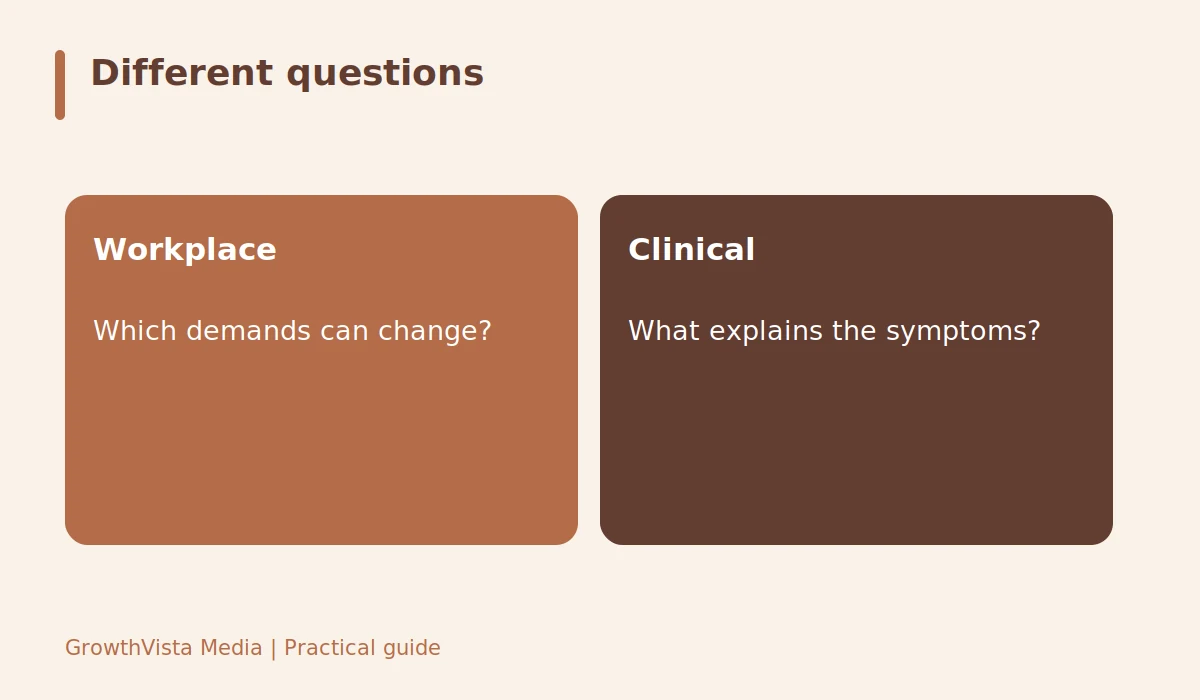
A discussion may focus on priorities, workload, clearer responsibilities, breaks, or access to employee support. Choose requests tied to observable constraints. Keep expectations realistic and consider confidentiality. A manager conversation and a health-care conversation serve different purposes; one does not replace the other. Record agreed changes and a review date where appropriate.
Review whether the change actually helps
After a practical change, look at workload, recovery, and functioning rather than only whether you pushed through another week. If problems continue, seek further support. Recovery is not proven by one weekend away or a productivity app. Long-term decisions about work may require careful personal and professional consideration, especially when health and financial responsibilities are involved.
A clearer workload conversation
A fictional employee records three recurring deadlines that conflict with an additional daily duty. Instead of asking only for less stress, the employee asks which task has priority and what can be postponed or reassigned. The example describes a workplace discussion, not treatment or a promise of recovery. Persistent health symptoms are discussed separately with an appropriate professional.
Your next steps
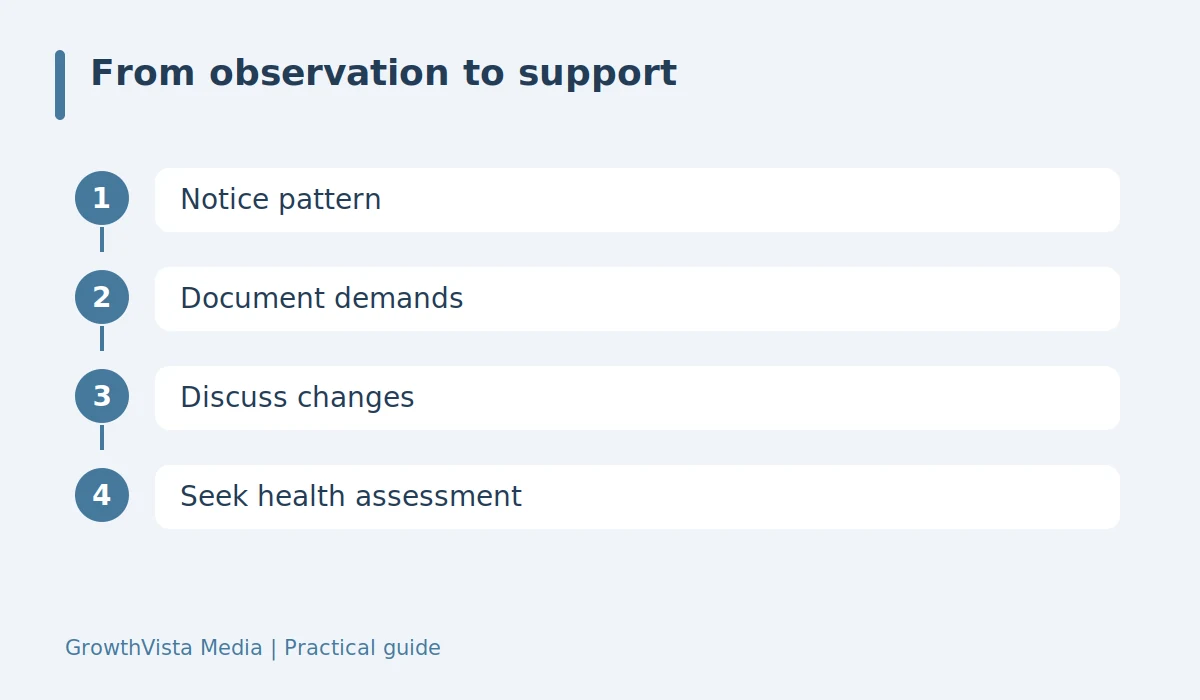
- Record the persistent pattern and work context.
- Identify concrete workload constraints.
- Discuss specific changes where appropriate.
- Seek assessment for ongoing symptoms.
- Review whether support improves functioning.
Related guides: Manage Stress: Practical Supports for an Ordinary Week · Mindfulness for Beginners: A Gentle Way to Try the Practice · Mental Health Support: How to Find Help and Prepare
Further reading
Editorial update: October 12, 2026. General educational information, not diagnosis or individualized treatment. Examples are illustrative; consult an appropriately qualified professional for personal health questions.