Weight Management: How Sleep and Activity Fit In

Sleep and weight management belong in the same lifestyle discussion, but sleep is not a guaranteed weight-loss shortcut. Rest affects how manageable daily routines feel. Activity, food access, stress, health conditions, and work schedules can also influence the pattern. Review the whole week and address persistent sleep problems with appropriate care rather than blaming a difficult night on lack of discipline.
Look at the opportunity to sleep
Record when you go to bed, when you need to wake, and the interruptions that reduce rest. Work shifts, caregiving, noise, and other circumstances can limit the opportunity. Distinguish lack of available time from difficulty sleeping despite enough time. That difference helps identify whether the next step is a schedule change, practical support, or professional assessment.

Sleep and weight management should avoid causal promises
Healthy-weight guidance includes adequate sleep alongside food, movement, and stress management. That does not allow a prediction about how many pounds a better bedtime will change. Individual outcomes vary, and medical circumstances matter. Treat rest as a health and routine priority, not a replacement for nutrition assessment or appropriate treatment.
Choose movement that fits recovery
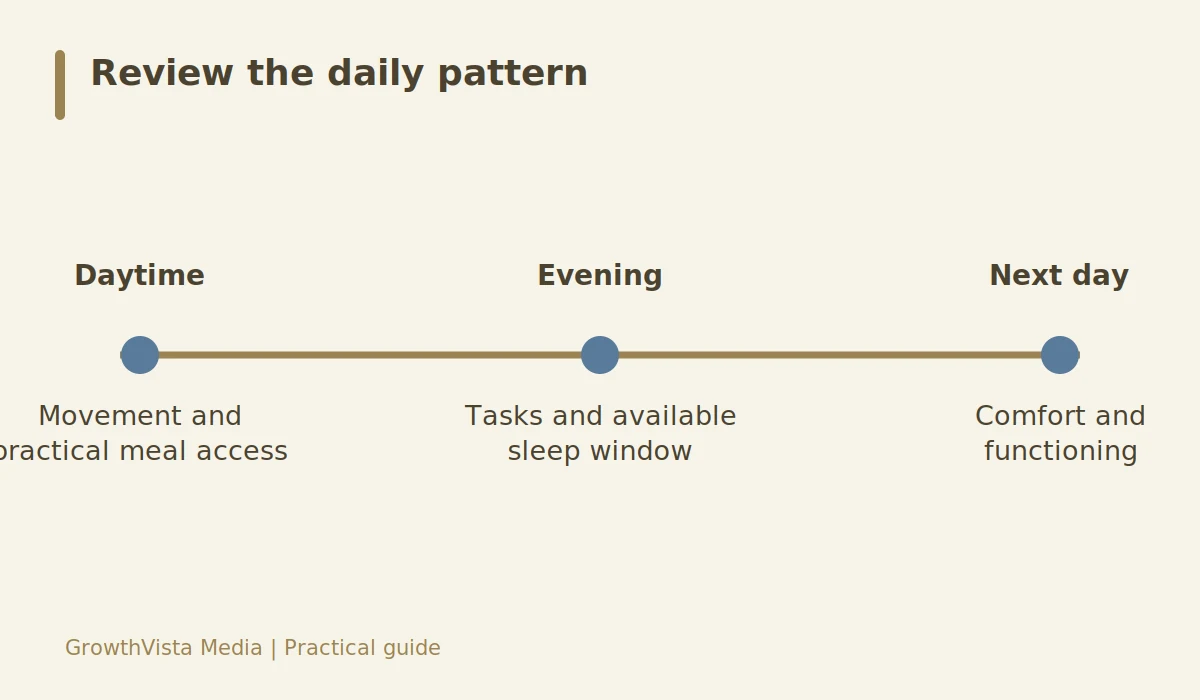
Activity can support health and a daily routine, but exhaustion is not a useful default goal. Adapt timing and difficulty to ability and recovery. General adult guidance includes aerobic and strengthening activity, with individual adjustments where needed. Do not use a poor night’s sleep as a reason to force a harder workout to compensate for anything eaten.
Questions readers ask
Will more sleep automatically cause weight loss?
No. Rest is part of health and a sustainable routine, but weight outcomes depend on many factors. Avoid promised pound changes from sleep advice.
Can my tracker diagnose a sleep problem?
No. Consumer estimates can show patterns but do not replace clinical assessment. Persistent symptoms need appropriate evaluation.
Should I train harder after a poor night?
Do not use exhaustion as compensation. Adapt activity to recovery and individual circumstances, especially if symptoms make exercise uncertain.
Reduce the busy-day friction
Keep an easy meal option and an appropriate short activity option available for demanding days. Plan around the schedule you have rather than an ideal one. A calmer evening transition may help some people establish a routine, but symptoms should not be dismissed as a planning issue. Review caffeine, light, and timing questions with reliable guidance and individual advice when relevant.
Bring persistent problems to a clinician
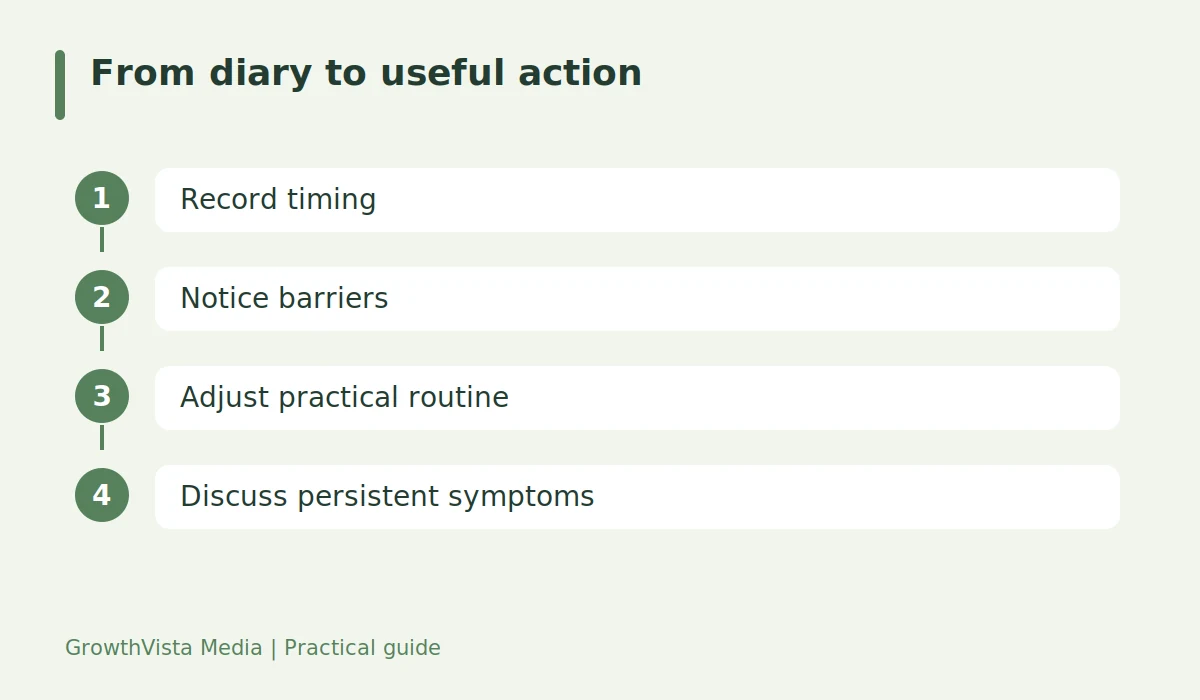
Repeated poor sleep, substantial daytime sleepiness, breathing concerns during sleep, or other troublesome symptoms deserve assessment. A consumer tracker cannot diagnose the cause. Note the timing and effects on daily life to make the discussion clearer. If work or caregiving makes rest difficult, practical support can be part of the solution alongside medical care.
Review one week without chasing a score
A fictional diary records bed and wake times, interruptions, movement opportunities, and how the person felt during the day. It reveals that the available sleep window is often shortened by late tasks. The first review considers the schedule rather than assuming a wearable score diagnoses a disorder. If symptoms persist, the diary becomes useful information for a professional discussion.
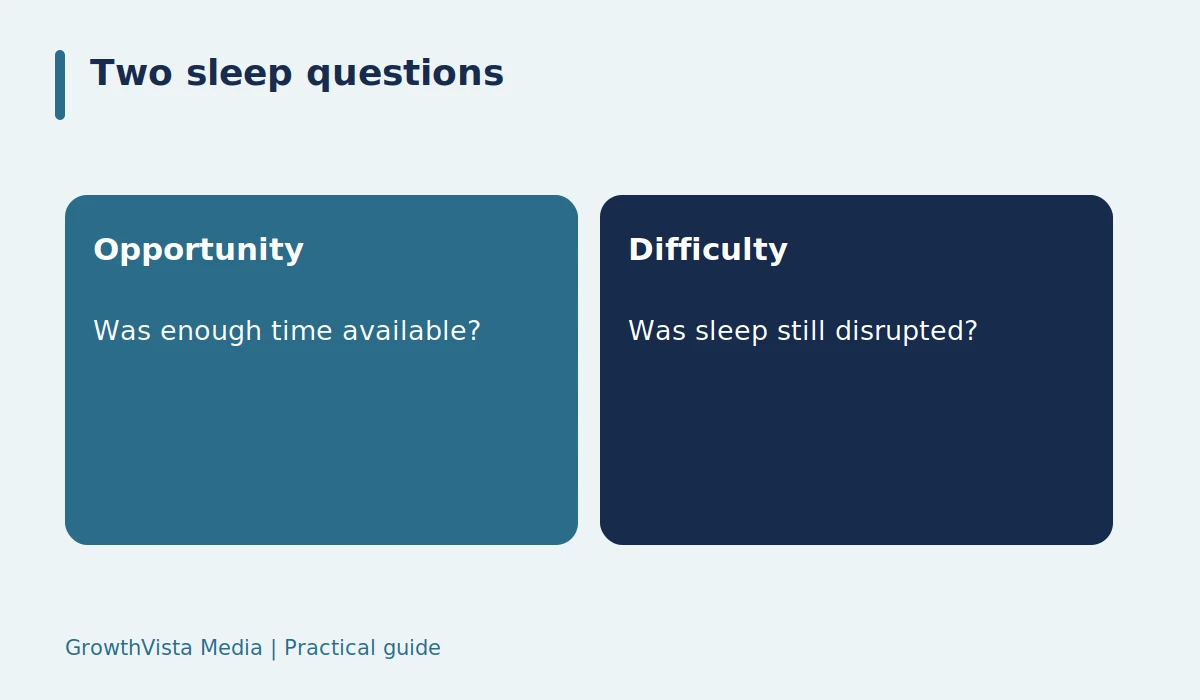
| Item | Detail |
|---|---|
| Opportunity | Was enough time available? |
| Difficulty | Was sleep still disrupted? |
Your next steps
- Record the real sleep opportunity.
- Identify schedule and environmental barriers.
- Keep manageable meals and movement available.
- Avoid interpreting a device score as diagnosis.
- Seek assessment for persistent troublesome symptoms.
Related guides: Weight Management Habits: Build Changes You Can Maintain · Fitness Apps vs Wearables: Which Data Helps Your Routine? · Sleep Tracking App: Read Patterns Without Chasing Scores
Further reading
Editorial update: October 12, 2026. General educational information, not diagnosis or individualized treatment. Examples are illustrative; consult an appropriately qualified professional for personal health questions.