Sleep Tracking App: Read Patterns Without Chasing Scores
A sleep tracking app can help record bedtime patterns, but its score is not a diagnosis. Consumer devices estimate sleep using their available sensors and algorithms. The most useful question may be whether your sleep opportunity is consistent, not whether one night earned a better number. Review the pattern alongside how you feel and seek care for persistent troublesome symptoms.
Start with a question the app can reasonably support
A record of bed and wake times can help identify an irregular schedule. It may also show gaps caused by not using the device. Decide what information you want before interpreting every dashboard metric. If a simple diary answers the question, additional scores may add little. Keep the tracking burden proportionate to the benefit.

Sleep tracking app estimates have limits
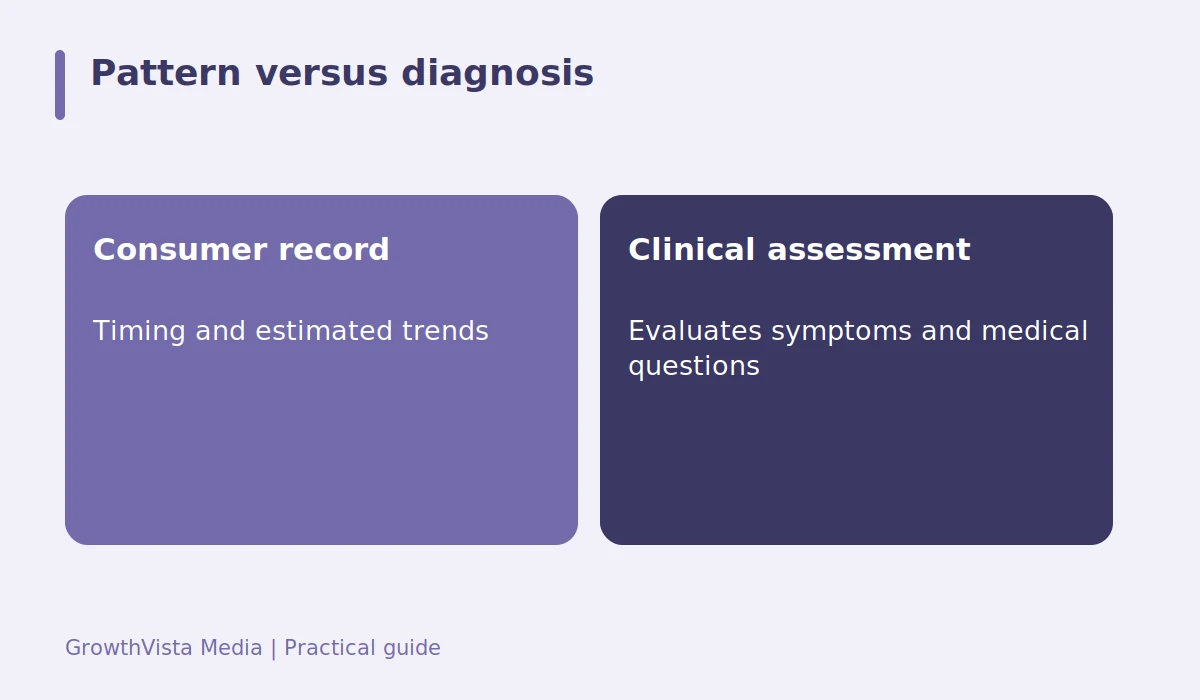
Consumer sleep stages and exact durations are estimates, not a clinical sleep study. Fit, device placement, missing wear time, and software can affect the record. Do not assume a detailed chart is exact because it looks precise. Compare repeated patterns cautiously and avoid drawing a medical conclusion from a single night’s classification.
Notice daytime functioning too
Record whether you feel rested, excessively sleepy, or affected in ordinary activities. A reassuring app score does not override symptoms. Persistent problems, breathing concerns during sleep, or other troublesome changes deserve professional discussion. Bring the timing record if useful, but let appropriate assessment determine what the symptoms mean.
Questions readers ask
Can the app diagnose a sleep disorder?
No. Consumer tracking does not replace clinical assessment. Persistent or concerning symptoms deserve appropriate professional care.
Should I chase the highest score?
Not if it creates worry or distracts from a practical routine. Focus on useful patterns and how you function rather than a perfect number.
What should I bring to an appointment?
A short record of timing, interruptions, symptoms, and relevant circumstances can help. The device data is additional context, not a diagnosis.
Avoid making the score another bedtime demand
Constant checking can turn rest into a performance task. If tracking increases worry, reduce the metrics reviewed or take a break from the tool. A practical routine should support sleep opportunity rather than require a perfect streak. Review environmental and schedule barriers with realistic expectations, especially when work or caregiving limits control.
Read privacy and recurring-cost terms
Sleep records and connected-device information can be sensitive. Check what is collected, how it is shared, whether exports are available, and how account deletion works. A paid plan may provide additional charts without making them clinically valid. Compare cost with the actual decision the data helps you make. Keep an independent note of useful patterns if the service changes.
A pattern worth discussing
A fictional diary shows bedtime shifting substantially across work and nonwork days, while the person reports daytime tiredness. The record can prompt a schedule review and a professional conversation if symptoms persist. The example does not diagnose the cause or interpret a specific score. A useful record describes timing, interruptions, and functioning without treating an app’s stage estimate as medical proof.
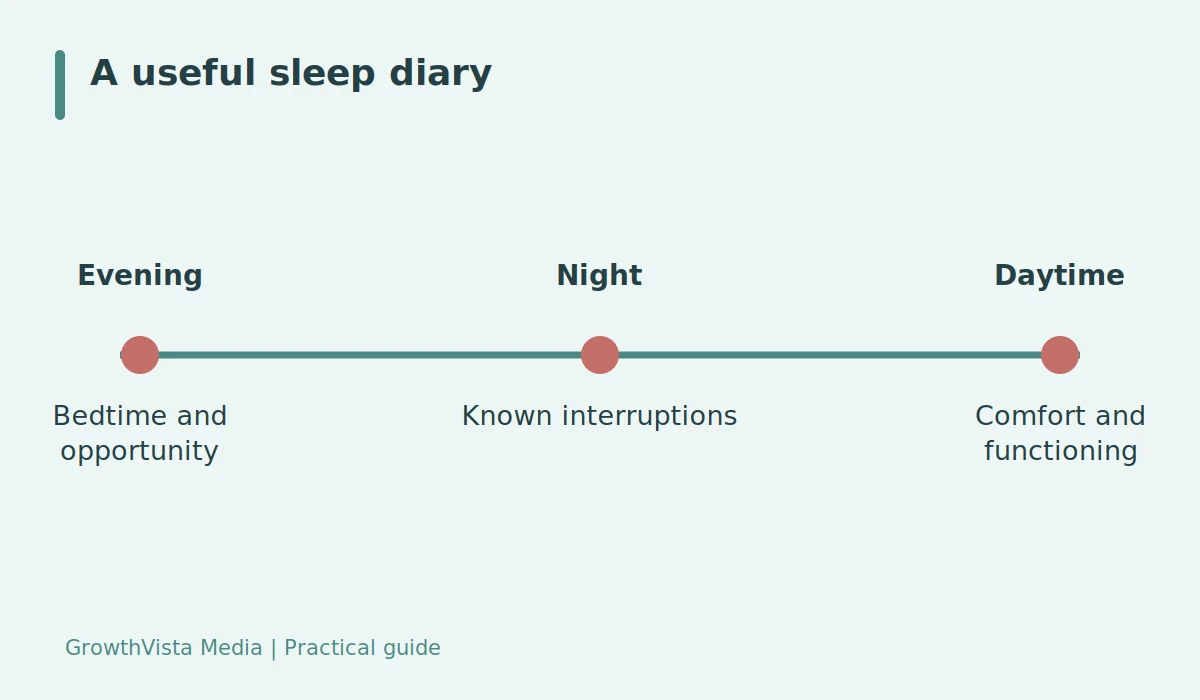
| Item | Detail |
|---|---|
| Evening | Bedtime and opportunity |
| Night | Known interruptions |
| Daytime | Comfort and functioning |
Your next steps
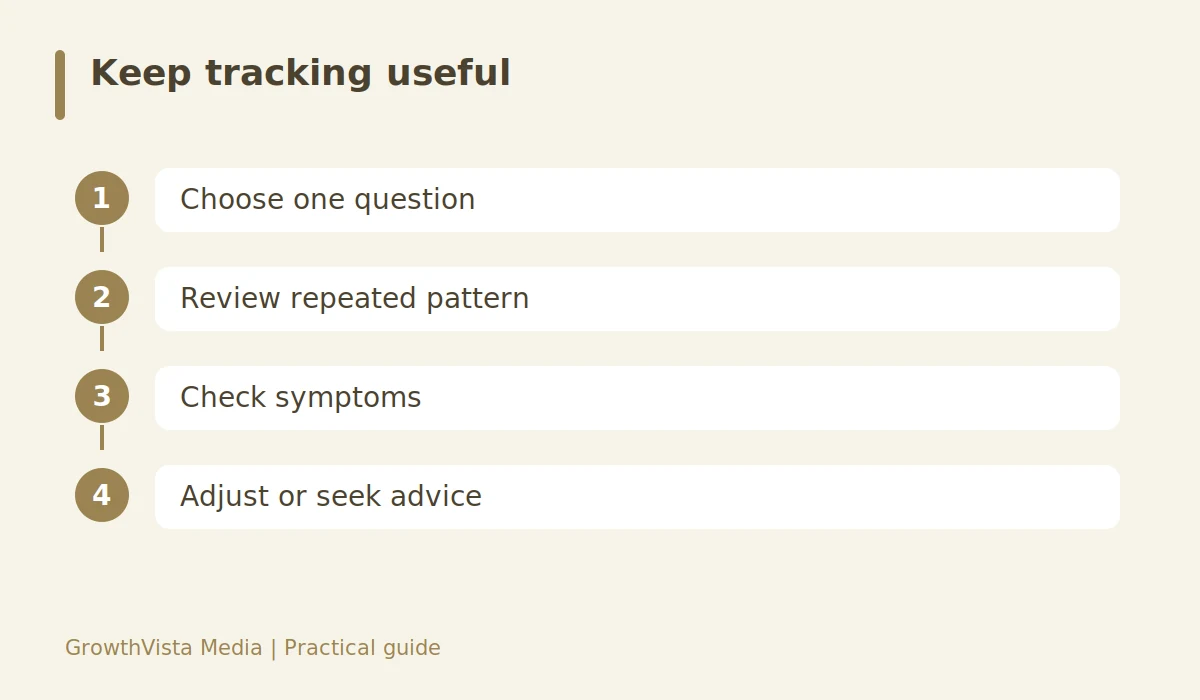
- Define the timing question you want to answer.
- Check missing data and estimate limits.
- Record daytime functioning and relevant symptoms.
- Reduce tracking if it increases worry.
- Review privacy and seek assessment when needed.
Related guides: Weight Management: How Sleep and Activity Fit In · Fitness Apps vs Wearables: Which Data Helps Your Routine? · Health App: 8 Privacy Questions Before Sharing Data
Further reading
Editorial update: October 12, 2026. General educational information, not diagnosis or individualized treatment. Examples are illustrative; consult an appropriately qualified professional for personal health questions.