Habit Tracking App: Choose Features That Support One Routine
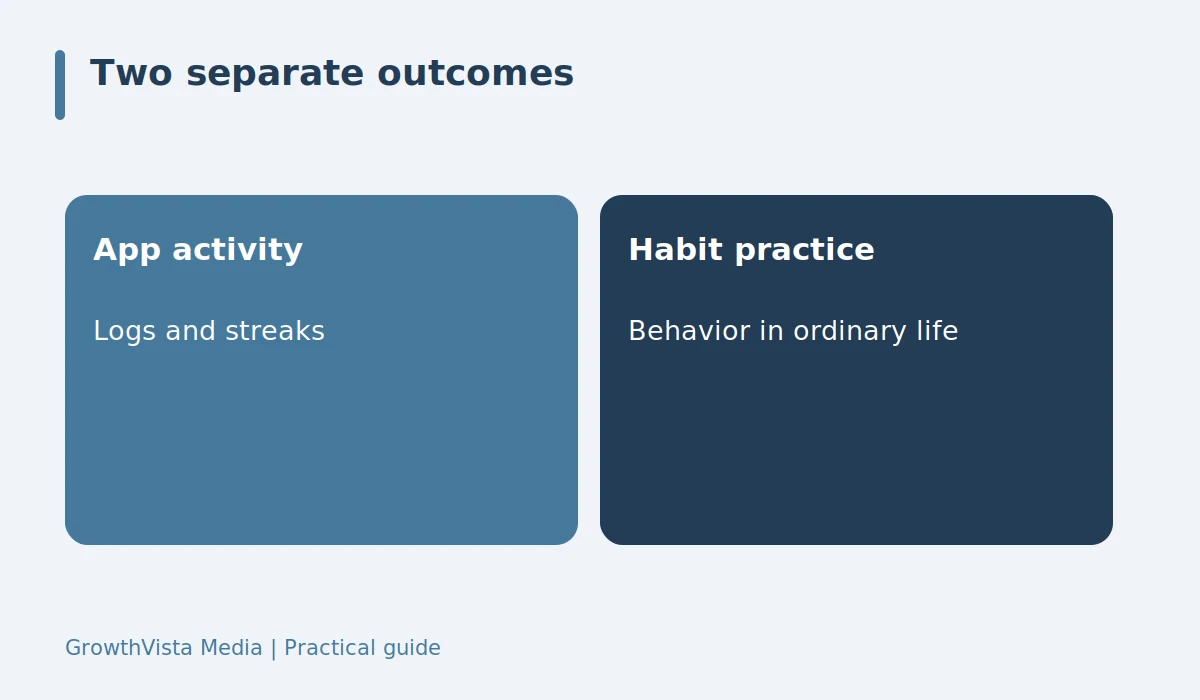
A habit tracking app should make a useful routine easier to observe. More badges and notifications do not guarantee a habit. Start with one behavior you can define clearly, then compare how quickly it can be recorded and reviewed. The app is a support tool, not the goal, and a notebook may be sufficient for a simple routine.
Define the habit before browsing features
Write what counts as completing the behavior and when the opportunity occurs. A vague goal such as be healthier is difficult to record consistently. A specific action creates a clearer log. Keep the first routine manageable and appropriate to your circumstances. The app should reflect the definition rather than force you into its default categories.

One clear action
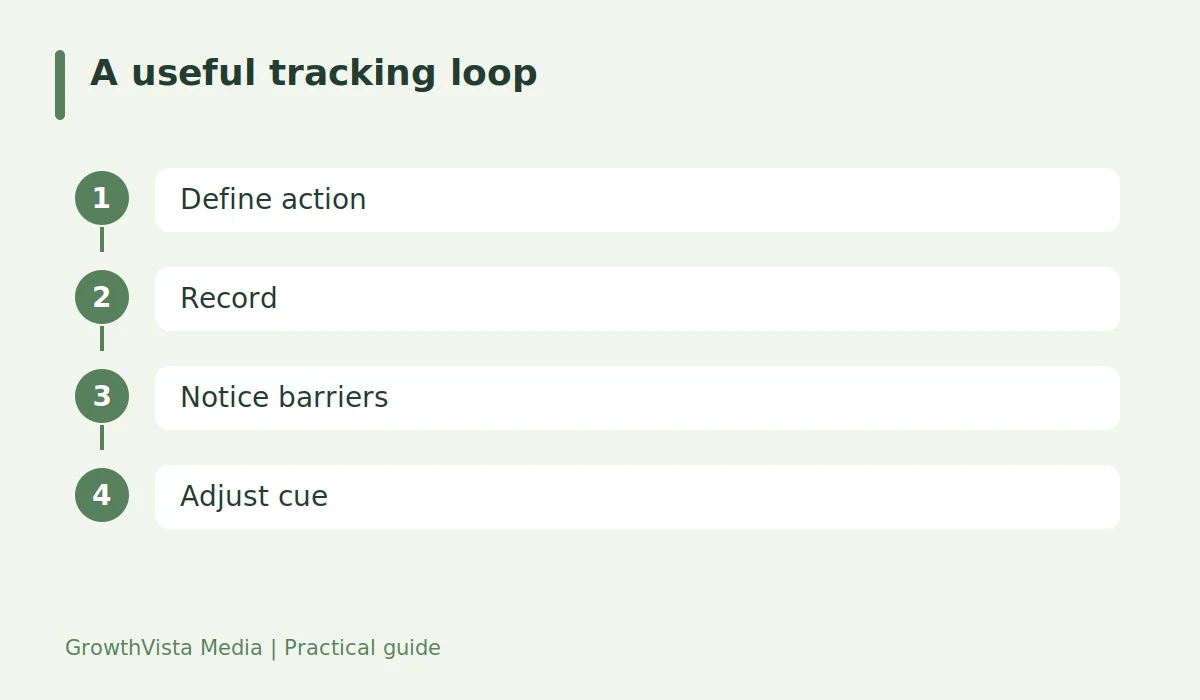
A fictional user defines a habit as preparing the next day’s work bag after dinner. The app records completion and a short note when the evening schedule changes. After a week, the user reviews whether the cue was practical. This is a habit-definition example, not a claim about health outcomes or the effectiveness of a particular app.
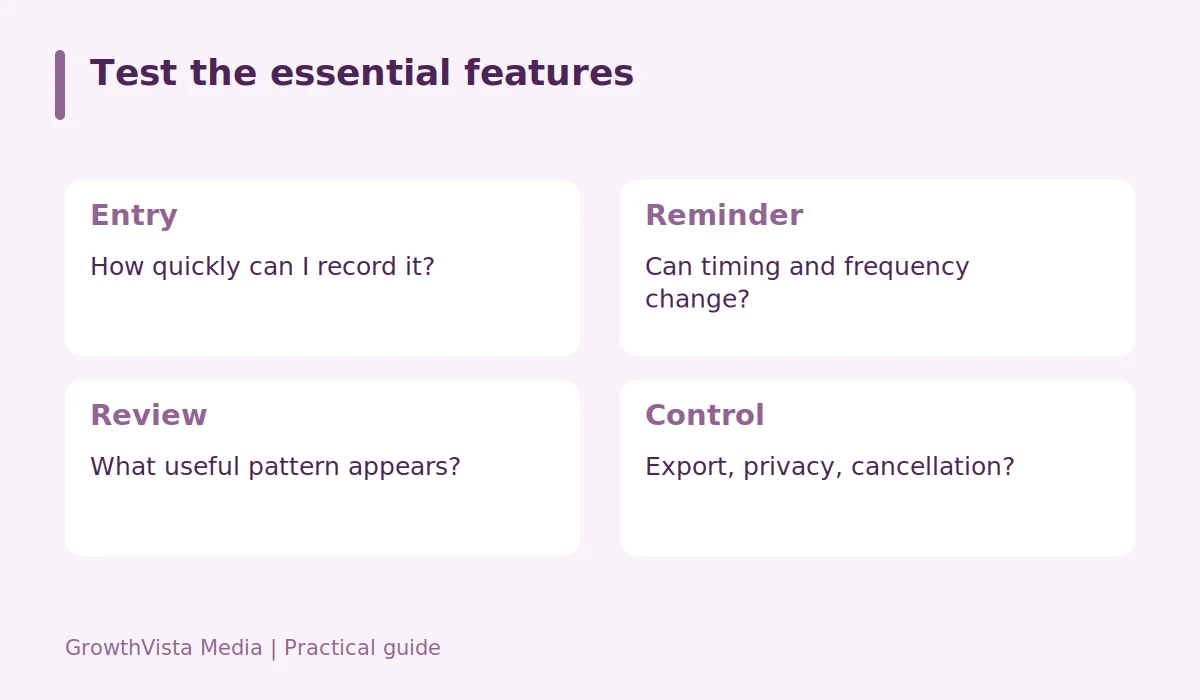
| Item | Detail |
|---|---|
| Entry | How quickly can I record it? |
| Reminder | Can timing and frequency change? |
| Review | What useful pattern appears? |
| Control | Export, privacy, cancellation? |
Habit tracking app reminders should be controllable
Check reminder timing, snooze options, and whether notifications can be reduced. A reminder sent during an impossible time adds noise rather than support. Some people prefer a single cue attached to an existing activity. Test the setting in ordinary life and adjust it. Avoid letting a streak counter turn a missed day into a reason to abandon the whole routine.
Look for a summary that answers a question
A useful review shows when the behavior was possible and what interrupted it. Many visual scores are less informative than a simple history and short notes. Check whether the app supports exceptions or schedule changes without making the record misleading. A chart should help improve the routine, not merely reward constant interaction with the app.
Check privacy and access
Review the information collected, account requirements, permissions, sharing, and export options. A habit log can reveal personal patterns even when it is not a medical record. Enter only what is needed. Make sure you can retrieve useful data and understand what happens when the account is deleted. Account deletion and subscription cancellation may be separate processes.
Compare a trial with a simple alternative
Try the essential workflow before paying: enter the habit, set a reminder, review history, and export or delete data if relevant. Compare the full renewal cost with the benefit. If the app adds more work than it removes, use a simpler method. The useful result is a sustainable behavior routine, not a perfect digital dashboard.
Your next steps
- Define one observable behavior.
- Test quick entry and useful reminders.
- Review a simple history rather than only a score.
- Read privacy and export terms.
- Check renewal and cancellation before paying.
Related guides: Meditation App: 6 Checks Before Starting a Subscription · Health App: 8 Privacy Questions Before Sharing Data · Sleep Tracking App: Read Patterns Without Chasing Scores
Questions readers ask
Are streaks necessary?
No. They can motivate some people but create pressure for others. Look for flexible tracking that helps resume after disruption.
Should I track many habits at once?
A smaller starting list can make the routine easier to understand. Add complexity only when the information remains useful.
Does deleting the app cancel a subscription?
Not necessarily. Check the provider and app-store subscription process separately from app removal or account deletion.
Further reading
Editorial update: October 12, 2026. General educational information, not diagnosis or individualized treatment. Examples are illustrative; consult an appropriately qualified professional for personal health questions.