Meditation App: 6 Checks Before Starting a Subscription
A meditation app can provide recordings, reminders, and a place to explore a practice. It does not make every technique suitable for everyone or turn a subscription into treatment. Try the guidance style and essential controls before paying. Keep expectations realistic and stop or seek qualified support if a practice creates distress.
Try the voice and instructions first
Guidance should be understandable and tolerable. Listen to a sample rather than judging the library size. Check whether the instructions allow comfortable posture, open eyes, and alternative attention points when needed. A recording that demands a particular emotional state can be unhelpful. You should be able to pause or stop without treating it as failure.

Meditation app choices should fit the available time
Look for session lengths and options suited to your day. A large library is not useful if the first session is hard to find. Check offline access and simple navigation where relevant. A shorter practice can be an exploration, not a promise of a measurable benefit. Avoid paying for features you do not expect to use.
Review qualifications and health claims
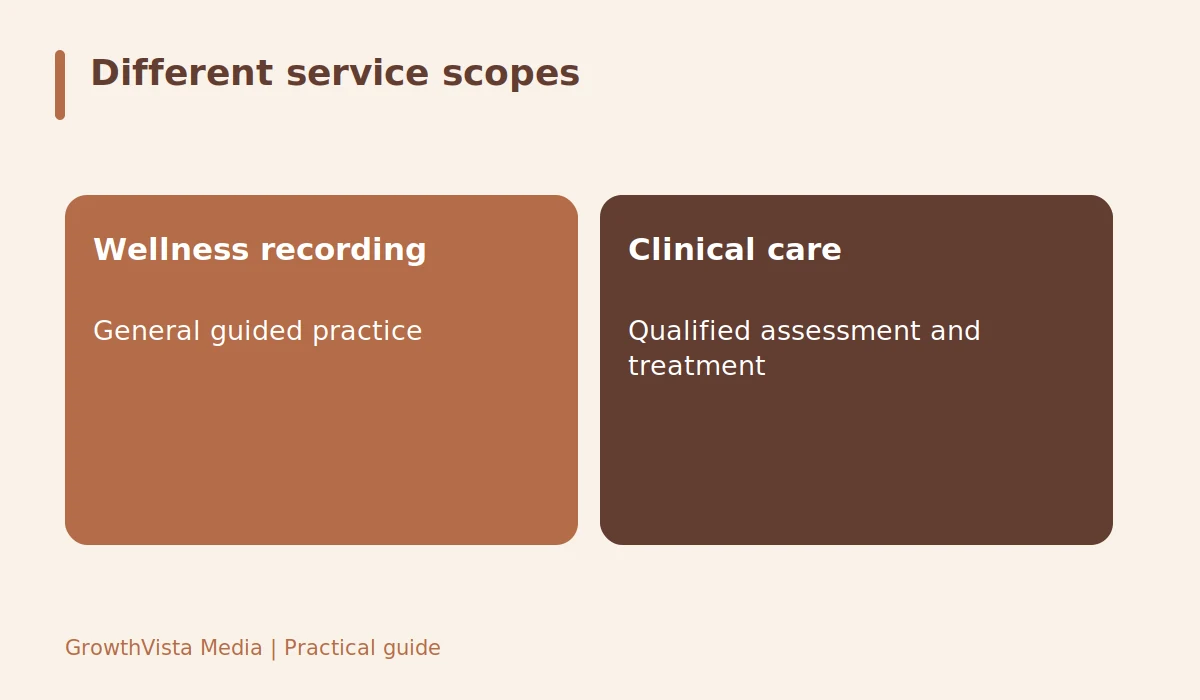
Ask who created the content and what evidence supports any claimed outcome. General wellness guidance and clinical treatment are different services. Meditation should not replace conventional care or delay assessment for a health concern. The app’s testimonials do not establish personal suitability. If a condition or history makes practice uncertain, seek appropriate professional guidance.
Questions readers ask
Is a meditation app therapy?
Not automatically. General recordings are different from clinical care. Review service scope and do not delay appropriate assessment or treatment.
What if focusing inward feels uncomfortable?
Stop or try a suitable alternative with guidance where needed. There is no requirement to continue a distressing practice.
Does a bigger library make it better?
Not necessarily. Guidance quality, accessibility, practical use, privacy, and cost may matter more than the number of recordings.
Check accessibility and privacy
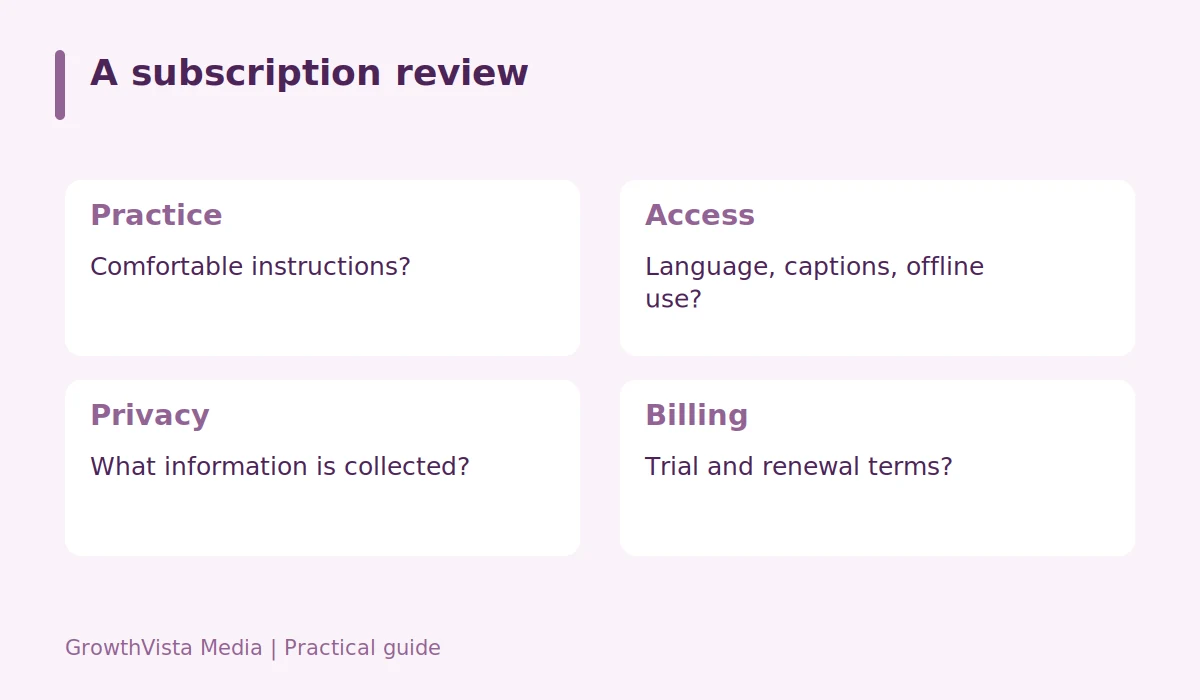
Compare captions, language, audio controls, and other access needs. Read what personal data is collected and whether it is shared. Mood notes or health-related entries can be sensitive. Enter only the information needed for the service. Review account deletion and data export rather than assume removing the app removes stored information.
Understand the trial and renewal
Record the trial end date, renewal amount, billing frequency, and cancellation route. Check whether cancellation affects access immediately or at period-end. A quiet-looking interface can still have an expensive renewal. Evaluate practical usefulness before the trial ends, and keep the confirmation if you cancel.
A practical trial review
A fictional user tests one short recording, checks whether the voice is comfortable, and tries the pause and accessibility controls. The user records the renewal date and reviews privacy before adding personal notes. After several uses, the decision is based on tolerability and convenience. This is a selection workflow, not proof that the app treats a condition.
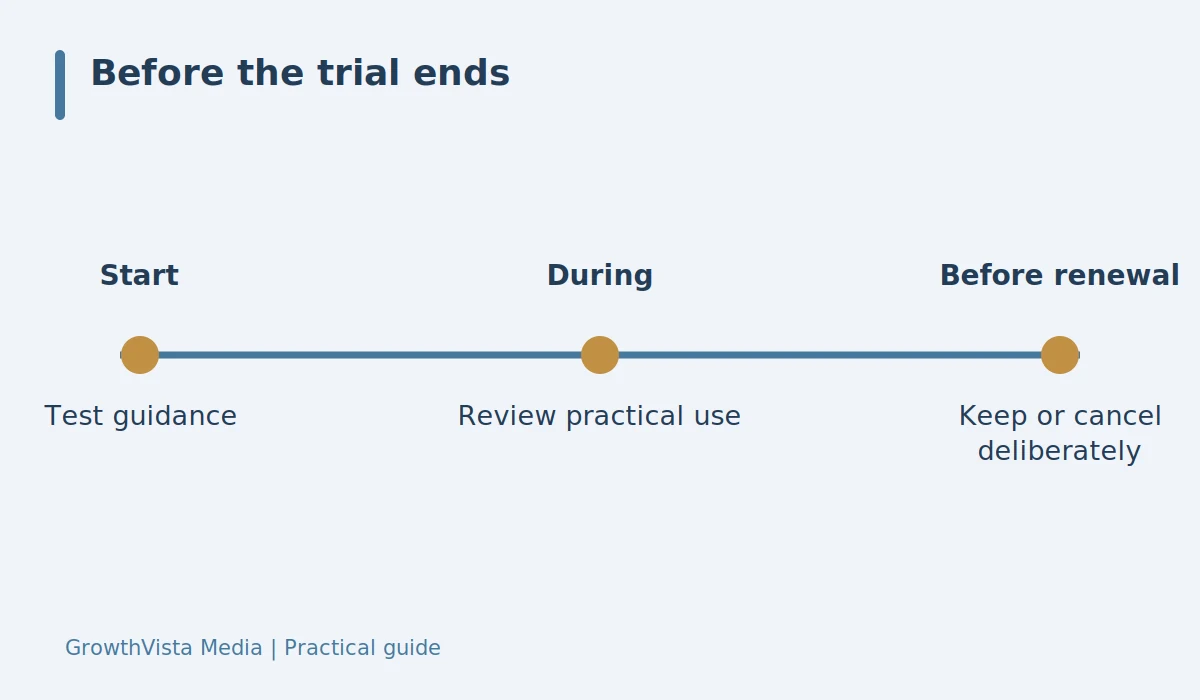
| Item | Detail |
|---|---|
| Start | Test guidance |
| During | Review practical use |
| Before renewal | Keep or cancel deliberately |
Your next steps
- Try a sample and essential controls.
- Check session lengths and accessibility.
- Read qualifications and health claims critically.
- Review sensitive-data collection.
- Record trial, renewal, and cancellation details.
Related guides: Mindfulness for Beginners: A Gentle Way to Try the Practice · Habit Tracking App: Choose Features That Support One Routine · Health App: 8 Privacy Questions Before Sharing Data
Further reading
Editorial update: October 12, 2026. General educational information, not diagnosis or individualized treatment. Examples are illustrative; consult an appropriately qualified professional for personal health questions.