Supplement Label: Read Ingredients, Amounts, and Claims
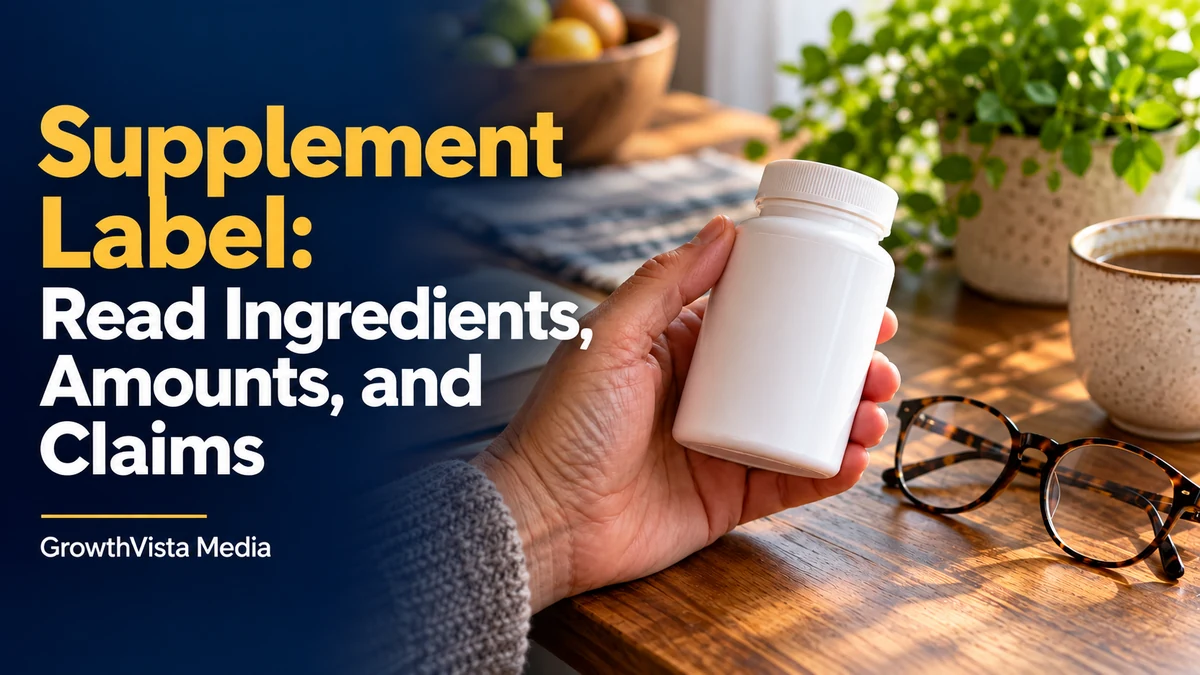
A supplement label is a starting point for understanding what a product claims to contain. It is not proof that you need the product or that it works for a particular condition. Read the Supplement Facts panel, directions, other ingredients, and warnings together. Compare the exact formulation rather than the largest word on the front of the bottle.
Check the serving before the amount
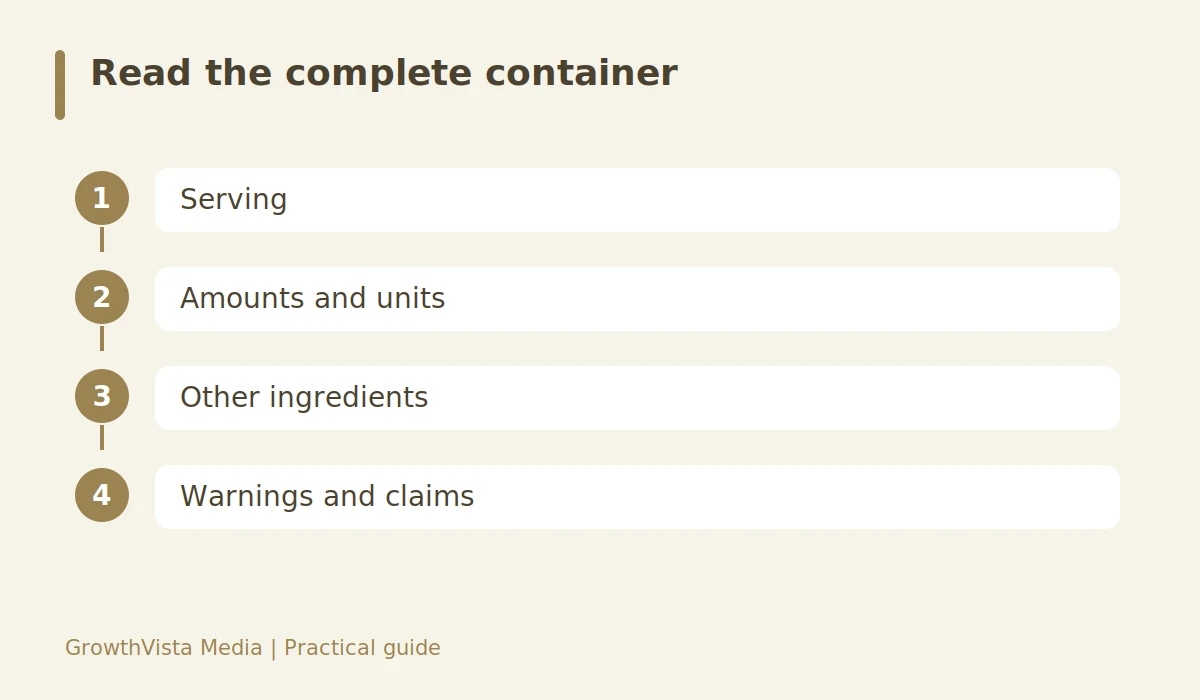
A listed amount may apply to two capsules or another stated serving, not one unit. Read the serving size and suggested use before comparing products. Calculate the amount for the way you would actually use it, but do not treat the label directions as individualized medical advice. A professional may recommend a different approach or advise against use.

A unit calculation, not a dosage recommendation
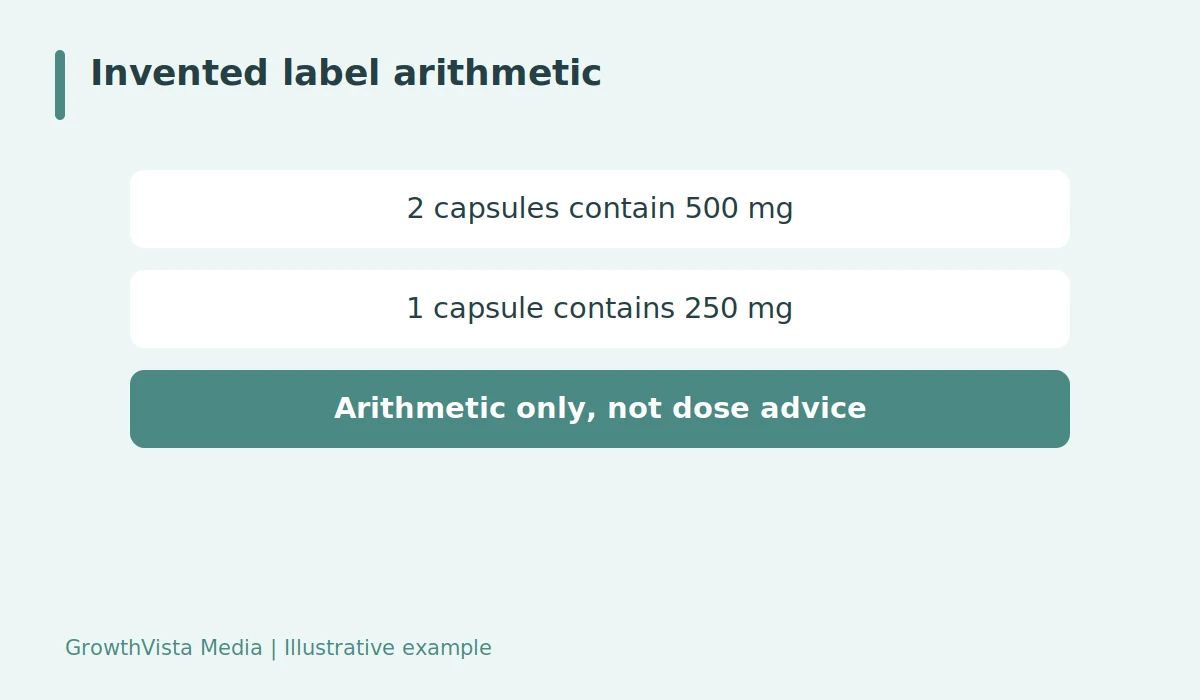
An invented panel states that two capsules contain 500 mg of an ingredient. Under that label, one capsule contains 250 mg if the ingredient is distributed equally. This example only explains serving arithmetic. It does not establish whether the ingredient is useful, safe, or appropriate, or how much anyone should take. Those questions require evidence and individual context.
Supplement label amounts need context
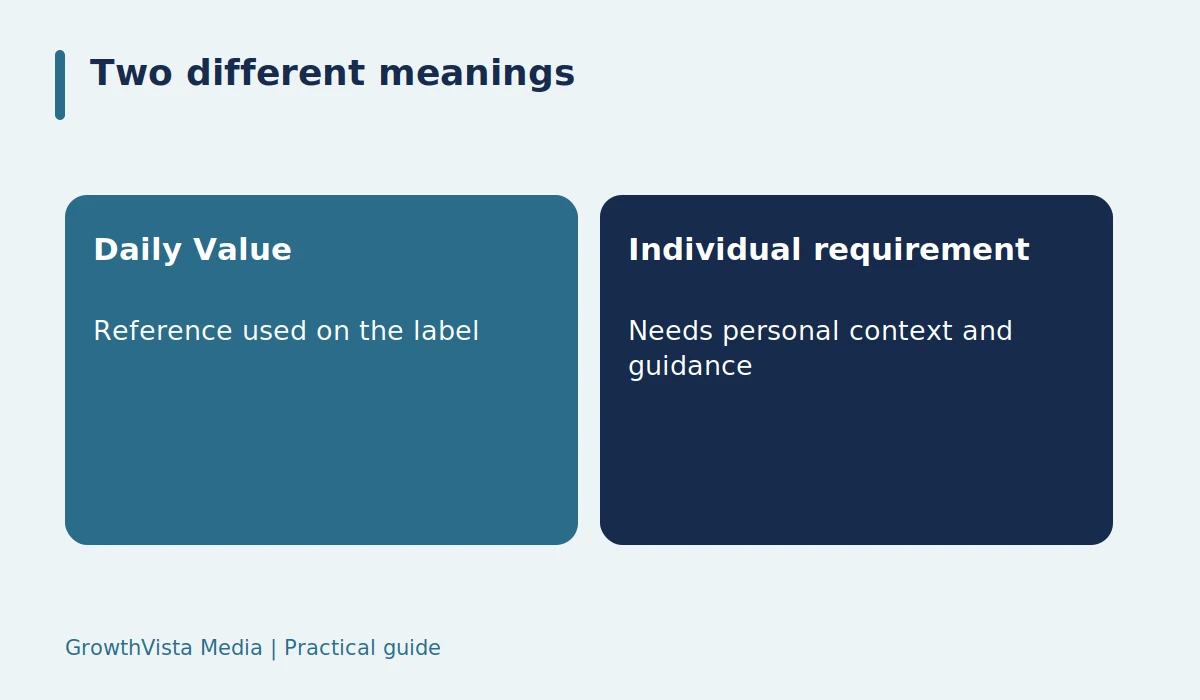
Look at each ingredient’s amount and the units used. Milligrams and micrograms are not interchangeable. Percent Daily Value refers to a reference value and does not define every person’s requirement. Some ingredients do not have an established Daily Value. A high percentage is not automatically a benefit, especially when other products provide the same nutrient.
Review blends and the rest of the ingredients
A proprietary blend may not disclose the quantity of each component in the same detail as separate ingredients. Other ingredients can include capsule materials, sweeteners, flavors, or allergens. Compare those with preferences and restrictions. A product’s front label can emphasize one ingredient while the full formulation includes several others that deserve review.
Read warnings and distinguish types of claims
Warnings can identify groups or circumstances requiring caution. Marketing language about supporting a function is not the same as a demonstrated treatment for a disease. Ask what evidence supports the exact claim. Be cautious about dramatic cure language or guarantees. The label should help frame questions, not bypass them.
Bring the full label to a professional discussion
A clear photo of the full container information can be more useful than remembering the product name alone. Include serving size, ingredient amounts, directions, and your current routine. A clinician or pharmacist can consider overlap and interactions. If a product changes formulation, review it again rather than assume the previous advice covers the new version.
Your next steps
- Read serving size before comparing amounts.
- Check units and Daily Value context.
- Review blends, other ingredients, and allergens.
- Read warnings and the exact claim.
- Keep a full label image for professional review.
Related guides: Supplements: 7 Questions Before Adding a Product · Vitamin D Supplements: Questions for Your Clinician · Protein Powder: Compare Products Without the Hype
Questions readers ask
Is the listed amount per capsule?
Not always. Check the serving size. It may refer to multiple capsules, a scoop, or another unit.
Does 100% DV mean the right dose for me?
No. Daily Value is a reference amount. Individual requirements and other intake sources can differ.
Can I rely on the front label?
Read the full panel, directions, ingredients, and warnings. The front usually does not explain the complete formulation or evidence.
Further reading
Editorial update: October 12, 2026. General educational information, not diagnosis or individualized treatment. Examples are illustrative; consult an appropriately qualified professional for personal health questions.